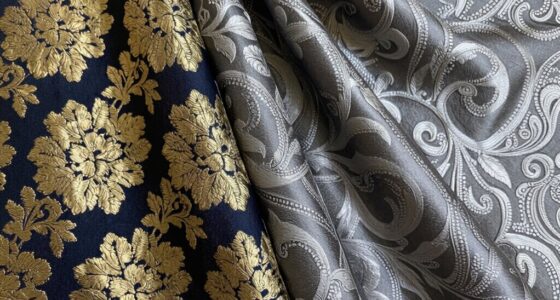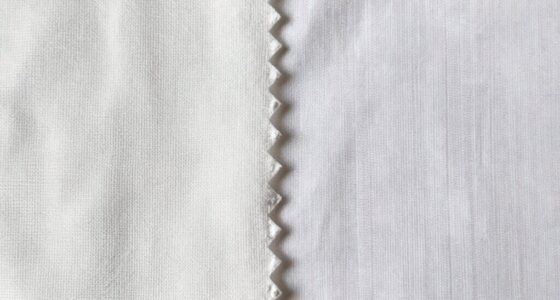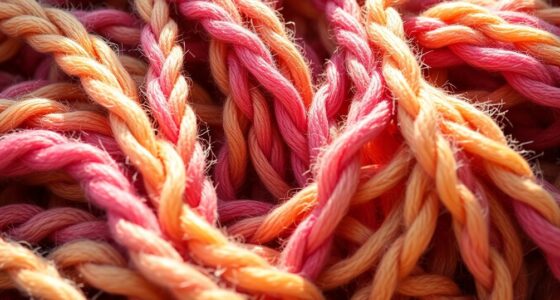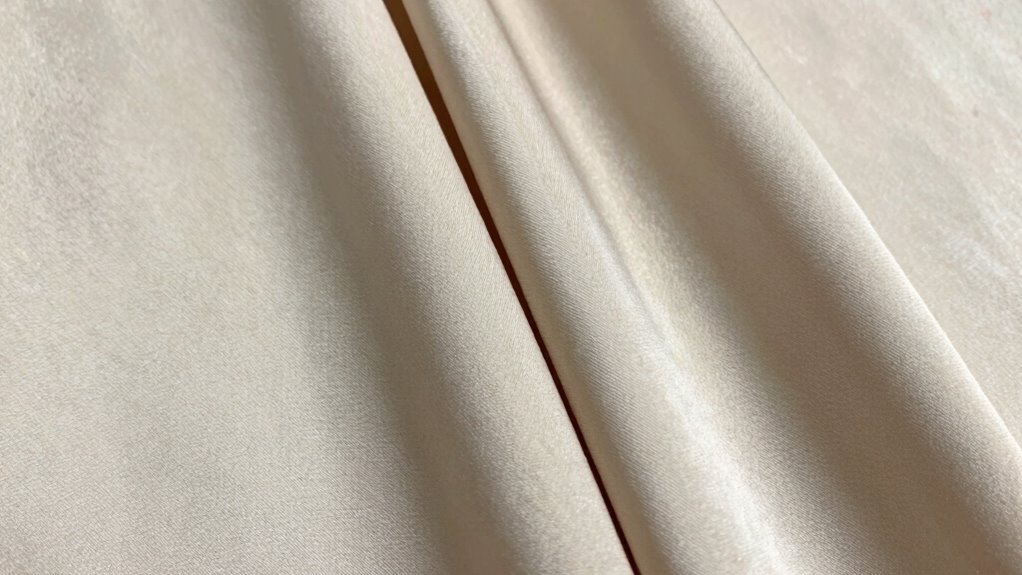

If you’re choosing between lyocell and rayon, lyocell generally performs better in durability, eco-friendliness, and comfort. It’s made from renewable resources, uses environmentally friendly processes, and resists shrinking, fading, and bacteria better than rayon. Lyocell also feels silky, absorbs dyes evenly, and is suitable for sensitive skin. While rayon may be cheaper, its environmental impact and lower durability might make it less ideal. If you want a sustainable, long-lasting fabric, lyocell is the smarter choice—more details ahead.

Get your wardrobe favorites delivered free with Prime
- Fast, free delivery on millions of items
- Prime Video, Amazon Music and more included
- Member-only deals all year
Key Takeaways
- Lyocell is stronger, more durable, and maintains shape better over time than rayon.
- It offers superior breathability, moisture-wicking, and resistance to bacteria for enhanced comfort.
- Lyocell absorbs dyes evenly, resulting in vibrant, long-lasting colors, unlike rayon which may fade faster.
- Its eco-friendly production and biodegradability make Lyocell a more sustainable choice.
- Rayon is less durable and prone to shrinking or losing shape after washing.
Are you curious about how Lyocell and Rayon compare? When choosing between these two fabrics, understanding their origins, environmental impacts, and performance can help you make an informed decision. Both materials are derived from cellulose, but they differ markedly in how they’re produced and their sustainability impacts. Lyocell is known for its eco-friendly manufacturing process, which uses a closed-loop system that recycles solvents, making it much more sustainable than traditional Rayon. Rayon, on the other hand, often involves more chemical-intensive methods, leading to higher environmental concerns. When considering fabric dyeing processes, Lyocell tends to absorb dyes more evenly and quickly, often requiring less water and fewer chemicals. This results in a less polluting process overall. Rayon’s dyeing process can be more resource-intensive, sometimes causing more environmental damage because of the chemicals used and the amount of water consumed. If sustainability impacts matter to you, Lyocell is generally the better choice, especially if you’re looking for a fabric with a lower ecological footprint. Its manufacturing process minimizes chemical waste, and the use of renewable resources like eucalyptus, beech, or spruce trees helps reduce deforestation. Rayon production, however, has historically been linked to environmental issues, including water pollution from chemical runoff. Additionally, Lyocell’s biodegradability makes it an even more environmentally friendly option. The fibers of Lyocell are also known for their biocompatibility, which makes them suitable for sensitive skin and clothing that lasts longer. Recent advancements in fiber technology have further improved Lyocell’s durability and performance, making it an increasingly popular choice among consumers. Furthermore, the development of eco-friendly dyes has enhanced the sustainability of Lyocell’s dyeing process, reducing its environmental impact even further. Moreover, the textile industry’s shift towards sustainable raw materials underscores the importance of choosing fabrics like Lyocell that align with eco-conscious values. In terms of fabric performance, Lyocell offers a soft, silky feel, often comparable to cotton or silk. It’s breathable, moisture-wicking, and naturally resistant to bacteria, making it ideal for clothing that keeps you comfortable throughout the day. Rayon, while also soft and smooth, can sometimes feel less durable and may shrink or lose shape after washing if not cared for properly. Lyocell’s stronger fiber structure means it holds up better over time, especially with proper care. When it comes to dyeing, Lyocell’s fibers accept dyes more uniformly, resulting in vibrant, long-lasting colors. Rayon can sometimes fade faster or develop uneven coloration, particularly if the dyeing process isn’t carefully managed. Overall, Lyocell tends to perform better in terms of longevity, comfort, and environmental friendliness, making it a popular choice for eco-conscious consumers.
As an affiliate, we earn on qualifying purchases.
Frequently Asked Questions
Is Lyocell More Environmentally Friendly Than Rayon?
Yes, lyocell is more environmentally friendly than rayon. In a sustainability comparison, lyocell’s eco-friendly production process uses less water and chemicals, making it more sustainable. It’s made from sustainably sourced eucalyptus trees through a closed-loop process that recycles most chemicals. Rayon, on the other hand, often involves toxic chemicals and water-intensive methods. So, choosing lyocell supports greener practices and reduces environmental impact.
How Do They Compare in Terms of Affordability?
You’ll find rayon is generally more affordable than lyocell, making it a popular choice for budget-conscious shoppers. When considering fabric durability, lyocell tends to hold up better over time, especially in color retention, meaning your clothes stay vibrant longer. Rayon’s lower price often comes with less durability, so while it’s easier on your wallet initially, it might cost more in replacements or repairs later on.
Which Fabric Is More Resistant to Wrinkles?
You’ll find that lyocell is more wrinkle-resistant than rayon, which tends to crease easily. This makes lyocell a better choice if you want fabric that stays smooth with less effort. Regarding fabric durability, lyocell also tends to hold up better over time, maintaining its shape and strength. So, for a low-maintenance, long-lasting fabric, lyocell is your best bet.
Are Both Fabrics Suitable for Sensitive Skin?
Both fabrics can be suitable for sensitive skin, but lyocell generally offers better comfort due to its hypoallergenic properties and minimal skin irritation. It’s made from eco-friendly wood pulp, which reduces potential allergens. Rayon, on the other hand, may cause irritation for some people because of chemical processing. If you have sensitive skin, opt for lyocell to minimize skin irritation and enjoy a softer, more skin-friendly fabric.
Can They Be Blended With Other Fibers Effectively?
Yes, you can blend lyocell and rayon with other fibers effectively. Fiber blending enhances textile versatility, allowing you to combine the best qualities of each fiber. For example, blending with cotton adds durability, while mixing with silk creates softness. These blends improve fabric performance, making them suitable for various clothing items. Just make certain the fiber proportions are balanced to maintain the desired texture, durability, and comfort.
Conclusion
Think of lyocell and rayon like two talented chefs in the fabric kitchen: one’s a health-conscious master, and the other a versatile artist. Lyocell, with its eco-friendly origins and durability, is like a well-balanced meal that keeps you feeling good. Rayon, on the other hand, offers vibrant, silky textures that feel luxurious. Choose lyocell if you want sustainability and strength, or go for rayon if you crave softness and variety. Your perfect fabric match awaits!
Halloween Picks
halloween
As an affiliate, we earn on qualifying purchases.