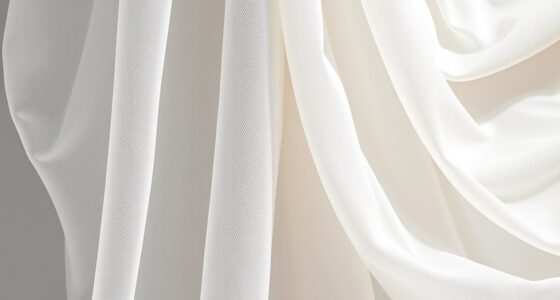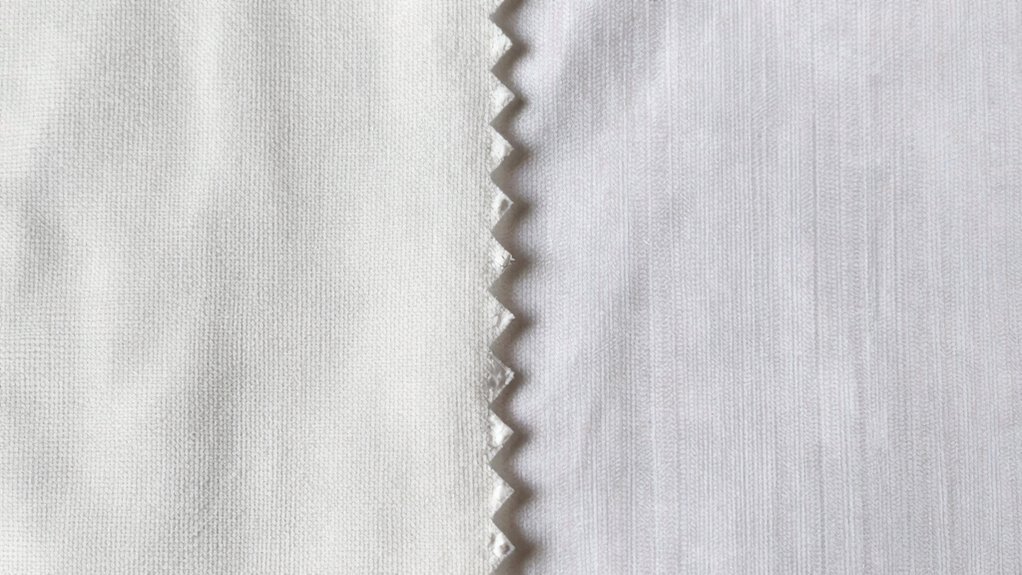

Cotton lawn is a lightweight, crisp fabric with a smooth, delicate feel, making it perfect for airy blouses and summer dresses, but it’s less durable and needs gentle handling. Cotton poplin, on the other hand, is a slightly heavier, more tightly woven fabric that feels sturdy, resists wrinkling, and lasts longer for everyday wear like shirts and skirts. To discover how each fabric suits your projects and climates, explore the details further.

Get your wardrobe favorites delivered free — and shop member deals
- Fast, free delivery on millions of items
- Access to Prime Big Deal Days deals on October 6–7
- Prime Video, Amazon Music and more included
Key Takeaways
- Cotton lawn is lightweight, soft, and delicate, ideal for warm-weather garments, while cotton poplin is heavier, sturdier, and more durable for everyday wear.
- Cotton lawn has a finer, crisper weave, offering a smooth, airy feel, whereas cotton poplin has a tighter weave, providing a smooth, resistant surface.
- Cotton lawn requires gentle handling and is less durable, suitable for delicate projects; cotton poplin withstands regular use and washing.
- Cotton lawn is perfect for summer dresses and children’s clothing, while cotton poplin is versatile for shirts, skirts, and layered outfits.
- Cotton poplin’s durability and resistance to wrinkling make it suitable for year-round and transitional season garments.
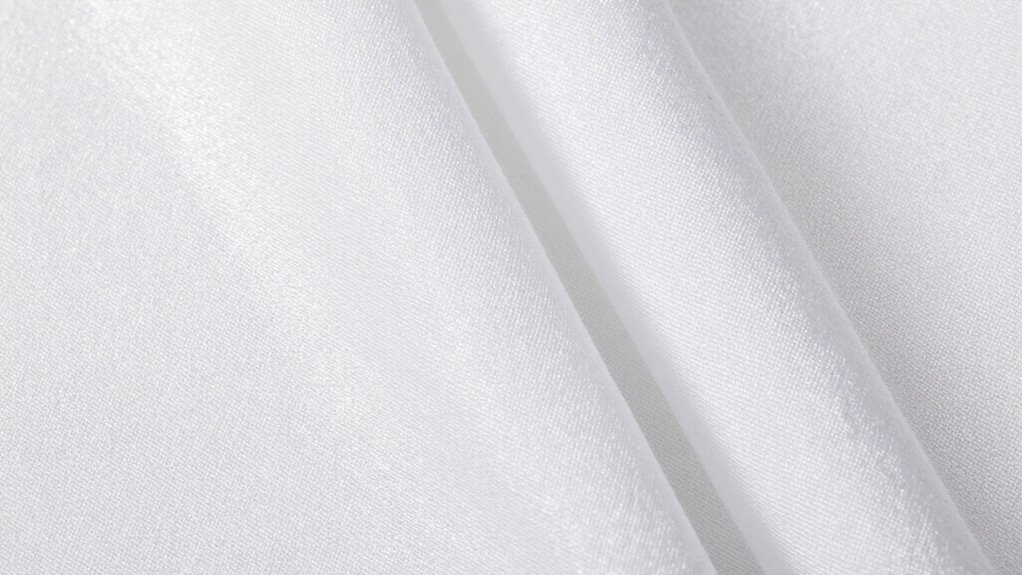
When choosing between cotton lawn and cotton poplin, understanding their differences can help you make the right fabric choice for your project. Both fabrics are popular cotton options, but they have distinct qualities that influence how they perform and suit different needs. Your decision depends on factors like fabric durability and seasonal suitability, which determine how long your garment lasts and whether it’s comfortable in various weather conditions.
Cotton lawn is a lightweight, finely woven fabric known for its smooth surface and crisp feel. It’s made with fine threads, giving it a soft and smooth texture that’s perfect for delicate or detailed designs. Because of its lightweight nature, cotton lawn tends to have lower fabric durability, especially when exposed to frequent washing or heavy use. It’s best suited for warmer seasons or climates, where its breathability and cool feel keep you comfortable. If you’re making blouses, dresses, or children’s clothing, cotton lawn offers a fresh, airy feel, but you’ll want to handle it gently to maintain its crispness over time. Additionally, proper fabric calibration can help optimize its color and texture for different projects. Recognizing the fabric characteristics can further assist in selecting the appropriate fabric for your specific needs. Being aware of the fabric’s wear and tear resistance can also help you decide how much to invest in higher-quality options. Understanding how different fabrics respond to care and maintenance can further influence your choice and longevity of the finished garment.
Cotton poplin, on the other hand, is a bit heavier and more tightly woven than cotton lawn. Its weave creates a smooth, firm surface that’s more resistant to wrinkling and wear. This makes cotton poplin more durable, so your garments can handle regular use and frequent washing without losing their shape or texture. Because of its sturdier construction, cotton poplin is more versatile for year-round wear. It’s suitable for both warm and cooler weather, especially when you want a fabric that has a bit more weight and structure. If you’re sewing shirts, skirts, or lightweight pants, cotton poplin’s fabric durability ensures your pieces last longer, even with daily use.
Seasonal suitability plays a crucial role in your choice. Cotton lawn’s lightness makes it ideal for summer or spring projects, where breathability and a crisp appearance are prized. Conversely, cotton poplin’s sturdiness and weight give it an edge for transitional seasons or layered clothing, offering comfort and longevity across different weather conditions. When selecting your fabric, consider how often your garment will be worn and in what climate. If you need something that’s lightweight and easy to pack for warm weather, cotton lawn is the way to go. If you want a more durable, versatile fabric that can handle various seasons, cotton poplin might be the better choice.
cotton lawn fabric for summer dresses
As an affiliate, we earn on qualifying purchases.
As an affiliate, we earn on qualifying purchases.
Frequently Asked Questions
Which Fabric Is More Environmentally Friendly to Produce?
You’ll find organic cotton fabrics more environmentally friendly because they often have organic certification, ensuring sustainable farming practices. They typically use less water during production compared to conventional cotton, reducing water usage considerably. While both fabrics can be eco-friendly depending on their production methods, organic cotton lawn generally has a smaller environmental footprint due to reduced chemical use and lower water consumption, making it a better choice for eco-conscious consumers.
How Do Cotton Lawn and Poplin Compare in Price?
You might think cotton lawn and poplin are pricey, but they vary in cost based on fabric durability and texture. Cotton lawn, with its delicate, smooth feel, tends to be a bit more expensive due to its finer weave. Poplin, being thicker and more durable, often costs less, making it a budget-friendly choice for sturdy yet stylish garments. Ultimately, your choice depends on your desired fabric texture and how much you’re willing to spend.
Are There Specific Care Instructions Unique to Each Fabric?
Yes, each fabric has specific care instructions. For cotton lawn, you should wash it in cold water to protect its delicate weave and maintain color retention, as it’s more prone to fading. For cotton poplin, use warm water and avoid harsh detergents to preserve fabric durability and color. Both fabrics benefit from gentle drying, but cotton lawn may need ironing on low heat, while poplin can handle medium heat better.
Can These Fabrics Be Blended With Other Textiles?
Yes, you can blend cotton lawn and cotton poplin with other textiles to enhance fabric durability and texture differences. Blending with materials like silk or polyester can improve strength, reduce wrinkling, and add unique tactile qualities. Be mindful of how the textures interact; for example, combining smooth poplin with rougher fabrics can create interesting contrasts. Always follow care instructions for the specific blend to maintain fabric integrity and appearance.
Which Fabric Is More Suitable for Summer Clothing?
Cotton lawn is more suitable for summer clothing because of its superior breathability and lightweight feel. Its soft, smooth texture feels comfortable against your skin, making it ideal for hot weather. Cotton poplin, while also breathable, has a slightly firmer, crisper texture that’s better for structured garments. If you want a cool, airy option, cotton lawn is your best choice, especially for lightweight, breathable summer apparel.
Conclusion
Now that you know the differences between cotton lawn and cotton poplin, you can make a more informed choice for your next project. Did you know that cotton poplin accounts for over 50% of all woven cotton fabrics used in apparel worldwide? Whether you prefer the lightweight, breathable feel of lawn or the crisp, structured look of poplin, understanding these fabrics helps you pick the perfect material. So go ahead—choose the one that best suits your style and needs!
Fall Picks
fall essentials
As an affiliate, we earn on qualifying purchases.