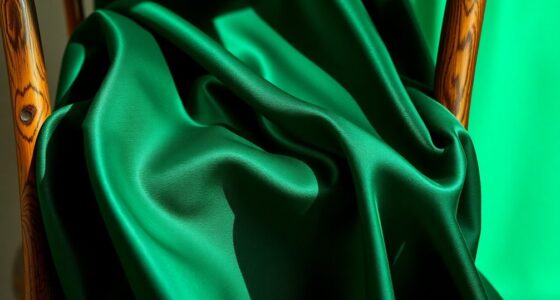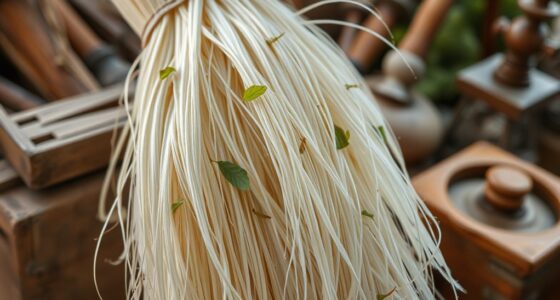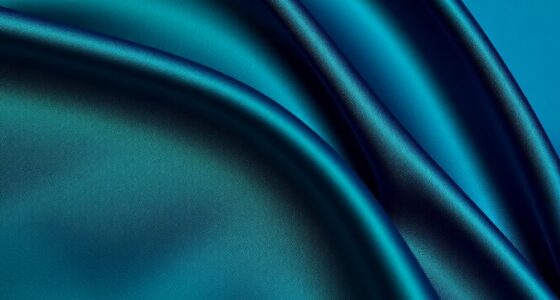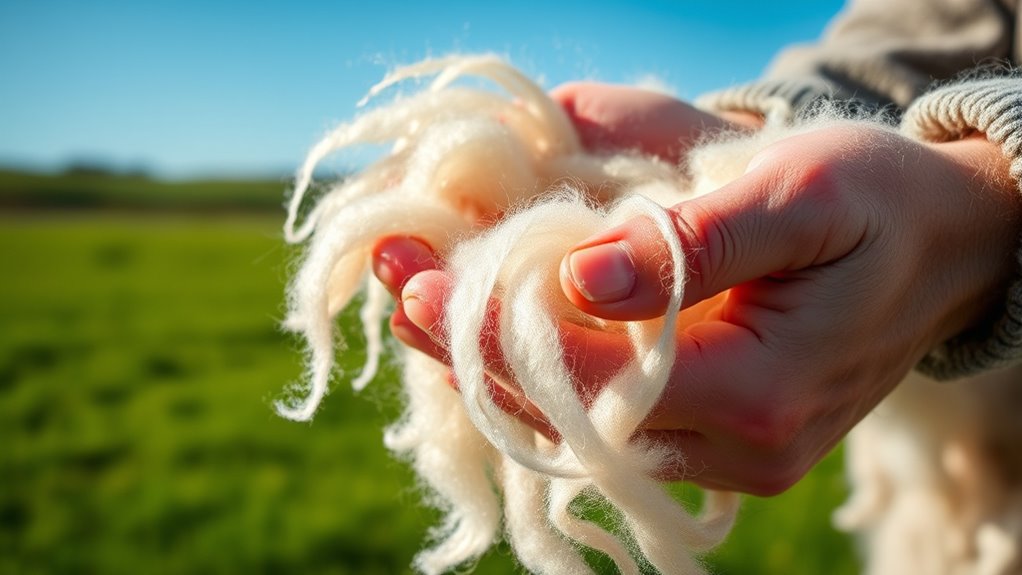

Exploring mohair reveals a luxurious fabric made from angora goats, known for its silky sheen, softness, and high strength. This goat fiber creates lightweight, warm textiles with a smooth, lustrous surface that reflects light beautifully. Its ability to absorb vibrant dyes enhances its visual appeal, making it popular in high-end fashion. If you continue exploring, you’ll discover more about how this eco-friendly, ethically produced fiber offers both elegance and durability in textiles.
Key Takeaways
- Mohair is a luxurious fiber derived from angora goats, known for its silky texture and natural sheen.
- The fiber’s fine diameter and high tensile strength make it ideal for soft, durable textiles.
- Production involves careful shearing and processing to preserve fiber qualities, resulting in lightweight, warm fabrics.
- Mohair is eco-friendly, with ethical shearing practices that promote sustainability and animal welfare.
- Its premium quality and vibrant dye affinity make mohair highly valued in high-end fashion and luxury garments.
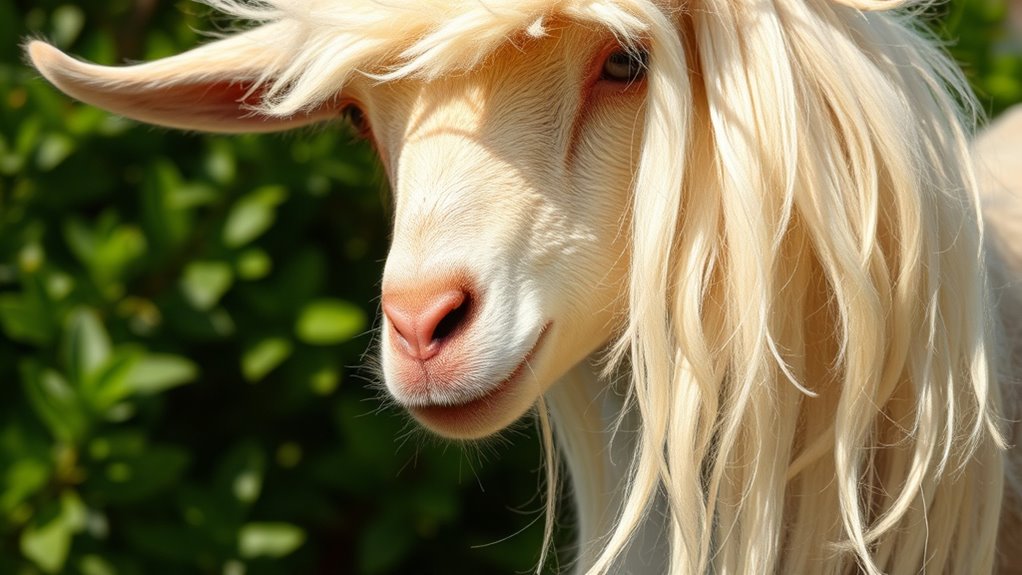
Have you ever wondered what makes fabric from angora goats so luxurious? The secret lies in the unique goat fiber they produce, known as mohair. This fiber is highly prized in the textile industry because it yields some of the most exquisite and soft luxurious textiles available. When you touch mohair, you immediately notice its silky texture and incredible sheen, setting it apart from other fibers. The process of transforming goat fiber into luxurious textiles involves careful harvesting and processing, ensuring that the natural qualities of the fiber are preserved. Mohair’s smooth, lustrous surface reflects light beautifully, giving garments and fabrics an elegant appearance that feels as good as it looks.
Mohair from angora goats offers silky softness, radiant sheen, and eco-friendly luxury in every fiber.
The luxurious qualities of this fiber derive from its fine diameter and high tensile strength, which make it both soft and durable. Unlike wool, which can sometimes be coarse and itchy, mohair offers a smooth, gentle feel against your skin. This softness, combined with its ability to retain warmth without feeling heavy, makes it a favorite for high-end fashion and cozy winter wear. Whether woven into fine sweaters, scarves, or luxury suits, mohair consistently elevates the quality of the finished product. Because of its glossy appearance and excellent dye affinity, fabrics made from goat fiber take dyes vividly, resulting in vibrant, long-lasting colors that enhance their visual appeal.
You’ll find that the production of mohair is a sustainable process, as angora goats shed their fiber naturally or can be carefully sheared without harm. This makes the fiber not only luxurious but also an eco-friendly choice for conscious consumers. Additionally, the self-shearing process minimizes waste and stress on the animals, promoting ethical farming practices. The process of turning goat fiber into luxurious textiles involves cleaning, carding, and spinning the fiber into yarns, which are then woven or knitted into fabrics. The result is a lightweight yet warm material that feels incredible to wear and looks sophisticated. Because of its rarity and quality, mohair fabrics often command a premium price, reinforcing their status as luxury textiles.
In essence, the appeal of fabric from angora goats comes down to the exceptional qualities of goat fiber. It’s a fiber that combines softness, strength, sheen, and sustainability to produce some of the most luxurious textiles available today. When you choose garments or textiles made from mohair, you’re investing in a material that’s not only beautiful and comfortable but also crafted with care and respect for the environment. This is what makes mohair a true treasure in the world of high-end fabrics.
Frequently Asked Questions
How Eco-Friendly Is Mohair Production Compared to Other Fibers?
Mohair production is relatively eco-friendly compared to other fibers because it involves sustainable farming practices and requires less water and energy. You’ll find that farmers often use eco-conscious dyes, reducing chemical waste. Unlike synthetic fibers, mohair is biodegradable, making it a better choice for the environment. By choosing mohair, you support sustainable agriculture and reduce your carbon footprint, making it a responsible, eco-conscious option for textiles.
What Are Common Challenges in Maintaining Mohair Garments?
You might find maintaining mohair garments challenging because pests like moths can damage the fibers, so pest control is essential. Additionally, mohair is prone to color fading if exposed to excessive sunlight or harsh detergents. To keep your garments in great shape, store them properly, use gentle cleaning methods, and regularly check for pests. With proper care, your mohair pieces stay vibrant and beautiful longer.
Can Mohair Be Blended With Synthetic Fibers for Durability?
Think of fiber blending as a recipe—mixing mohair with synthetic fibers creates a sturdy, resilient fabric. You can absolutely blend mohair with synthetics to boost textile durability, making garments more resistant to wear and tear. This combo acts like a sturdy bridge, combining the luxurious softness of mohair with the strength of synthetic fibers. So, if durability’s your goal, blending helps you craft fabrics that stand the test of time.
How Does Climate Affect Mohair Fiber Quality?
Climate impact markedly influences mohair fiber quality. If you’re in a hot, dry climate, the goats produce finer, softer fiber because they’re stressed less and have better nutrition. Conversely, harsh weather conditions can lead to coarser fibers and lower quality. You should consider local climate when sourcing mohair, as it directly affects fiber quality, ensuring you select the best possible material for your needs.
Are There Specific Care Instructions for Vintage Mohair Pieces?
You should treat vintage mohair pieces with gentle care, like handling delicate silk. To preserve their charm, use dry cleaning techniques or hand wash with cold water and mild detergent. Store them in breathable containers away from direct sunlight to prevent fading. Regularly inspect for moths or dust, and avoid harsh chemicals. Proper vintage preservation keeps your cherished mohair looking soft, shiny, and timeless for years to come.
Conclusion
While some might think mohair is too delicate or expensive, its durability and luxurious feel prove otherwise. Once you experience its silky softness and warmth, you’ll see it’s worth the investment. Plus, with proper care, mohair garments last for years, making them a smart choice for both comfort and style. Don’t let misconceptions hold you back—embrace the elegance of mohair and elevate your wardrobe with this timeless fabric.