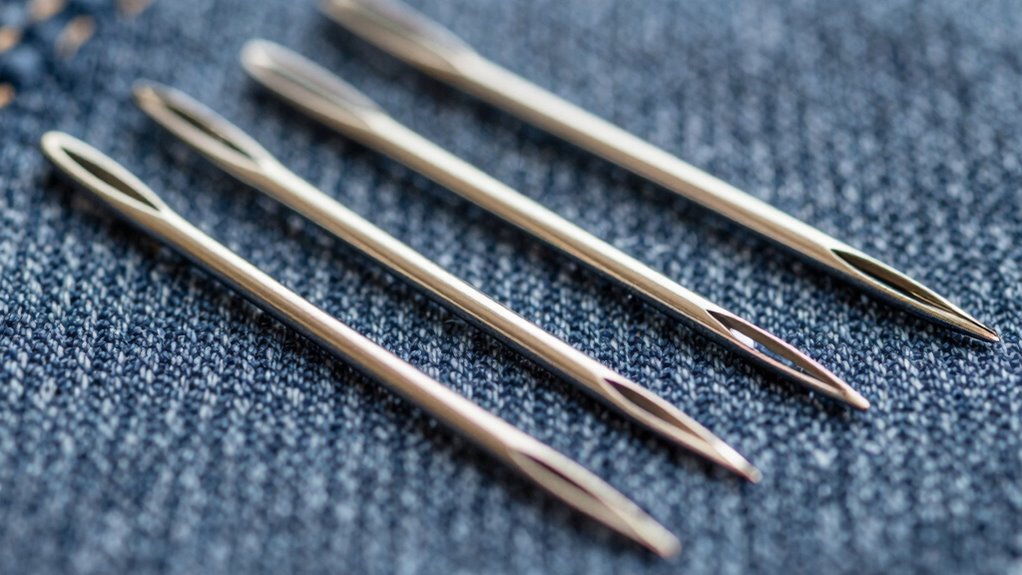
Choosing the right sewing needle for denim is key to getting strong, professional results. You’ll want a needle designed for heavy fabric, like a size 90/14 or 100/16 denim or jeans needle, which prevents skipped stitches and fabric damage. The proper shape and size make your sewing easier, reduce fraying, and prolong your machine’s life. If you keep these tips in mind, you’ll improve stitch quality and durability—plus, there’s more to discover on the best needle choices for your project.

Get your wardrobe favorites delivered free — and shop member deals
- Fast, free delivery on millions of items
- Access to Prime Big Deal Days deals on October 6–7
- Prime Video, Amazon Music and more included
Key Takeaways
- Choosing the right needle size (90/14 or 100/16) ensures strength and prevents fabric damage when sewing denim.
- Denim or jeans needles are specifically designed to penetrate tough fabric smoothly and reduce fraying.
- Proper needle shape and size improve stitch quality, reduce skipped stitches, and extend sewing machine lifespan.
- Correct needle selection makes tension adjustment easier, resulting in consistent, professional-looking seams.
- Using appropriate needles minimizes fabric tearing, thread breakage, and ensures durable, high-quality denim projects.
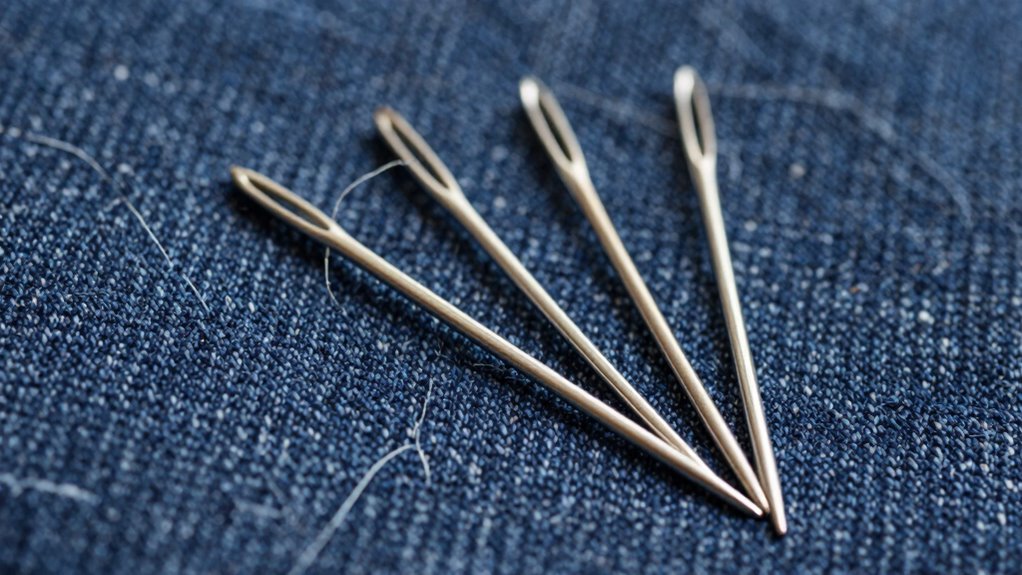
When sewing denim, choosing the right needle can make all the difference in achieving strong, professional-looking results. Denim is a thick, sturdy fabric that demands a needle capable of handling its toughness without skipping stitches or causing damage. The correct needle size and proper thread tension are essential, but selecting the appropriate needle is your first step toward a clean, durable finish. If you pick a needle that’s too small, it might bend or break under the fabric’s resistance, while a needle that’s too large can leave permanent holes or distort the material. Typically, for denim, a size 90/14 or even a 100/16 needle provides the strength needed to pierce through multiple layers smoothly. These sizes are designed specifically for heavy fabrics, reducing the risk of skipped stitches and uneven seams. Using the right needle shape—such as a denim or jeans needle—ensures the point penetrates cleanly and reduces the risk of fraying or tearing. Proper needle selection also helps prevent fabric damage and prolongs the life of your sewing machine components, making your projects more durable and efficient. Additionally, understanding fabric types helps in choosing the most suitable needle for various denim weights and finishes. Selecting the appropriate needle also helps in maintaining the overall machine performance, ensuring your sewing experience remains smooth and hassle-free.
Thread tension also plays a *significant* role in sewing denim, but it starts with a good needle choice. When you use an appropriate needle, you’ll find that adjusting your thread tension becomes easier, leading to more balanced stitches. Too tight, and the fabric puckers; too loose, and the stitches appear loose or uneven. With a properly fitted needle, your machine’s tension settings can be dialed in more precisely, giving you a professional look. Remember, thicker fabrics like denim often require a slightly higher tension setting, but this should be fine-tuned based on your specific machine and thread type. Using the right needle size ensures that the thread moves smoothly through the fabric without breaking or causing snags, which is *imperative* for maintaining consistent tension and stitch quality. Additionally, selecting the correct needle strength helps prevent bending or breaking during sewing. The importance of matching your needle size with your thread and fabric cannot be overstated. A mismatch can lead to skipped stitches, broken threads, or fabric damage. When you’re working with denim, a heavier thread often pairs best with a size 90/14 or larger needle, providing the strength needed to secure your seams without compromise.
As an affiliate, we earn on qualifying purchases.
Frequently Asked Questions
Can I Reuse Denim Sewing Needles Safely?
You can reuse denim sewing needles, but it’s not always safe. Over time, fabric durability can cause needles to become dull or bent, especially after piercing tough denim repeatedly. Check if your needle feels dull or shows signs of wear; if so, it’s best to sharpen it or replace it. Using a sharp needle guarantees smooth sewing, maintains fabric integrity, and prevents damage to your denim project.
How Do Needle Sizes Affect Denim Sewing?
Think of needle sizes as the heartbeat of your denim project; smaller numbers mean thicker needles, perfect for heavy fabric, while larger numbers suit lighter denim. Your choice influences thread tension and needle compatibility, ensuring smooth stitches without puckering or skipped stitches. Using the right size helps your sewing machine dance gracefully over thick seams, making your denim piece durable and professional-looking. Always match needle size to fabric weight for flawless results.
Are Special Needles Needed for Topstitching Denim?
Yes, you should use special needles for topstitching denim. These needles are often designed with a larger eye and a reinforced blade to handle thick stitches, which helps maintain proper fabric tension and consistent stitch length. Using the right needle prevents skipped stitches and fabric damage, ensuring your topstitching looks professional. Opt for denim or topstitch needles, and adjust your machine’s tension accordingly for smooth, even results.
What Needle Type Reduces Skipped Stitches on Denim?
They say “a stitch in time saves nine,” and choosing the right needle helps you avoid skipped stitches on denim. Use a heavy-duty needle designed for denim, which maintains sharpness and prevents bending. Also, adjust your thread tension properly to guarantee smooth sewing. When your needle is sharp and tension is correct, your stitches stay even and secure, making your denim project look professional and polished.
How Often Should I Change My Denim Sewing Needle?
You should change your denim sewing needle after every 8 to 10 hours of sewing or when it shows signs of wear, like bent or dull points. Fabric stretch and thread tension can cause skipped stitches and uneven seams, so a fresh needle guarantees smooth sewing. Regularly replacing the needle helps maintain consistent stitch quality, especially on thick denim, preventing fabric damage and ensuring your stitches stay even and secure.
Conclusion
Choosing the right sewing needle for denim isn’t just about making your project easier; it’s about achieving durability, precision, and a professional finish. Whether you need a heavy-duty needle for thick seams or a sharp one for detailed topstitching, your choice impacts every stitch you make. So, select wisely, sew confidently, and enjoy the process. Because when your needle matches your fabric, your denim project becomes not just sewn but truly crafted.
Fall Picks
fall essentials
As an affiliate, we earn on qualifying purchases.