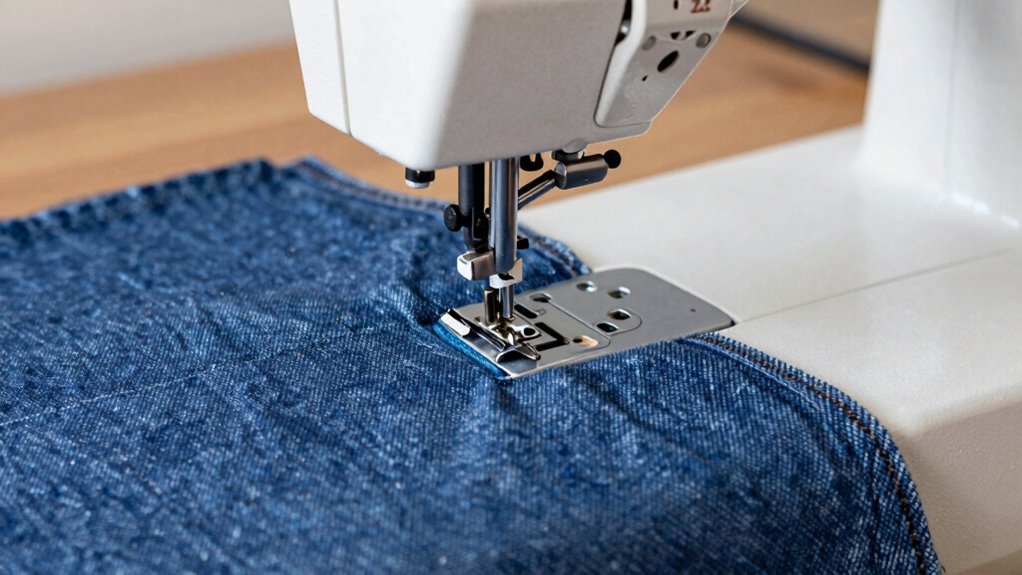

A walking foot sewing machine handles challenging fabrics better because it features a second set of feed dogs that move in sync with the main feed, ensuring even fabric delivery. This design prevents slipping, puckering, and shifting on thick or slippery materials like leather or vinyl. It maintains steady pressure and consistent feeding, making tricky projects easier and producing professional stitches. Keep exploring how proper maintenance and needle choices can maximize its performance even further.

Get your wardrobe favorites delivered free — and shop member deals
- Fast, free delivery on millions of items
- Access to Prime Big Deal Days deals on October 6–7
- Prime Video, Amazon Music and more included
Key Takeaways
- The walking foot’s second set of feed dogs synchronizes with the main feed, ensuring even fabric movement.
- It maintains consistent pressure on thick or textured fabrics, preventing slipping or bunching.
- The mechanism reduces fabric shifting, resulting in fewer skipped stitches and higher seam quality.
- Proper maintenance of the machine and using suitable needles improve performance on tough textiles.
- Walking foot machines are designed to handle multiple layers and slippery materials more effectively than standard machines.
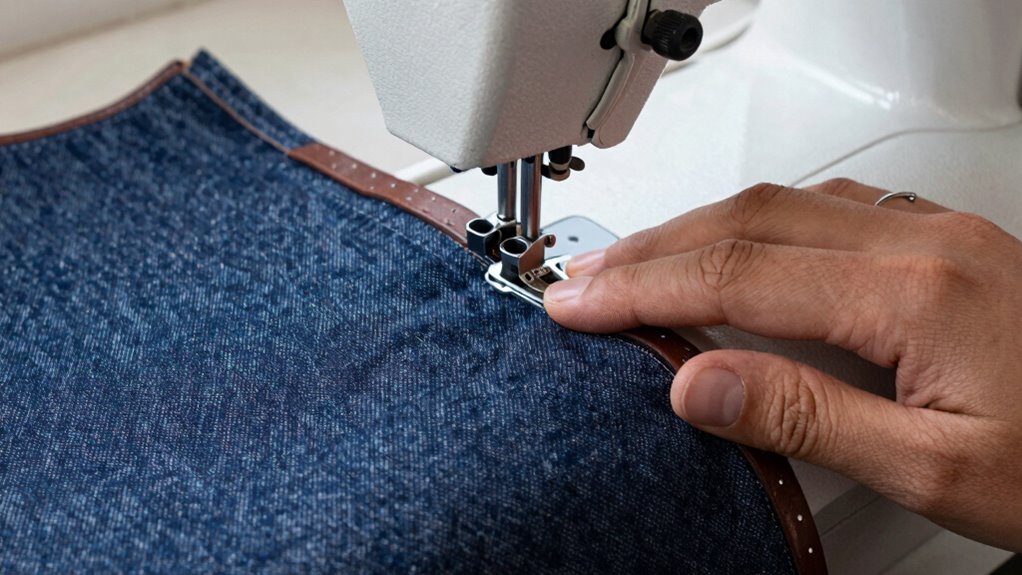
When sewing challenging fabrics like leather, vinyl, or multiple layers, a standard sewing machine can struggle to keep everything aligned and feed smoothly. These fabric types are thick, slippery, or uneven, making it hard for your machine’s regular feed dogs to grip and move the material consistently. That’s where a walking foot sewing machine shines. It features a specially designed presser foot with a second set of feed dogs underneath, which moves in tandem with the machine’s main feed dogs. This synchronized movement helps the fabric advance evenly, preventing shifting or puckering. As a result, you get cleaner, more professional stitches on difficult materials, even if you’re working with multiple layers or textured fabrics.
A walking foot not only improves the quality of your sewing but also reduces the frustration that often comes with handling tricky fabric types. When you’re working with leather or vinyl, for example, a standard presser foot might push the material out of alignment or cause skipped stitches. A walking foot maintains steady pressure and consistent feed, so your fabric stays in position without slipping or bunching. This consistency is essential for sewing seams that are both durable and visually appealing, especially in projects like upholstery or bags where precision and control matter. Plus, a walking foot can handle thicker fabrics that would otherwise jam or strain a regular machine, saving you time and effort. Regular maintenance, including cleaning and oiling your machine, ensures that these features continue to function optimally. Additionally, choosing the right needle type and size for your fabric can significantly improve sewing performance on tough textiles.
Taking care of your walking foot sewing machine involves regular machine maintenance. Since these machines handle tougher fabrics and more demanding sewing tasks, dust, lint, and thread buildup can affect performance. Cleaning and oiling your machine regularly ensures smooth operation and prolongs its lifespan. Checking the machine parts, such as the feed dogs and presser foot, and replacing worn-out needles frequently, especially when working with heavy or abrasive fabrics, is essential. Using high-quality sewing machine oil helps reduce friction and wear on internal components. Proper maintenance not only keeps your machine running efficiently but also helps you achieve consistent results, regardless of the fabric type you’re working with. This way, you avoid unexpected breakdowns and keep your sewing projects on track.
walking foot sewing machine for leather
As an affiliate, we earn on qualifying purchases.
As an affiliate, we earn on qualifying purchases.
Frequently Asked Questions
Can Walking Foot Machines Sew Leather Effectively?
Yes, walking foot machines sew leather effectively, making them ideal for leather craftsmanship. Their design provides sewing precision by evenly feeding thick or tough leather fabrics, preventing slipping or shifting. This enhances stitch quality and durability. You’ll find that a walking foot machine helps you achieve professional results, especially when working with challenging leather materials. Its ability to handle heavy, textured fabrics guarantees your projects look polished and withstand wear over time.
Are Walking Foot Machines Suitable for Quilting Thick Layers?
Yes, walking foot machines are great for quilting thick layers. They handle fabric stretch well, preventing shifting and puckering, which is essential for quilting precision. The walking foot moves in sync with the fabric, ensuring even stitches across multiple layers. This makes it easier to sew through bulky, layered fabrics smoothly. So, if you’re working on complex quilting projects with thick layers, a walking foot machine will give you better control and consistent results.
How Do Walking Foot Machines Compare to Standard Sewing Machines?
Walking foot machines excel over standard sewing machines because they handle thick, challenging fabrics with ease, maintaining consistent thread tension and preventing fabric shifting. You’ll notice they sew at a steadier, controlled sewing speed, which helps in achieving even stitches on tough materials. Their ability to evenly feed multiple layers makes them ideal for quilting and heavy-duty projects, giving you professional results without the hassle of fabric slipping or uneven stitching.
What Maintenance Is Required for Walking Foot Machines?
You need to regularly check and adjust the thread tension to keep your walking foot machine sewing smoothly. Also, clean and replace the needle as needed to prevent skipped stitches and fabric damage. Lubricate moving parts according to the manufacturer’s instructions to guarantee longevity. By staying on top of thread tension and needle maintenance, you’ll keep your machine running efficiently and handle challenging fabrics with ease.
Are Walking Foot Machines Easier for Beginners to Operate?
You might think walking foot machines are complicated, but they’re actually easier for beginners. They help maintain proper thread tension, ensuring consistent stitch quality across challenging fabrics. The foot’s design reduces fabric slipping, making it straightforward to sew thick or multiple layers. With less fuss over fabric slipping or uneven stitches, you’ll find operating a walking foot machine more intuitive, helping you build confidence as you learn sewing basics.
Conclusion
So, if you’re tackling tough fabrics like leather or multiple layers, a walking foot sewing machine is your best bet. It keeps everything moving smoothly, preventing bunching or slipping. Imagine trying to walk on a slippery slope versus a steady staircase—you’ll have better control and results with a walking foot. Don’t let challenging textiles slow you down. With the right machine, you’ll sew confidently and achieve professional-looking stitches every time.
Evergreen bestsellers Picks
bestsellers
As an affiliate, we earn on qualifying purchases.