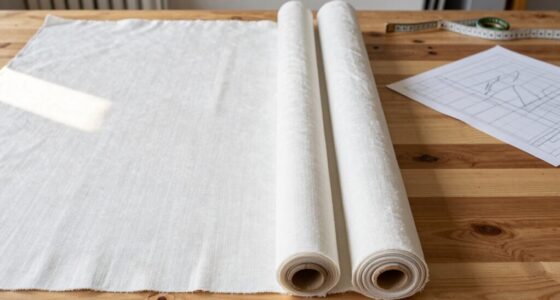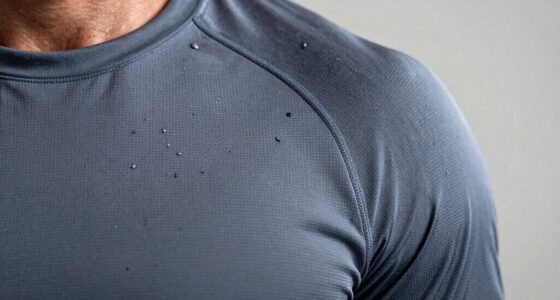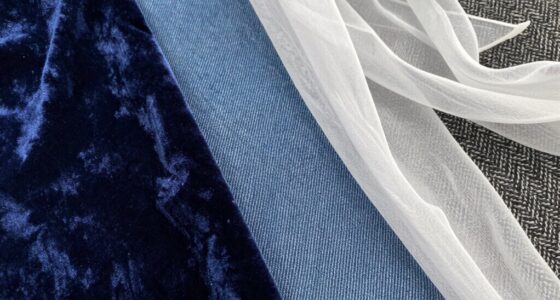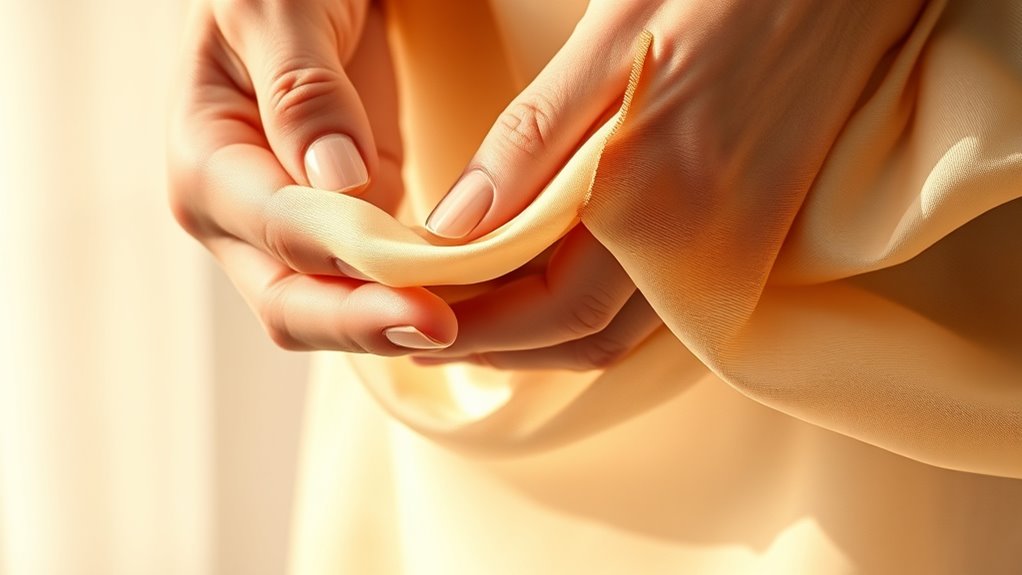

To understand fabric drape, try a simple hands-on test. Suspend the fabric from one end and observe how it falls naturally. Notice if it forms soft, flowing folds or stiff shapes. You can also fold the fabric diagonally and let it hang—watch how the fold behaves. These quick assessments, grounded in fiber types and fabric behavior, give you insight into its fluidity. Keep exploring to discover more ways to master fabric drape.
Key Takeaways
- Suspend fabric from one end and observe how it naturally falls to assess its fluidity.
- Look for smooth, elongated curves indicating a soft, flexible drape versus stiff bunching.
- Fold the fabric diagonally or along the grain, then let it hang to see fold behavior and fabric fluidity.
- Use simple tools like a ruler or tape measure to measure angles and curvature for more precise assessment.
- Recognize that natural fibers like silk and linen generally drape more softly than synthetic or heavy fabrics.
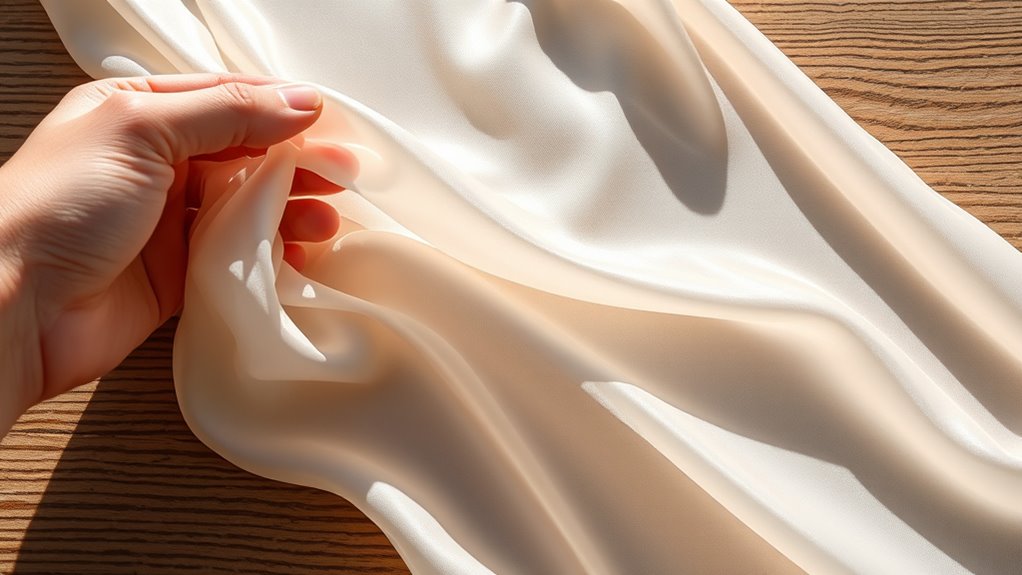
Ever wondered what makes some fabrics flow effortlessly while others appear stiff? The secret lies in their drape, which is influenced by various factors, including fiber types and how you measure that drape. Understanding these elements can help you choose the perfect fabric for your project and even assess its quality with simple tests. Fiber types play a significant role because different fibers have unique properties that impact how fabric hangs and moves. Natural fibers like silk and linen tend to have a soft, fluid drape due to their smooth surface and flexibility. Conversely, fabrics made from polyester or heavy wool might drape more stiffly because of their structure and fiber characteristics. Knowing about fiber types helps you predict how a fabric will behave when worn or used in design.
To truly grasp a fabric’s drape, it’s useful to learn drape measurement techniques. These are straightforward methods you can do yourself to assess how fabric flows and hangs. One common approach involves taking a piece of fabric, about a foot long and wide enough to handle comfortably, and suspending it from one end. As it hangs freely, observe how it forms folds and curves. Does it cascade smoothly, or does it hold its shape sharply? This visual cue reveals whether the fabric has a soft, fluid drape or a more rigid structure. You can also measure the fabric’s drape by pinning one end to a flat surface, allowing the rest to hang naturally, and then using a ruler or tape measure to note the angles at various points. A fabric with a gentle curve and a low angle indicates a supple, flowing drape, while a steeper angle suggests stiffness.
Another simple drape measurement technique involves creating a small fold test. Fold a square or rectangular piece of fabric in half diagonally or along the grain, then let it hang. Pay attention to how the fold behaves—does it fall in a graceful, elongated curve, or does it bunch up and hold a stiff shape? This hands-on test offers quick insight into the fabric’s draping qualities without specialized equipment. Remember, the fiber composition and the way you perform these drape measurement techniques work together to give you a practical understanding of how a fabric will behave in real-world applications. Whether you’re sewing, designing, or just shopping for fabric, these simple assessments can save you time and help you select the right material for your needs. By combining knowledge of fiber types with these easy measurement techniques, you gain a clearer, more confident perspective on fabric drape.

Nsbul Science Curtains, Cartoon Chemical Equation Knowledge Colorful Test Tube Tools Learning Study Window Drapes for Kids Students Bedroom Living Room Classroom Decor, 42" W X 45" L (No Blackout)
Quality Fabric: Made from thick and durable polyester. Comfortable and breathable, , long – lasting materials that resist…
As an affiliate, we earn on qualifying purchases.
As an affiliate, we earn on qualifying purchases.
Frequently Asked Questions
How Does Fabric Drape Affect Garment Fit?
Fabric drape directly impacts how a garment fits and looks on you. When fabric stiffness is high, it tends to hold its shape, creating a structured, formal appearance. Softer fabrics with better drape flow more naturally, offering a relaxed, elegant fit. Your choice of fabric influences the aesthetic appeal and comfort of your garment, so understanding drape helps you select the right fabric for the desired style and fit.
What Types of Fabrics Have the Best Drape?
You’ll find fabrics with the best drape often feature a fiber composition that’s lightweight and flexible, like silk or chiffon. These materials flow smoothly and create elegant silhouettes, enhancing the garment’s aesthetic appeal. Natural fibers tend to drape better than stiff synthetics, giving your clothes a graceful, fluid movement. So, when choosing fabrics, look for those with a good balance of fiber composition that complements your design and adds to the overall look.
Can Drape Testing Predict Fabric Longevity?
They say “look before you leap,” and that’s true for fabric longevity. Drape testing mainly shows how fabric reacts visually and physically, considering fabric stretch and color fastness. While it hints at durability, it can’t fully predict long-term wear or how fabrics age over time. So, don’t rely solely on drape—consider other factors to guarantee your fabric lasts.
How Does Fabric Weight Influence Drape Quality?
Fabric weight notably influences drape quality by affecting fabric stiffness and drape fluidity. Heavier fabrics tend to be stiffer, resulting in less fluid drapes that hold shape more rigidly. Lighter fabrics are more flexible, allowing for softer, more flowing drapes. When you consider fabric weight, you can better predict how the fabric will drape, helping you choose materials that match your desired look and feel for your project.
Is Drape Testing Suitable for All Fabric Types?
Drape testing isn’t a one-size-fits-all magic trick; it’s like trying to fit a square peg into a round hole! Some fabrics, like lightweight silks, showcase breathability and dye absorption beautifully through drape tests, while heavy denim just can’t bend that way. So, you need to take into account fabric type, weight, and properties before testing. Not all fabrics respond equally, making drape testing suitable only for certain materials.

100cm*114cm 100% Silk Fabric Natural White Silk Organza Fabric Gauze Wedding Fashion Lining Material
Material: 100% mulberry silk organza
As an affiliate, we earn on qualifying purchases.
As an affiliate, we earn on qualifying purchases.
Conclusion
Now that you’ve tried this simple test, you see how fabric’s stiffness or fluidity shapes its drape. Some say heavier fabrics always hang better, but it’s really about the interplay of fiber, weight, and weave. So, don’t just guess—explore different textiles yourself. By understanding drape through hands-on experience, you can confidently choose fabrics that match your project’s vision. Trust your senses; they’re your best guide to fabric’s true nature.

Mr. Pen- Sewing Ruler, 3 Pack, 6", 12" & 17", Acrylic Ruler, Quilting Ruler, Cutting Ruler, Acrylic Ruler for Cutting Fabric, Rulers for Quilting and Sewing, Non Slip Quilt Rulers, Sewing Supplies
The set includes 3 rulers with lengths of 6 inches, 12 inches, and 17 inches, catering to a…
As an affiliate, we earn on qualifying purchases.
As an affiliate, we earn on qualifying purchases.

Microscope Accessories Kit – 8X Illumination Foldable Scale, Linen Tester, Fabric Glass, 2 LED Lights & Microscope Slides for Enhanced Viewing & Precision Testing
Experience enhanced visibility with our 8x Magnification Binoculars featuring a 30mm Lens Diameter. Ideal for birdwatching, hiking, and…
As an affiliate, we earn on qualifying purchases.
As an affiliate, we earn on qualifying purchases.