AI and 3D printing are revolutionizing fabrics by allowing you to create highly personalized and customizable textiles tailored to your preferences. AI helps design intricate patterns and responsive features, while 3D printing enables on-demand production of unique fabrics with complex structures. Smart textiles can adapt to your environment or monitor health, making fabrics more functional. To discover how these innovations empower your self-expression and transform textile creativity, keep exploring the possibilities.
Key Takeaways
- AI enables detailed design customization, pattern creation, and responsive features in fabrics, enhancing personalization.
- 3D printing allows on-demand, precise production of complex, bespoke fabric structures, reducing waste.
- Smart textiles incorporate sensors and conductive fibers for environmental responsiveness and health monitoring.
- These technologies support rapid prototyping, intricate designs, and tailored functionalities beyond traditional methods.
- Ethical considerations, including data privacy and sustainability, are essential in developing personalized fabric solutions.
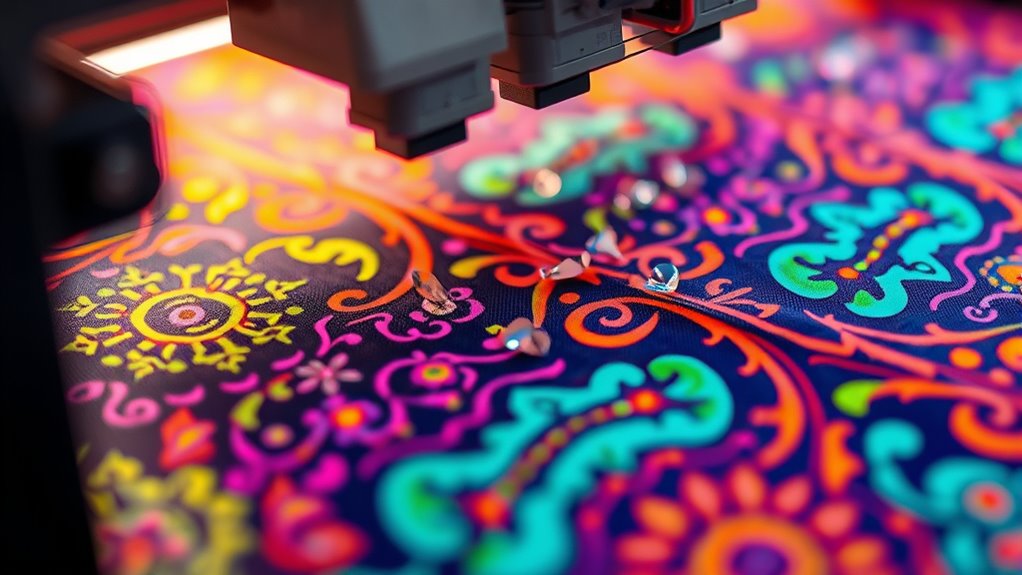
Have you ever wondered why customization and personalization have become essential in today’s digital world? It’s because consumers now crave products that reflect their unique identities, preferences, and lifestyles. In the fabric industry, this shift is driving innovation through technologies like AI, 3D printing, and smart textiles. These advancements allow you to create fabrics tailored specifically to your needs, whether for fashion, sports, or medical applications. Smart textiles, for example, incorporate sensors and conductive fibers that respond to environmental changes or user inputs, enhancing comfort and functionality. Imagine clothing that adjusts to temperature or monitors your health — that’s the power of personalization through smart textiles. But as you explore these innovations, you also need to contemplate ethical considerations. Developing personalized fabrics with AI and smart textiles involves data collection, which raises concerns about privacy and consent. Manufacturers must guarantee that your data is protected and used responsibly, respecting your rights and avoiding exploitation. Ethical considerations also extend to sustainable practices, as the production of customized fabrics can have significant environmental impacts. Using eco-friendly materials and minimizing waste during 3D printing processes are vital steps to make sure these advancements benefit both you and the planet. When it comes to 3D printing, you have the advantage of creating complex, customized fabric structures on demand, reducing overproduction and waste. This technology allows for rapid prototyping and bespoke solutions, giving you a level of personalization that traditional fabric manufacturing couldn’t match. By integrating AI, you can design fabrics with intricate patterns or responsive features that perfectly suit your style or functional needs. Smart textiles, combined with 3D printing and AI, open a new domain of possibilities for customization, making your clothing or textiles more than just a product — they become an extension of your personality. As you navigate this landscape, it’s important to stay aware of the ethical implications, making sure that innovation doesn’t come at the expense of privacy, sustainability, or social responsibility. Ultimately, these technologies empower you to have more control over the fabrics you use, blending creativity with technology to produce truly personalized items. Whether for everyday wear, sports gear, or medical textiles, the future of customization in fabrics is shaping up to be more inclusive, sustainable, and aligned with individual values, giving you the ability to stand out and express yourself authentically.

Daniel Smart Men's Ridding Vest – Textile Vest with Leather Detailing Motorcycle Vest with Inside Pockets & Mandarin Collar
- Premium Quality Material: Textile with leather detailing and lining
- Stylish Design: Black textile and leather combo for a trendy look
- Functional Storage: Inside pockets with holsters and snaps
As an affiliate, we earn on qualifying purchases.
As an affiliate, we earn on qualifying purchases.
Frequently Asked Questions
How Do AI Algorithms Select Fabric Patterns for Individual Preferences?
AI algorithms select fabric patterns for your preferences by analyzing your past choices and behaviors. They use pattern selection techniques to identify styles, colors, and designs you favor. The system then matches these insights with a vast database of fabric options, ensuring the final pattern aligns with your unique tastes. This personalized approach makes it easier to create fabrics that truly reflect your individual style and preferences.
What Safety Standards Exist for Ai-Designed Personalized Textiles?
You should guarantee AI-designed personalized textiles meet safety standards by verifying they comply with regulatory compliance guidelines, like OEKO-TEX or ISO standards. Protect your data privacy by using secure systems that prevent unauthorized access to personal preferences and measurements. Regular testing and certification help verify safety, minimize risks, and build trust with customers. Staying updated on evolving standards guarantees your textiles remain safe, compliant, and respectful of users’ privacy.
Can 3D Printing Produce Fabrics With Integrated Electronic Components?
Imagine weaving a fabric that’s a living circuit, and yes, 3D printing can produce such textiles with embedded electronics. You can incorporate conductive fibers directly into the structure, creating smart fabrics that react or connect seamlessly. This technology enables you to embed sensors, LEDs, or other electronic components into the fabric during the printing process, transforming ordinary textiles into interactive, high-tech masterpieces that adapt to your needs.
How Does AI Ensure Ethical Sourcing in Personalized Fabric Production?
AI guarantees ethical sourcing in personalized fabric production by analyzing supply chain transparency and monitoring ethical labor practices. It tracks raw material origins, verifies fair wages, and detects potential violations. You can rely on AI to identify unethical suppliers and recommend alternatives, helping you make responsible choices. This way, AI promotes sustainable practices and ensures your fabrics are produced ethically, aligning with your values and consumer trust.
What Are the Environmental Impacts of Ai-Driven Fabric Customization?
Think of AI-driven fabric customization as a gardener pruning excess to promote healthy growth. It can markedly reduce waste by optimizing designs and sourcing sustainable materials. This process minimizes environmental impacts, conserving resources and lowering pollution. By focusing on waste reduction and eco-friendly materials, AI helps create a more sustainable textile industry, ensuring your choices support both innovation and environmental health.
Conclusion
As you explore the world of AI and 3D printing in fabrics, you’re gently guided toward a future where your preferences subtly shape your wardrobe. Instead of standard options, you’ll find comfort in personalized designs that whisper your individuality. This innovative blend softly transforms the textile landscape, making it more welcoming and uniquely yours. Embrace these gentle changes, and enjoy the quiet revolution that makes your style truly a reflection of you.