TL;DR
Harper’s Bazaar has published a styling guide built around seven denim looks associated with the fall/winter 2026 runways. Its suggestions pair dark indigo, slim and slouchy jeans, utility styles, denim dresses and skirts, and colorful jeans with contrasting layers and accessories.
Harper’s Bazaar has published a fall 2026 denim styling guide organized around seven runway-linked looks, including dark indigo jeans, slimmer cuts, utility denim, slouchy jeans, knee- to ankle-length skirts, denim dresses and colorful jeans. The report translates those trends into outfit suggestions, offering readers practical ways to update denim without treating any one silhouette as mandatory.
The report’s central styling idea is to use contrast in texture, shape and formality to make familiar denim feel current. For dark indigo, it recommends a denim-on-denim outfit, finished with low-heeled booties, hammered gold-tone earrings and an oversized cashmere peacoat. The darker wash, the magazine suggests, can support a more polished combination.
For a denim dress, Harper’s Bazaar proposes a longline neutral cardigan and loafers, with a large everyday bag. Slim jeans get a close-fitting short-sleeve knit, calf-hair mules and a croc-embossed bag; a bright enamel bracelet supplies a small color accent. These are editorial outfit ideas, not requirements for wearing the pieces.
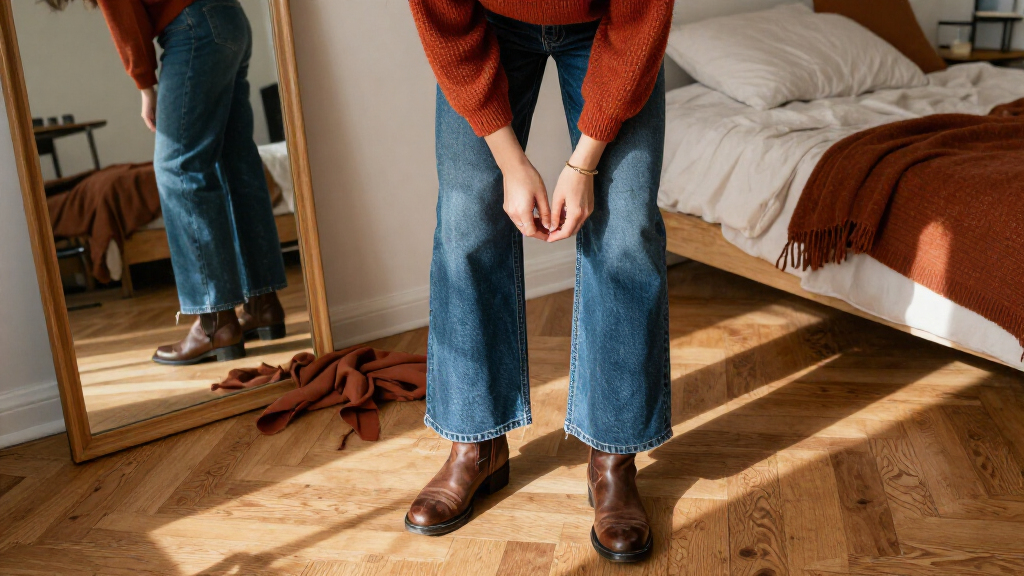
The remaining suggestions cover different preferences and occasions. Utility jeans can be paired with a cropped leather jacket for a sharper look, or a quarter-zip, white T-shirt and white scrunch tennis shoes for a sporty one. Slouchy jeans are styled with a cognac suede wrap coat, striped T-shirt and textured red flats. For denim skirts, the guide points to a preppy mix of tweed blazer, sweatshirt, plaid button-up and suede boots. With red jeans, it recommends limiting the palette to a gray henley, subdued purple belt and denim jacket.
Seven Ways to Refresh Denim
The guide matters as a practical translation of runway styling for shoppers deciding how to wear denim in the coming season. Rather than recommending a full wardrobe change, its combinations show how a familiar pair of jeans, skirt or dress can be restyled with outerwear, knitwear, shoes and accessories.
It also presents fall denim as varied rather than governed by one cut. The report discusses both slim and slouchy silhouettes, alongside utility designs, skirts and dresses. That range gives readers options based on personal taste and what they already own, while the emphasis on layering offers ways to adapt lighter denim pieces as temperatures change.
The advice is especially specific about color and texture: red denim is balanced with a small palette, dark indigo is paired with denim and cashmere, and relaxed jeans are dressed up with suede. Those choices are editorial recommendations, not evidence that consumers must replace existing clothes to follow a trend.
As an affiliate, we earn on qualifying purchases.
From Runway Styles to Outfits
Harper’s Bazaar frames the article around fall/winter 2026 runway trends and the recurring question of how to make runway styling wearable. It names Khaite and Valentino in connection with slimmer silhouettes, Zimmermann as a reference for loafers with a denim dress, and Dior in the denim-skirt discussion. It also links renewed interest in colorful denim to Dario Vitale’s single runway collection for Versace.
The report refers to skirt shapes that reach the knee and can extend to the ankle, rather than focusing on very short styles. It also says heavier outerwear seen for spring/summer 2027 supports reworking summer clothes for early fall. The article is a fashion-editorial guide, not a market survey or a claim that every designer or retailer will adopt these looks.
What the Guide Does Not Establish
The article offers styling recommendations, not sales or trend data. It does not quantify how common each look is across the full fall/winter 2026 collections, provide consumer research, or establish that these styles will be widely available in stores. Its references to designers and runways support the editorial discussion but do not, on their own, show how shoppers will respond.
Individual product availability, prices and sizing are not established by the supplied report text. The page also discloses that Harper’s Bazaar may earn commission on some products selected for purchase. Readers should treat the suggested pairings as inspiration and check retailer details before buying.
How to Use the Styling Ideas
The next step for readers is to adapt the suggestions to their wardrobes and the weather: try a cardigan or coat over a denim dress, use shoes to shift jeans from casual to polished, or build a restrained color palette around a brighter pair. The source does not announce a later report or a publication schedule for additional trend updates, so no specific follow-up is confirmed.
As fall 2026 collections and retail offerings develop, shoppers can compare what is available with the guide’s runway references. Before purchasing, check each retailer’s fabric, care, price and fit information; sizing varies by brand, and the article’s outfit suggestions do not guarantee a particular fit or availability.
Key Questions
Which denim looks does the fall 2026 guide cover?
Harper’s Bazaar covers dark indigo, denim dresses, slim jeans, utility jeans, slouchy jeans, denim skirts and colorful jeans.
How does the guide suggest styling slouchy jeans?
It pairs slouchy jeans with a cognac suede wrap coat, a striped T-shirt and textured red flats for a more dressed-up take on a relaxed shape.
How can colorful denim be styled?
The report suggests keeping the outfit to a handful of colors. Its example combines red denim with a gray henley, a subdued purple belt and a denim jacket.
Does the report say one jean silhouette is replacing the others?
No. It discusses both slimmer and slouchier jeans as runway-linked options and provides styling ideas for each. It does not establish that one cut will replace the other in the wider market.
Are the suggested outfits requirements for following the trends?
No. They are editorial styling suggestions. Readers can adapt them to personal preference, existing clothes, budget and local weather; sizing and availability vary by brand and retailer.
Source: rss