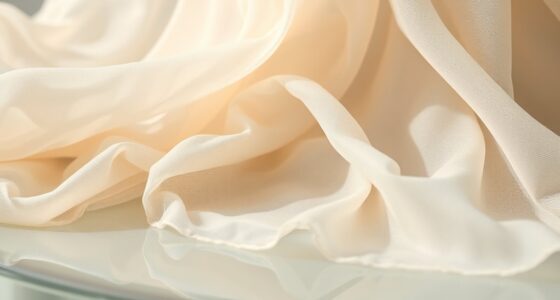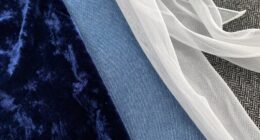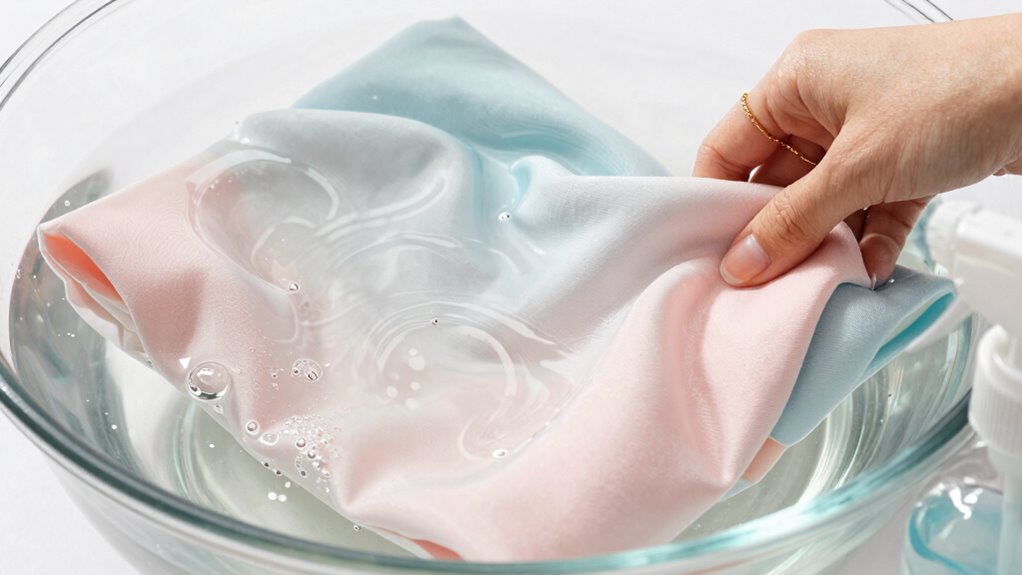
To prewash fabric the right way before sewing, start by checking the care label and washing it in the same way your finished project will be cleaned. Test for color bleeding by soaking a small piece in cold water, and pre-shrink natural fibers by washing them as you plan to use them, whether cold or warm. Handle delicate fabrics gently, and pay attention to fabric treatments. Knowing these tips helps guarantee your project stays perfect, so keep going to learn more.
Key Takeaways
- Wash fabric in the same method and water temperature intended for the finished project.
- Test for color bleeding by soaking a small piece in cold water before washing.
- Pre-shrink fabric by washing it as you plan to in your project to prevent future shape issues.
- Use gentle detergents and avoid harsh chemicals, especially for delicate or treated fabrics.
- Always follow the fabric’s care label instructions for optimal prewashing results.

Prewashing fabric is an indispensable step to guarantee your finished project looks great and lasts longer. It helps you address common issues like fabric shrinkage and color bleeding before you start sewing, saving you from surprises after your project is complete. When you prewash fabric, you’re fundamentally testing how it reacts to water and detergent, which allows you to make adjustments and avoid mishaps. Shrinkage can be a big concern, especially with natural fibers like cotton, linen, or wool, which tend to shrink when washed for the first time. If you skip prewashing, you risk your finished item shrinking unevenly or losing its shape, which can ruin the look and fit of your project. To prevent this, wash the fabric exactly as you plan to do with the finished product—whether that’s in cold water, warm water, or with specific detergents. This way, you’ll know whether you need to adjust your pattern size or pre-shrink the fabric more thoroughly.
Prewashing fabric prevents shrinkage and ensures your project retains its shape and fit.
Color bleeding is another issue that prewashing can help you avoid. Some fabrics, especially those with vibrant dyes, can bleed color during washing, staining other fabrics or your project. To test for color bleeding, soak a small piece of fabric in cold water for a few minutes and then check if any dye leaches out. If you notice color transfer, you might want to wash the fabric separately or use a color-safe detergent. This step is essential for preventing ruined projects or unexpected color runs that can be difficult to fix later. When prewashing, always read the fabric’s care instructions—some fabrics require gentle washing or specific detergents to maintain their color and integrity. Understanding how fabrics react to water and detergent is crucial for successful prewashing. Additionally, considering the fiber content can help you determine the best washing method to minimize damage. Recognizing fabric durability can guide you on whether to hand wash or machine wash to preserve the fabric’s quality. Knowing your fabric’s finish and treatment can also influence how you approach prewashing to achieve the best results.

Jacquard Synthrapol Prewash and After Wash Liquid detergent for Dyed or Painted Fabrics, Industrial Strength, pH Neutral, 8 fl oz
Professional-Grade Textile Detergent – Jacquard Synthrapol detergent is specially formulated for pre-washing and post-dyeing, ensuring that fabrics are…
As an affiliate, we earn on qualifying purchases.
As an affiliate, we earn on qualifying purchases.
Frequently Asked Questions
How Much Fabric Should I Prewash at Once?
You should prewash enough fabric at once to avoid multiple rounds of dyeing or shrinking, typically 2 to 3 yards. This helps guarantee uniform fabric dyeing and consistent prewash techniques. Prewashing larger quantities might be difficult to manage, but it’s essential for avoiding surprises later. Always wash similar fabrics together, and use warm water with mild detergent to achieve the best results for shrinkage and dyeing.
Can I Prewash Delicate Fabrics in a Washing Machine?
Yes, you can prewash delicate fabrics in a washing machine, but you should use a gentle cycle and cold water. This helps prevent color bleeding and fabric stiffness. Place delicate items in a mesh bag for added protection. Avoid harsh detergents, and skip the spin cycle if possible. Always check the fabric care label first, and do a spot test if you’re unsure about colorfastness.
How Do I Prevent Fabric Shrinkage During Prewashing?
To prevent fabric shrinkage during prewashing, use cold water and a gentle cycle. Add a fabric softening agent to minimize stiffness and help maintain fabric quality. Always wash similar colors together to prevent color bleeding, which can cause uneven shrinking. Avoid high heat in the dryer; instead, air dry or tumble dry on low heat, ensuring your fabric stays true to size and color.
What Temperature Is Best for Prewashing Different Fabrics?
You should prewash different fabric types at their recommended temperatures to prevent damage. For cotton and linen, use warm or hot water for thorough cleaning and shrinkage removal. Delicate fabrics like silk or rayon need cold water to avoid damage. Prewash benefits include removing excess dye, dirt, and shrinkage, ensuring your final project fits perfectly. Always check the fabric’s care label for specific temperature recommendations to keep your material in top shape.
Should I Prewash Fabric Before or After Cutting?
You should prewash fabric before cutting to guarantee better fabric preservation and prevent dye bleeding later. Prewashing reduces shrinkage, warping, and color transfer, which can affect your finished project. By washing beforehand, you avoid surprises after sewing, like fabric distortion or dye bleeding that might ruin your work. It’s a simple step that helps you achieve cleaner, more professional results and keeps your fabric looking fresh and vibrant.
color bleeding test fabric kit
As an affiliate, we earn on qualifying purchases.
As an affiliate, we earn on qualifying purchases.
Conclusion
Prewashing fabric is your secret weapon for flawless sewing projects, preventing surprises like shrinking or color bleeding. When you follow these simple steps, you’re fundamentally giving your fabric a fresh start, ensuring it behaves exactly as you want. Think of it as taming a wild beast before the real adventure begins—your sewing journey will be smoother than ever, and your finished piece will stand the test of time. Just a little prep goes a long way to sewing perfection!

Non-ionic Laundry Stain Removal Emulsifier, Clothing Emulsifier Stain Remover, for Clothes, Shoes, And Upholstery, Gentle Pre-Wash Spot Cleaner for Home, Travel, And Everyday Fabric Care (2PCS)
Deep Penetrating Stain Removal: Gently lifts and breaks down stubborn grease, sweat, sebum, and food residue from fabric…
As an affiliate, we earn on qualifying purchases.
As an affiliate, we earn on qualifying purchases.

Portable Mini Washing Machine, Rechargeable Cordless Underwear Washer, Ultrasonic Travel Laundry Cup for Bras/Underwear/Socks, Compact Washer for Delicates (White)
Portable & Space-Saving: Mini, lightweight design stores easily in small spaces; great for apartments, dorms, hotels, travel, and…
As an affiliate, we earn on qualifying purchases.
As an affiliate, we earn on qualifying purchases.