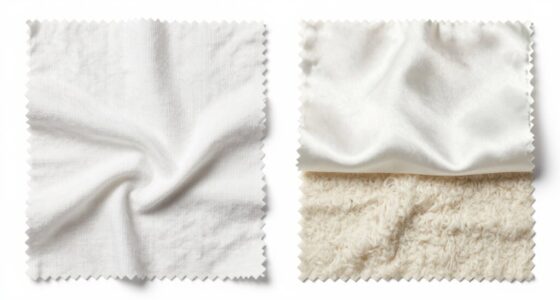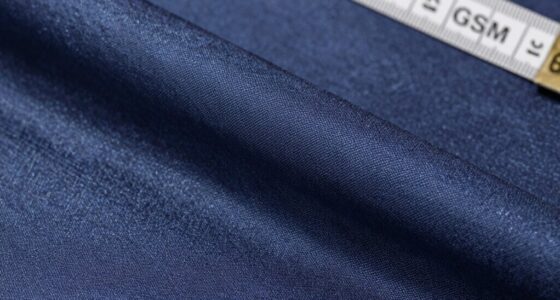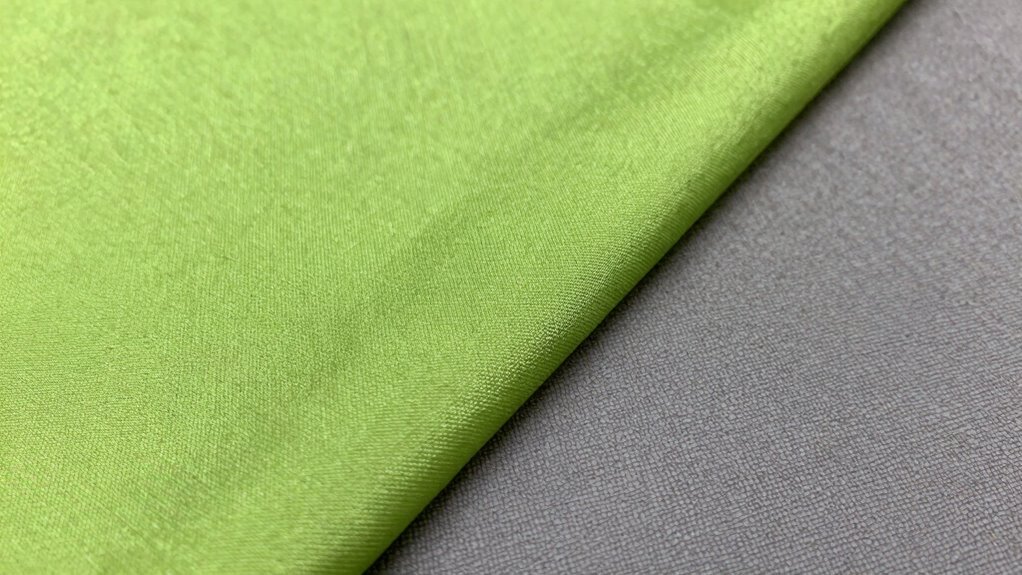
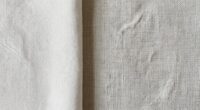
To tell the face side from the wrong side of fabric, look for a smoother, more polished surface on the face side, which often has a slight sheen and vibrant, sharp patterns. The wrong side usually feels rougher or duller, with less vivid colors and a matte finish. The weave or stitches may also be more visible on the wrong side. If you keep examining, you’ll uncover more tips to identify each side with confidence.
Key Takeaways
- The face side is typically smoother, polished, and displays more vivid, detailed patterns.
- The wrong side often feels rougher and shows the back of stitches or less defined patterns.
- Color saturation and dye distribution are more even and vibrant on the face side.
- Pattern clarity and sharpness are better on the face side, with intricate details more visible.
- The weave or knit structure appears more prominent and visible on the wrong side.
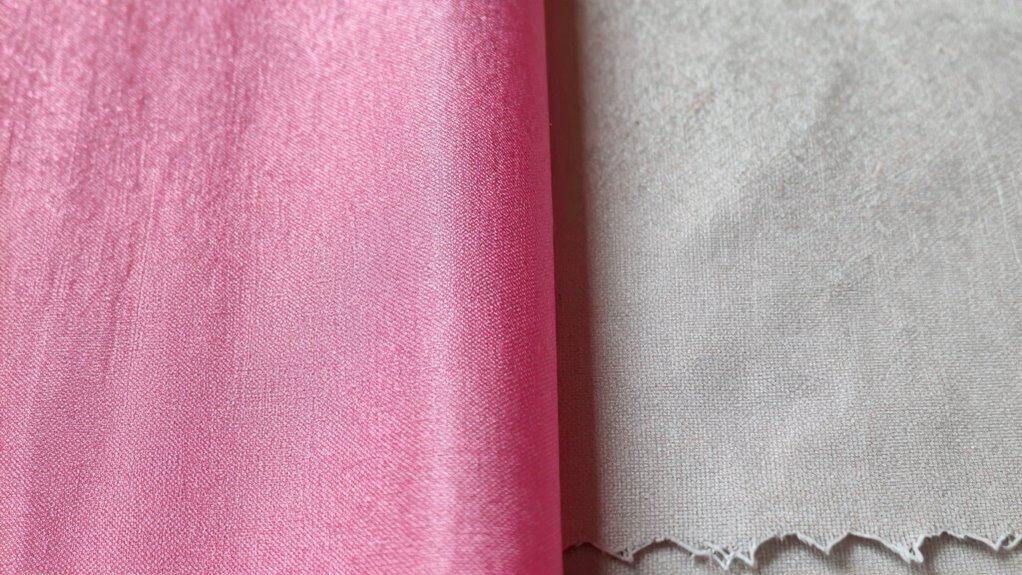
Ever wondered how to tell the difference between the face side and the wrong side of fabric? It’s a common question, especially if you’re new to sewing, fabric dyeing, or working with textiles. Recognizing the right side is essential because it affects how your finished project looks. The face side is typically the side meant to be visible, often featuring the most appealing appearance. The wrong side, on the other hand, is usually less refined, sometimes showing the back of the textile weave or less vibrant colors. Understanding these differences starts with examining the fabric’s surface and its production details.
One of the easiest indicators is to look at the fabric’s surface texture. The face side often has a smoother, more polished look, especially if the fabric has been carefully finished. For textiles with intricate weave patterns, such as jacquard or brocade, the design is usually more prominent on the face side. This is the side where the pattern appears more vivid and detailed, thanks to the way the textile weave patterns are created during manufacturing. Conversely, the wrong side might reveal the underlying structure of the weave, showing the loose or less neat threads, or a more muted color palette. If you’re working with fabric that has been fabric dyed, the face side will typically display the most saturated, evenly distributed dye, while the wrong side may have a lighter, uneven coloration.
The face side of fabric is smoother, more polished, and often shows a more vivid, detailed pattern.
In some fabrics, the difference can be subtle, requiring you to feel the texture. The face side might be softer or have a slight sheen, especially with fabrics like silk or satin. The wrong side might feel rougher or duller because it’s often the side not intended for display. When dealing with textile weave patterns, the pattern’s visibility can also tell you which side is which. The detailed motifs or the pattern’s design tend to be more sharply defined on the face side, while the wrong side often shows the back of the stitches or the reverse of the pattern. Additionally, understanding the fabric construction can help distinguish the sides more easily, as the weave or knit structure may be more apparent on the wrong side. Recognizing the manufacturing process involved in creating the fabric can also give clues about which side is intended for display. For example, some fabrics are intentionally woven with a different texture or appearance on each side, which is often highlighted during the textile finishing process.
If you’re unsure, try holding the fabric up to the light. Sometimes, the face side will have a more finished, polished appearance, while the wrong side might look more matte or show the technical aspects of the weave. When applying fabric dyeing techniques, keep in mind that dye often penetrates fully into the fabric, but the look on the face side remains more vibrant and consistent. In addition, examining the weave pattern can often reveal which side is meant to be visible, as the pattern’s clarity is usually sharper on the face side. Recognizing these differences makes your sewing projects look more professional, and helps you handle fabrics with confidence from the start.
fabric face side vs wrong side guide
As an affiliate, we earn on qualifying purchases.
As an affiliate, we earn on qualifying purchases.
Frequently Asked Questions
Can the Face Side Vary Between Different Fabric Types?
Yes, the face side can vary between fabric types. For example, woven fabrics often have a smoother, more polished face with consistent color and texture, while knits may have a softer, more textured surface. You can tell the difference by examining the fabric’s texture and color consistency, as the face side usually shows the best finish and most vibrant color. Each fabric type has its own typical appearance for the face side.
Do Fabric Finishes Affect Which Side Is the Face?
You might notice that fabric finishes can influence which side is the face, especially with fabrics that have a sheen or a textured surface. The face side often has a smoother, more polished look, while seam allowances reveal the fabric’s backside. When fabric finishes like coatings or treatments are applied, they can enhance the sheen on the face side, making it easier to identify, even at the edges or in seam allowances.
Is the Wrong Side Always Rougher or Duller?
The wrong side isn’t always rougher or duller, but often it feels different due to fiber texture and surface sheen. You might notice a duller appearance or less smooth surface, especially with fabrics like silk or satin. However, some fabrics, like quilting cotton, have similar textures on both sides. Check fiber texture closely; the wrong side can be slightly fuzzy or matte, helping you identify it easily.
Can Lighting Change the Perceived Face or Wrong Side?
Ironically, lighting can indeed fool you into seeing the wrong side as the face, thanks to a clever lighting illusion. Bright lighting often enhances fabric sheen, making the wrong side appear shiny and more like the face side. Conversely, poor lighting can dull the fabric’s natural luster, hiding the sheen and confusing you. So, always check under different lighting to truly identify the fabric’s face side.
How Do I Identify the Face Side on Patterned Fabrics?
To identify the face side of patterned fabrics, look closely at the fabric’s texture and pattern visibility. The face side usually has a clearer, more defined pattern with vibrant colors, while the wrong side may appear duller or less detailed. Feel the fabric’s surface—if it’s smoother or more polished, that’s likely the face. Checking the pattern’s sharpness and how the fabric feels helps you confidently distinguish the right side from the wrong side.
Conclusion
Now that you can tell the face side from the wrong side, you’re like a skilled navigator steering through fabric’s secret waters. Remember, the face side shines like a sunlit horizon, while the wrong side is the quiet moon behind the scenes. With this knowledge, you hold the key to revealing your fabric’s true story, turning each project into a voyage of discovery. Embrace these clues, and let your creativity sail smoothly across your fabric’s uncharted seas.