Pattern-making rulers are crucial tools for precise fabric design. They come in clear acrylic or plastic for easy visibility, allowing you to see fabric and markings clearly. Metal rulers offer added stability and resist warping, especially with thicker fabrics. Features like grid lines and curves help you draft accurate shapes and seam allowances. Proper handling and understanding material properties guarantee cleaner lines and better results. Keep exploring to learn more about choosing and using these indispensable drafting tools effectively.
Key Takeaways
- Transparent rulers enable precise fabric alignment and clear visibility of markings during pattern drafting.
- Metal rulers offer stability and resistance to warping, especially with thicker fabrics or multiple layers.
- Accurate grid lines and measurement increments on rulers ensure consistent seam allowances and complex shape accuracy.
- Proper handling and understanding of material properties maintain ruler stability and drafting precision.
- Additional features like detailed markings enhance accuracy and reduce pattern creation errors.
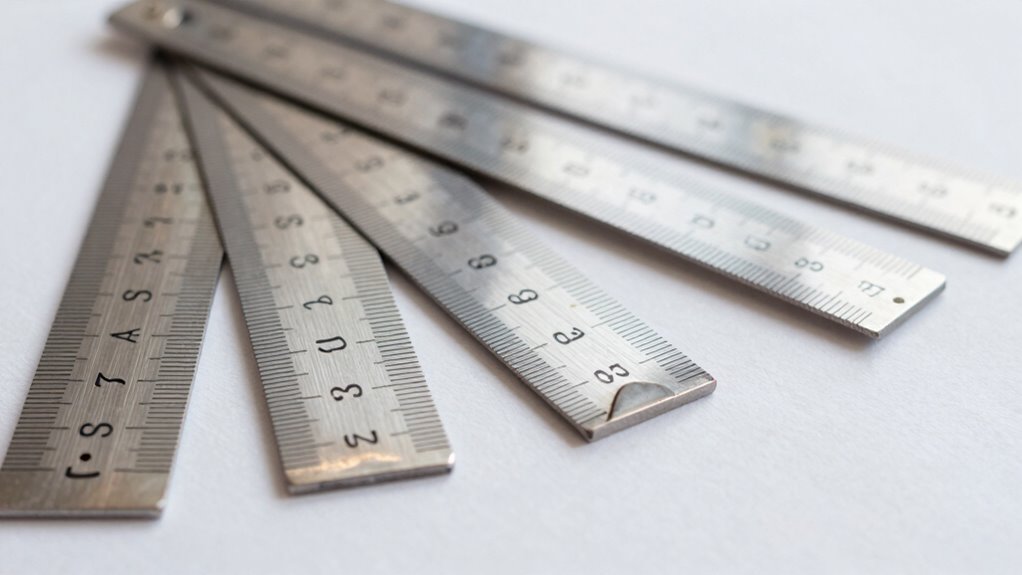
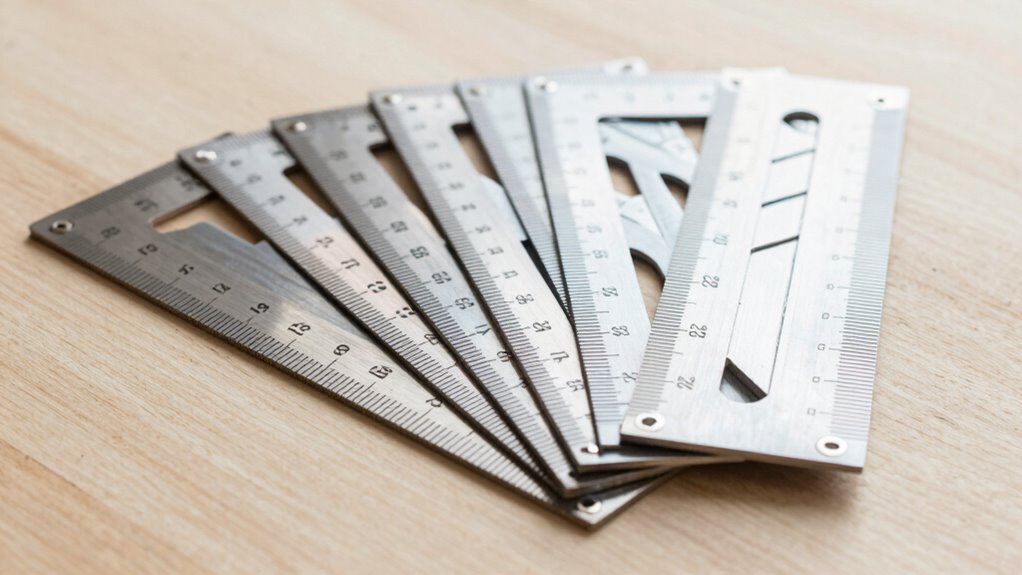
Most pattern-making rulers are made from clear acrylic or plastic, which allows you to see your fabric and markings clearly. The transparency helps you position lines precisely without guesswork, especially when aligning patterns or marking seam allowances. Metal rulers, often made from stainless steel, are another popular choice because they are sturdy, durable, and resistant to warping over time. These materials are especially advantageous when working with thicker fabrics or multiple layers, as they provide a stable guide that won’t bend or shift easily. The choice of ruler material can influence your ability to keep fabric stable during the drafting process, so consider the type of fabric you’re working with when selecting your tools.
In addition to material, the design and markings on your ruler matter. Many pattern rulers feature grid lines, curves, and measurement increments that help you draft complex shapes with accuracy. When using these rulers, you can achieve cleaner lines and more consistent seam allowances, which directly impacts fabric stability during sewing. Precise markings also help prevent errors that might cause fabric distortion or misalignment later on, ensuring your finished project maintains its intended shape. Proper handling techniques, such as applying gentle pressure and keeping the ruler flush against your fabric, are essential for maintaining accuracy and stability during drafting. Additionally, understanding the material properties of your ruler can help you select the best tool for different fabric types and project needs, ultimately leading to better drafting results. Using the right measurement system on your ruler can also improve precision and reduce errors in your pattern creation process. Furthermore, choosing rulers with clear measurement markings can enhance accuracy and ease of use during complex pattern drafting. Being aware of measurement increments can also help you achieve more detailed and precise markings for intricate designs.

Fiskars 3" x 18" Acrylic Sewing & Quilting Ruler with Gridlines, Clear
- SEWING AND QUILTING RULER: Large acrylic ruler for precise…
- PRECISION ART SUPPLIES: Ideal for measuring and making…
- LONG LASTING AND RELIABLE: Thick acrylic material for lasting…
As an affiliate, we earn on qualifying purchases.
As an affiliate, we earn on qualifying purchases.
Frequently Asked Questions
How Do I Choose the Right Ruler for My Project?
To choose the right ruler for your project, consider your fabric weight and the ruler’s calibration. For lightweight fabrics, opt for a smaller, precise ruler to handle delicate lines. Heavier fabrics need a sturdy, longer ruler for accuracy. Confirm the ruler’s calibration matches your measurements—clear, easy-to-read markings help prevent errors. Selecting the right ruler ensures cleaner lines and better drafting results tailored to your fabric type.
What Materials Are Best for Pattern-Making Rulers?
Think of your ruler as a trusty compass guiding your creative voyage. The best materials are transparent acrylic or clear plastic, allowing you to see your fabric beneath. Choose rulers with appropriate thickness to match your fabric compatibility—thicker for sturdier fabrics, thinner for delicate materials. These materials guarantee precision, durability, and ease of use, helping your patterns take shape smoothly like a master artisan crafting their masterpiece.
Can Pattern Rulers Be Used for Digital Drafting?
Yes, pattern rulers can be used for digital drafting, especially if they have digital compatibility features. Many rulers now come with software integration options, allowing you to scan or connect directly to design programs. This makes it easier to transfer measurements accurately and streamline your workflow. Just make certain your rulers are compatible with your software, and you’ll enjoy precise, efficient digital pattern-making.
How Do I Maintain and Clean My Pattern Rulers?
Think of your pattern rulers as the backbone of your drafting, needing care to stay precise. To maintain them, regularly clean with a soft, damp cloth to remove dust and ink, avoiding harsh chemicals. Check ruler calibration periodically to guarantee accuracy. Store your rulers flat or upright in a dedicated drawer, using protective sleeves if needed. Proper cleaning and storage keep your rulers reliable, helping your designs stay sharp and professional.
Are There Specific Rulers for Different Fabric Types?
Yes, there are specific rulers for different fabric types. For example, rulers with flexible or curved edges work well for fabrics with stretch, allowing you to follow the fabric’s natural grain and avoid distortion. Look for rulers with clear, precise markings tailored to your fabric’s needs. Using the right ruler guarantees accurate measurements, especially when considering fabric stretch, and helps you cut with confidence and precision.
Conclusion
Now that you understand the power of pattern-making rulers, your drafting skills are about to reach new heights. But there’s one secret tool that can elevate your work even further—are you ready to discover it? Stay tuned, because once you unveil this hidden gem, your patterns will transform from good to extraordinary. The next step could change everything—are you prepared to take it? The future of your designs awaits, just beyond the horizon.