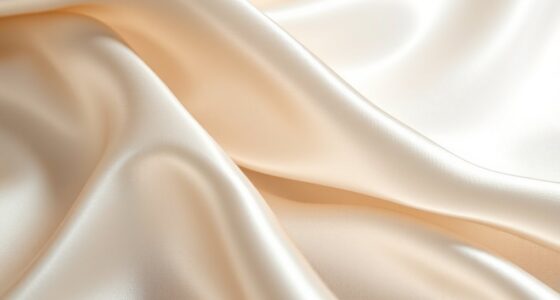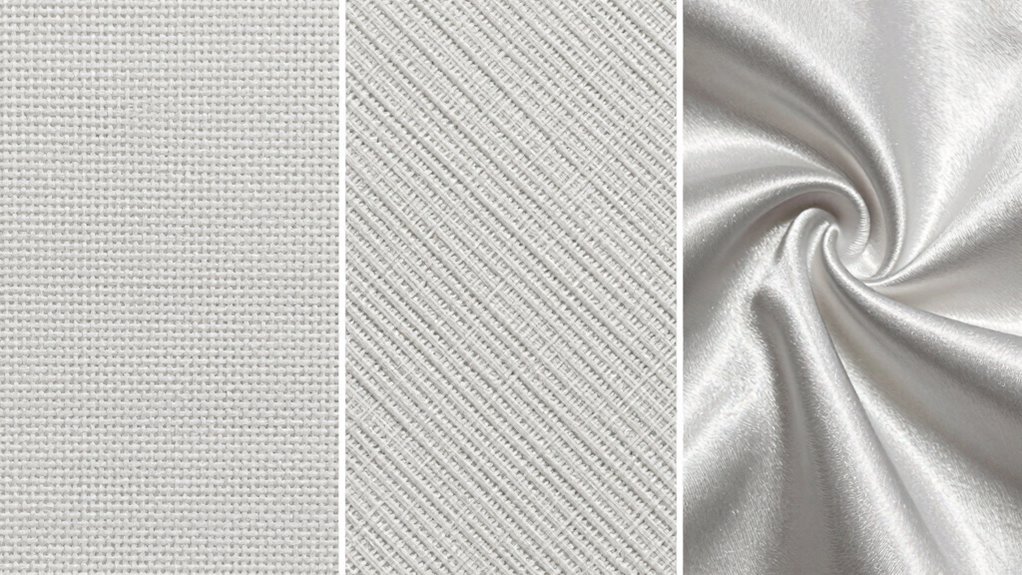
Plain weave is the simplest, with threads crossing alternately for a durable, tightly woven fabric, perfect for everyday use. Twill has a diagonal pattern, making it stronger, wrinkle-resistant, and great for denim or chinos. Satin is smooth and shiny, offering a luxurious feel but less durability, ideal for elegant garments. Understanding these differences helps you choose the right fabric for your project’s needs—keep exploring to learn more about each!

Get your wardrobe favorites delivered free — and shop member deals
- Fast, free delivery on millions of items
- Access to Prime Big Deal Days deals on October 6–7
- Prime Video, Amazon Music and more included
Key Takeaways
- Plain weave is a simple, durable fabric with a tight crisscross pattern, ideal for long-lasting applications.
- Twill features diagonal ridges, offering increased strength and wrinkle resistance compared to plain weave.
- Satin has a smooth, glossy surface with floating threads, providing a luxurious feel but less durability.
- Plain weave dyes evenly and maintains vibrant colors, while twill holds deep hues and resists fading.
- Satin is suited for elegant, high-end items, whereas plain weave and twill are better for everyday, functional fabrics.

When choosing fabrics for your projects, understanding the differences between plain weave, twill, and satin weave is essential. Each weave type influences how the fabric performs regarding durability and color retention, which are vital factors depending on your intended use. Plain weave is the most basic and tightly woven structure, where the weft and warp threads cross alternately, creating a simple crisscross pattern. This tight interlacing makes the fabric quite durable, able to withstand daily wear and tear better than more delicate weaves. Because the threads are closely packed, colors tend to stay vibrant over time, maintaining their brightness even after multiple washes. If you’re looking for a fabric that lasts long and keeps its hue, plain weave is a reliable choice. Additionally, the simplicity of plain weave often makes it easier to dye evenly, enhancing color retention.
Twill weave introduces a diagonal pattern to the fabric, achieved by passing the weft thread over one or more warp threads before going under two or more, creating a distinctive diagonal line. This structure makes twill fabrics exceptionally strong and resistant to wrinkles, which is advantageous for garments or items that require frequent use. Regarding fabric durability, twill often surpasses plain weave because the diagonal pattern distributes stress more evenly across the fabric. When it comes to color retention, twill fabrics tend to hold dye well, resulting in rich, deep hues that resist fading, especially in materials like denim or chino. The diagonal weave also lends a slightly textured surface, giving your project a more interesting visual and tactile appeal without sacrificing longevity. Furthermore, the durability of twill makes it suitable for long-lasting applications, ensuring it maintains its integrity over time.
Satin weave is characterized by its smooth, glossy surface, achieved by floating the warp or weft threads over multiple threads before interlacing. This creates a luxurious, shiny appearance that’s perfect for elegant garments or decorative items. However, satin’s structure isn’t as tightly woven as plain or twill weaves, which can impact its durability. It’s more prone to snagging and wear over time, so it’s not ideal for items subjected to heavy use. As for color retention, satin fabrics can hold dye very well, especially silk or polyester varieties, and the smooth surface helps keep colors looking vibrant. The sheen also enhances the depth of colors, making them appear more vivid. If you’re aiming for a polished, high-end look and are willing to handle the fabric gently, satin weaves can provide that luxurious appeal while maintaining good color retention.
As an affiliate, we earn on qualifying purchases.
Frequently Asked Questions
Which Weave Is Most Durable for Heavy-Duty Fabrics?
You’ll find that twill weave is the most durable for heavy-duty fabrics because of its diagonal weave pattern, which provides extra strength and resilience. Its fabric texture is often thicker and more resistant to wear and tear than plain or satin weaves. This makes twill ideal for workwear, jeans, and outdoor gear, as it can withstand frequent use and harsh conditions better than other weave patterns.
How Does Weave Affect Fabric Breathability?
Ever wonder how weave impacts breathability? The weave influences fiber density and moisture management, which directly affect airflow. Plain weaves tend to be more breathable because they have a looser structure, allowing air to circulate freely. Twill weaves are denser, reducing breathability but offering durability. Satin weaves, with their smooth surface, can trap heat and moisture, making them less ideal for airflow. Your choice depends on balancing comfort and fabric performance.
Can Different Weaves Be Combined in One Fabric?
Yes, you can combine different weaves in one fabric, creating intriguing textures and aesthetic appeal. By blending fiber textures, designers achieve unique visual effects and tactile qualities, like mixing smooth satin with textured twill. This approach enhances the fabric’s overall look and feel, offering versatility for various applications. When combining weaves, consider how the different fiber textures interact, ensuring the final fabric maintains durability and desired aesthetic appeal.
Which Weave Is Best for Beginner Sewing Projects?
For beginner sewing projects, plain weave fabrics are your best choice. They’re simple to work with, versatile, and come in various fiber types like cotton or linen, making them easy to handle. The straightforward pattern offers a clean look, adding to their aesthetic appeal. Plus, their durability and ease of sewing help you build confidence without frustration, making plain weave ideal for those just starting out.
How Does Weave Choice Influence Fabric Weight?
Weave choice is like the skeleton of your fabric, directly shaping its weight. You’ll find that woven fabrics with tight fiber textures, like satin, tend to be lighter and softer, ideal for delicate projects. Conversely, twill weaves with a looser structure create heavier, more durable fabrics, perfect for sturdy garments. Your selection influences dye absorption too—tighter weaves often absorb dye more evenly, affecting the fabric’s overall weight and feel.
Conclusion
Understanding the differences between plain weave, twill, and satin weave helps you choose the right fabric for your needs. For example, if you’re designing a durable work shirt, a twill weave might be your best bet because of its strength. Think about how choosing the right weave can impact comfort, durability, and appearance—like selecting a satin for luxurious bedding. Knowing these details empowers you to make smarter fabric choices for any project.
Evergreen bestsellers Picks
bestsellers
As an affiliate, we earn on qualifying purchases.