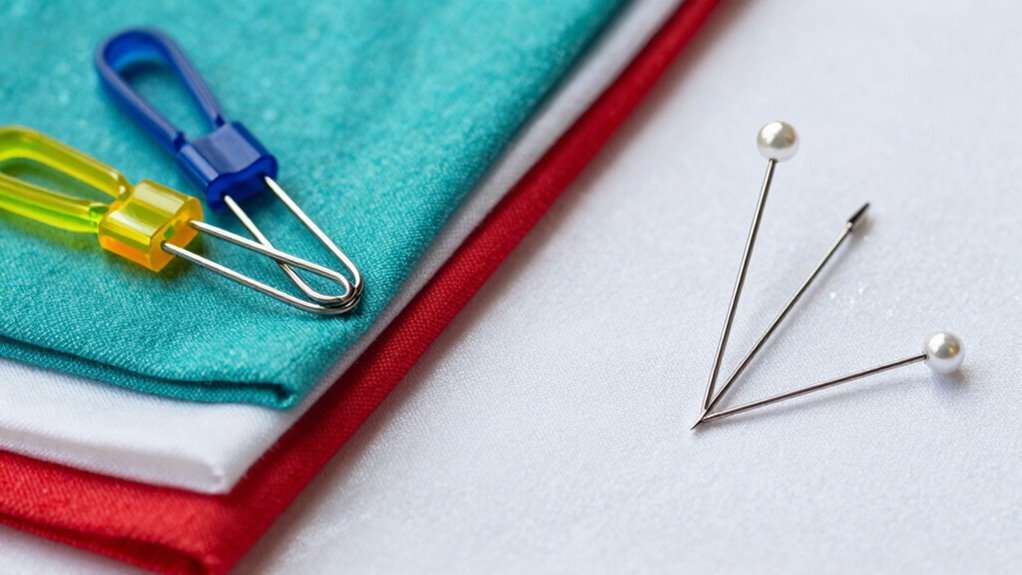

Choose sewing clips when working with delicate fabrics like silk, chiffon, or lace, as they prevent holes and damage. Pins are better for thicker, layered materials like denim or upholstery, where they securely hold multiple layers. Clips are gentle and won’t interfere with your sewing machine, while pins are quick for precise alignment but require removal before sewing. To discover which tool suits your project best, keep exploring these options further.
Key Takeaways
- Use sewing clips for delicate fabrics to prevent holes and fabric damage during handling and pinning.
- Choose pins for thick, layered fabrics like denim or upholstery requiring secure, penetrating hold.
- Clips are ideal for fabrics sensitive to pinholes, ensuring no marks or damage on high-end or fragile textiles.
- Pins facilitate precise alignment and pattern matching, especially with patterned or striped fabrics.
- Switch to clips when working with lightweight, silky, or stretchy fabrics to avoid fabric distortion or damage.
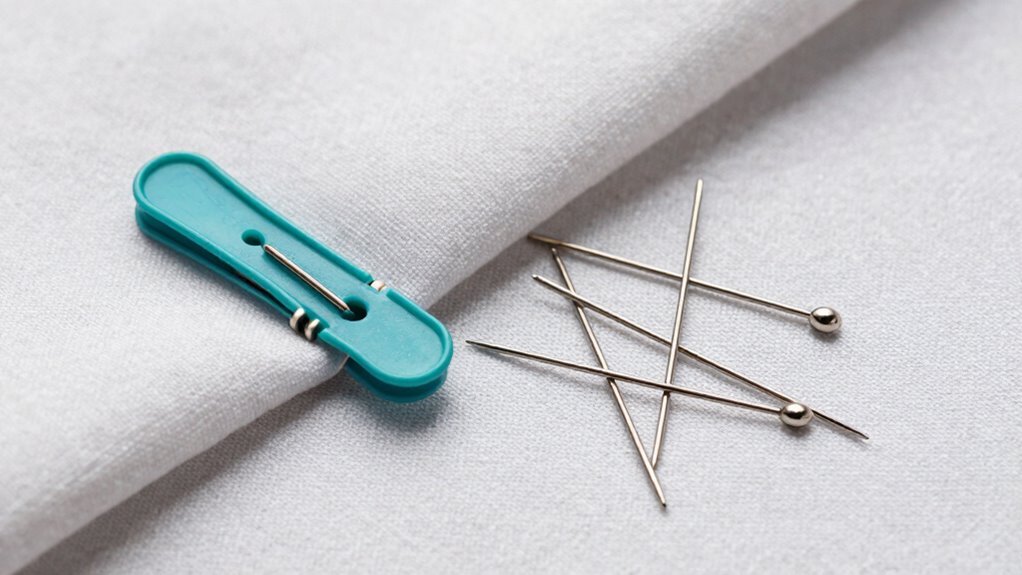
Have you ever wondered whether sewing clips or pins are better suited for your project? Choosing between the two often comes down to the fabric types you’re working with and whether you’re using a sewing machine. Both tools serve to hold fabric pieces together, but they each shine in different situations. Understanding when to use sewing clips over pins can make a significant difference in the quality of your work and the ease of your sewing process.
If you’re working with delicate or stretchy fabrics, sewing clips tend to be your best choice. Fabrics like silk, chiffon, lace, or knits are prone to snagging or getting damaged when pins are inserted. Pins can leave holes or cause stretching, especially if you’re working with lightweight or fragile textiles. Clips, on the other hand, gently clamp onto the fabric without piercing it, preserving the integrity of delicate fibers. Additionally, clips are compatible with a wide range of fabrics because they don’t leave holes or marks, making them ideal for high-end or sensitive materials. When it comes to sewing machine compatibility, clips are often easier to work with because they don’t interfere with the needle’s path, reducing the risk of accidental damage to your machine or fabric. Moreover, fabric preservation is essential when working with delicate textiles, and clips help maintain the fabric’s quality throughout your project. Using the right holding tools can also help prevent unnecessary fabric damage, ensuring your project turns out just as you envision. For those working with a variety of fabrics, understanding the appropriate holding tools can streamline your sewing process and improve results.
On thicker or layered fabrics, such as denim, canvas, or upholstery material, pins can be more effective. Their sharp points easily penetrate multiple layers, holding them securely in place during sewing. Pins are also preferred when precise alignment is vital, such as matching plaids or stripes, because they can be placed and removed quickly without slipping. In terms of sewing machine compatibility, pins generally work well with most domestic machines, especially when handled carefully. Just ensure that you remove pins before sewing over them to avoid damaging your needle or machine.

Multipurpose Sewing Clips Pack of 100, Perfect Alternative Quilting Pins
- Transparent Plastic Design: Easy to see fabric and materials
- Reusable and Durable: Long-lasting for repeated use
- Multi-layer Fabric Holding: Secures multiple fabric layers easily
As an affiliate, we earn on qualifying purchases.
As an affiliate, we earn on qualifying purchases.
Frequently Asked Questions
Are Sewing Clips Suitable for All Fabric Types?
Sewing clips are suitable for many fabric types, but not all. They work especially well with delicate, stretchy, or thick fabrics because they don’t leave holes or damage the material. Their clip versatility makes them ideal for fabrics that are difficult to pin, like leather or vinyl. However, for very lightweight or sheer fabrics, pins might be better to avoid bulk. Use clips where gentle, firm hold is needed without damaging the fabric.
How Do Sewing Clips Impact Fabric Accuracy?
Sewing clips help improve fabric accuracy by securely holding fabrics in place without causing distortion or stretch, especially on delicate or stretchy materials. Their clip strength guarantees they stay put during sewing, reducing shifting and inaccuracies. Unlike pins, clips don’t puncture the fabric, preserving its integrity. You’ll notice better precision on tricky fabrics, making your sewing more accurate and professional-looking, especially when working with stretch or fragile textiles.
Can Sewing Clips Be Reused Multiple Times?
Yes, sewing clips can be reused multiple times like trusty sidekicks in your sewing adventures. Their clip durability guarantees they won’t give up easily, even after several uses. To keep them in top shape, store them in a dedicated container away from moisture and extreme temperatures. With proper storage tips, these versatile helpers stay sharp and reliable, making your sewing projects smoother and more enjoyable time after time.
Do Pins Cause Fabric Damage Over Time?
Yes, pins can cause fabric damage over time, especially if they develop rust, known as pin rust, which can stain or weaken your fabric. Repeated pinning may also lead to fabric distortion or holes, especially if you apply too much pressure or use dull pins. To prevent this, use rust-resistant pins and remove them carefully once you’re done sewing, reducing the risk of fabric damage.
Are There Safety Concerns When Using Sewing Clips?
Approximately 85% of sewing accidents involve sharp tools, so safety is vital. When using sewing clips, you should follow safety precautions like keeping fingers clear of clip openings. Consider clip material; stainless steel clips are durable, but plastic ones might break easily. Always handle clips carefully, store them properly, and avoid leaving them where children can reach. Doing so minimizes safety concerns and guarantees a safer sewing experience.
Conclusion
Ultimately, choosing between sewing clips and pins depends on your project’s delicate nuances. While pins may whisper of tradition, clips offer a gentle touch for more sensitive fabrics. Trust your instincts and the subtle cues of each tool, allowing your craftsmanship to flourish. By embracing their unique charms, you’ll find the perfect harmony in your sewing journey—crafting with grace and finesse, no matter which method you favor.