When you compare warp and weft in fabric, you’ll see that warp threads run lengthwise and provide stability, while weft threads cross horizontally, creating the fabric’s surface. The way they interlace affects durability, softness, and appearance. Tightly woven fabrics are stronger, and the pattern impacts how the fabric performs and takes dye. Understanding these basics helps you choose the right fabric for your needs—and there’s much more to uncover as you explore further.

Get your wardrobe favorites delivered free — and shop member deals
- Fast, free delivery on millions of items
- Access to Prime Big Deal Days deals on October 6–7
- Prime Video, Amazon Music and more included
Key Takeaways
- Warp threads run lengthwise, while weft threads cross horizontally in fabric construction.
- Weaving involves interlacing warp and weft to create the fabric’s structure.
- Tight weaves offer durability; loose weaves provide softness and breathability.
- Warp can be dyed before weaving, and weft can be dyed afterward for patterns.
- The interaction between warp and weft affects fabric strength, appearance, and dye absorption.
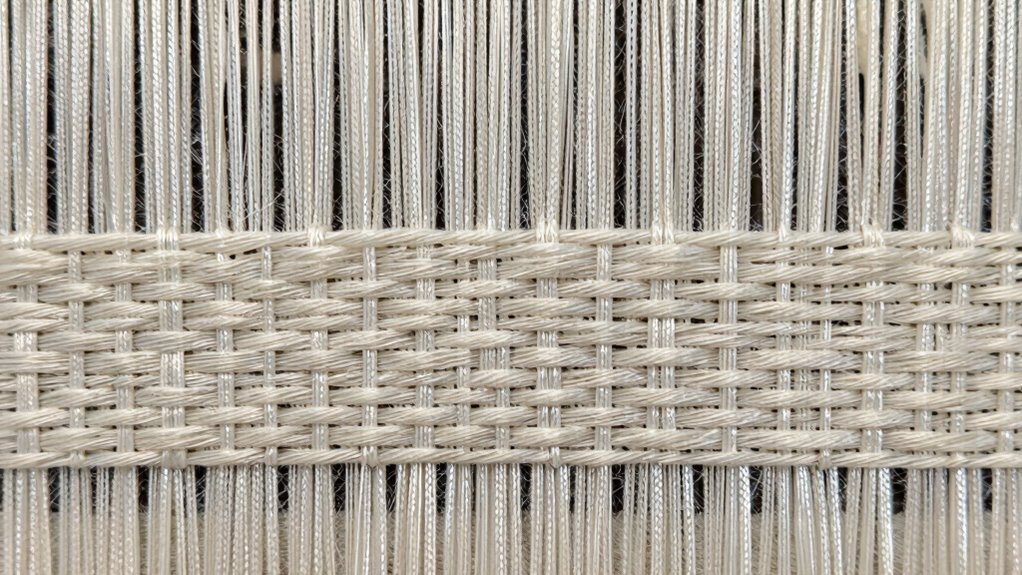
When you look closely at fabric, you’ll notice that it’s made up of two fundamental components: warp and weft. These are the threads that intertwine to create the textile you see and feel. The warp threads run lengthwise, stretching from one end of the fabric to the other, while the weft threads cross the fabric horizontally, weaving over and under the warp. Understanding this basic structure is key to grasping how fabrics are made, how they respond to dyeing techniques, and their overall durability.
Warp and weft are the foundational threads that give fabric its structure and strength.
The way the warp and weft are woven together affects the fabric’s appearance and strength. For example, tight weaves like twill or satin are more durable because the dense interlacing provides strength and resistance to wear. Conversely, looser weaves tend to be softer and more breathable but less durable. When selecting fabrics for different purposes, knowing which threads form the warp and weft helps you predict how the textile will perform over time, especially under stress or frequent washing. Fabric construction plays a crucial role in determining the fabric’s performance and longevity.
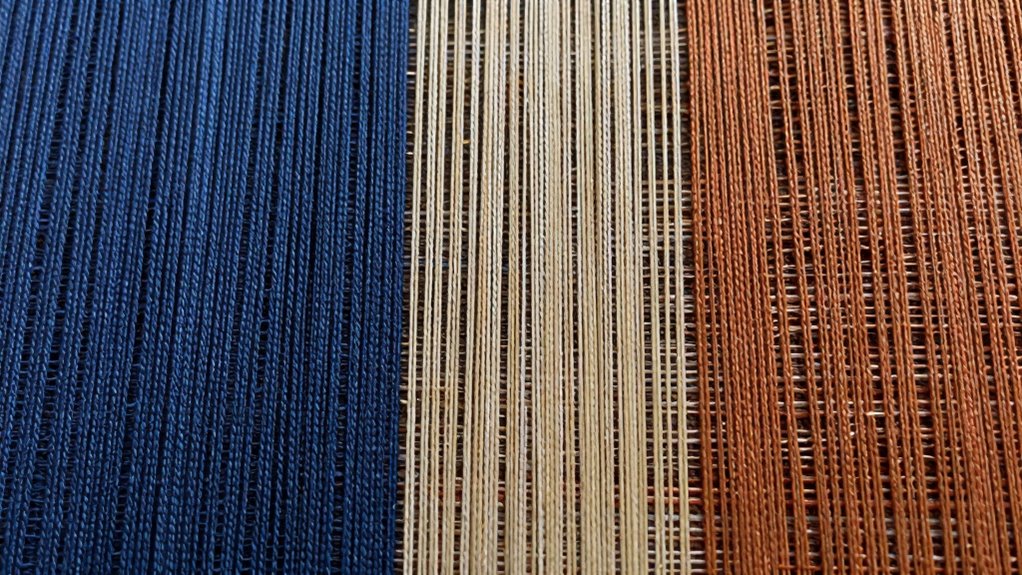
Dyeing techniques also depend heavily on the fabric’s construction. The warp threads often absorb dyes differently than the weft, especially in methods like tie-dye or batik, where specific areas are resisted or exposed. In some cases, the warp may be dyed before weaving—creating a background color—while the weft is dyed afterward, adding patterns or accents. This interplay influences not just the visual appeal but also the fabric’s texture and how colors fade or retain vibrancy over time. The warp’s stability during dyeing is essential because it supports the fabric’s overall appearance, helping it keep its shape and color integrity after multiple washes.
Additionally, the choice of weaving pattern and thread tension can significantly impact the fabric’s structure and performance, influencing how well it holds up under different conditions. Fabric durability, a key consideration for clothing and upholstery, is largely determined by how the warp and weft are woven and the quality of the threads used. A strong, tightly woven fabric resists tearing and pilling, maintaining its look and function longer. The choice of material—cotton, silk, polyester—also impacts durability, but the weaving pattern and thread tension play equally important roles. When you select fabric, understanding the interplay between warp and weft guides you toward options that will withstand daily use and laundering without losing their integrity.
In essence, knowing about warp and weft helps you make informed choices about fabric types, dyeing techniques, and durability. It’s the foundation for appreciating how textiles are made and how they can be optimized for different applications, whether for fashion, home décor, or technical uses.
As an affiliate, we earn on qualifying purchases.
Frequently Asked Questions
How Do Warp and Weft Affect Fabric Durability?
You can see that warp and weft greatly impact fabric durability through fiber strength and thread alignment. Strong fibers in the warp make the fabric more resistant to tearing, while proper thread alignment ensures even distribution of stress. When both are optimized, your fabric becomes more durable, lasting longer and resisting wear better. So, understanding how warp and weft work together helps you choose fabrics that stand up to daily use.
Can Warp and Weft Be Different Materials?
Yes, warp and weft can be different materials. When choosing fibers, consider fiber compatibility to guarantee the fabric’s strength and cohesion. Using contrasting materials can create interesting color variation and texture in your fabric. However, mixing fibers requires careful selection because incompatible fibers may lead to uneven wear or difficulty during sewing. Always consider how different materials will work together in your project to achieve the desired look and durability.
How Does Fabric Tension Influence Warp and Weft?
Fabric tension plays a vital role in weaving, affecting both warp and weft. When you adjust tension, you control how tight or loose the threads are, which influences fabric elasticity and stability. Proper tension adjustment guarantees even weaving and prevents puckering or gaps. If tension is too tight, fabric can become stiff, while too loose tension causes unevenness. Balancing tension is key to achieving the desired fabric quality and drape.
Are There Special Care Instructions for Warp-Focused Fabrics?
Yes, you should follow special care instructions for warp-focused fabrics. To preserve their fiber reinforcement and dye penetration, wash them gently in cold water and avoid harsh detergents. When ironing, use a low heat setting to prevent damaging the warp fibers. Avoid excessive agitation or bleach, as these can weaken the structure and fade the dye, ensuring your fabric maintains its strength and vibrant color over time.
What Are Common Weaving Patterns Involving Warp and Weft?
Imagine you’re designing with a vintage loom—common weaving patterns with warp and weft include plain weave, twill, and satin. You can explore color weaving and pattern variations by alternating colors or changing the weave technique. These patterns create textures and visual interest, much like a modern tapestry. Whether you’re aiming for a subtle sheen or bold geometric designs, understanding these patterns helps craft unique fabrics that stand out.
Conclusion
Now that you understand the differences between warp and weft, you’re better equipped to choose fabrics for your projects. Remember, knowing how these threads interact can make all the difference in the final look and durability of your textiles. So, next time you’re shopping or sewing, ask yourself: do I want a fabric that’s tightly woven or more flexible? With this knowledge, you’re ready to make smarter, more confident choices in your fabric journey.
Fall Picks
fall essentials
As an affiliate, we earn on qualifying purchases.