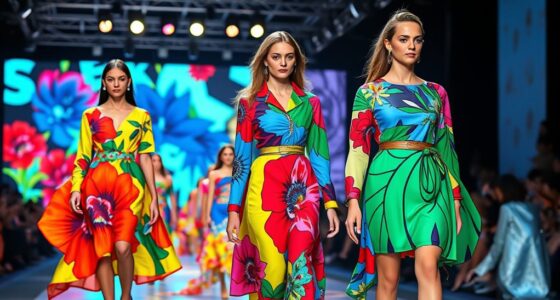
Color trends like earth tones, pastels, and jewel tones are shaped by psychological, cultural, and technological factors. Earth tones evoke stability and a connection to nature, while pastels bring calm and renewal, and jewel tones signal luxury and confidence. Societal values, cultural meanings, and digital platforms influence which shades become popular. Understanding these underlying influences helps explain why you see certain colors dominant now. Keep exploring to uncover more about how these forces continue to shape your favorite hues.
Key Takeaways
- Color trends mirror societal emotions and cultural values, with earth tones indicating stability, pastels symbolizing calmness, and jewel tones conveying luxury.
- Psychological effects of colors influence consumer perceptions, with earth tones promoting grounding, pastels evoking serenity, and jewel tones suggesting confidence.
- Technological platforms like social media accelerate trend dissemination, making natural, muted shades and vibrant jewel tones more mainstream.
- Cultural symbolism shapes preferences: pastels for renewal, earth tones for authenticity, and jewel tones for prosperity across different societies.
- Rapid digital sharing and branding strategies reinforce certain color preferences, driving the evolution and adoption of specific color palettes.

Understanding color trends isn’t just about picking pretty shades; it’s a science that reveals how society, culture, and technology influence our preferences. When you look at the rise of earth tones, pastels, and jewel tones, you’re tapping into deeper psychological and cultural currents shaping our visual landscape. Color psychology plays a vital role here, as each hue can evoke specific emotions and perceptions. Earth tones—like warm browns, muted greens, and sandy beiges—often communicate stability, reliability, and a connection to nature. These shades tend to resonate during times of social or economic uncertainty, offering comfort and grounding. Pastels, with their soft pinks, blues, and lavenders, evoke calmness, innocence, and a gentle optimism. They’re especially popular in wellness and lifestyle sectors, reflecting a cultural shift towards mindfulness and self-care. Meanwhile, jewel tones such as emerald, sapphire, and ruby exude luxury, confidence, and vibrancy. They’re often associated with opulence and status, influenced by historical associations with royalty and wealth. Additionally, advancements in digital technology influence how and which colors become trendy, as online platforms rapidly disseminate visual styles across diverse audiences. Cultural influences deeply shape these color preferences as well. For example, in Western societies, pastels are linked to springtime and renewal, while earth tones symbolize authenticity and rustic charm. In Eastern cultures, red and gold—rich jewel tones—are traditionally linked to prosperity, good fortune, and celebration. These cultural meanings influence fashion, interior design, and branding, guiding collective choices. As technology advances, the way we engage with colors also shifts. Digital platforms amplify certain shades, making them more mainstream faster than ever. For instance, the popularity of muted earth tones can be traced to social media trends emphasizing natural aesthetics, while vibrant jewel tones often appear in luxury branding and marketing campaigns to evoke exclusivity.
You can see that these color trends are not random but rooted in complex interactions of psychology, culture, and technology. They reflect broader societal values and emotional states, evolving with our collective consciousness. When you choose colors for your space or wardrobe, you’re participating in this intricate dance—responding to subconscious cues and cultural signals that influence your preferences. Recognizing these underlying factors helps you understand why certain shades feel more appealing during specific times or in particular contexts. In brief, color trends are a mirror of who we are collectively, shaped by the stories we tell ourselves, the cultures we belong to, and the innovations that surround us.
Frequently Asked Questions
How Do Cultural Differences Influence Color Trend Perceptions?
You notice that cultural differences shape how you perceive color trends through cultural symbolism and regional palettes. In some cultures, specific colors symbolize luck, purity, or mourning, influencing design choices and preferences. Regional palettes reflect local traditions and environment, making certain hues more appealing or meaningful. By understanding these cultural nuances, you can create more relevant, respectful, and appealing color schemes that resonate deeply with diverse audiences.
What Role Does Psychology Play in Color Trend Popularity?
You might not realize it, but color psychology deeply influences what trends catch your eye. When a color evokes strong emotional responses, it becomes more popular because it connects with your feelings and desires. Designers tap into this subconscious power, shaping trends to resonate with your mood and aspirations. So, your emotional reactions to certain hues help determine which colors dominate, making psychology a silent yet powerful force behind trend popularity.
How Do Climate Changes Affect Future Color Trends?
Climate changes will influence your future color trends by emphasizing climate adaptation and environmental impact. As you notice shifts toward sustainable, eco-friendly shades, you’ll see earth tones, muted pastels, and jewel tones reflecting nature’s resilience. These colors help promote awareness and support environmentally conscious choices, making them more appealing in fashion, interior design, and branding. Climate-driven trends make certain you stay connected to nature’s evolving palette while emphasizing sustainability and environmental responsibility.
Can Individual Genetics Impact Color Preference?
Yes, your genetics can influence your color preferences through genetic influence and color genetics. Your DNA affects the way your eyes perceive color and how your brain responds to different shades, making some colors more appealing to you. For example, certain genetic traits may make you more attracted to warm or cool tones. Recognizing this can help you choose colors that resonate with your natural inclinations and enhance your personal style.
How Do Emerging Technologies Shape New Color Trend Discoveries?
Emerging technologies like color prediction algorithms analyze vast data to forecast future trends, so you can stay ahead in design. Augmented reality visualization lets you see how new colors will look in real-world settings before committing. These tools empower you to experiment confidently, discover innovative palettes, and influence upcoming color trends, making your creative process more precise and exciting.
Conclusion
Understanding the science behind color trends helps you see beauty in both the calm of earth tones and the vibrancy of jewel tones. Just like a cozy pastel sunset or a bold gemstone, these colors evoke feelings that shape your mood and style. Embrace the contrast—sometimes subtle, sometimes striking—because it’s in that balance where color truly comes alive. So, next time you choose a hue, remember, science and emotion blend to create your perfect palette.