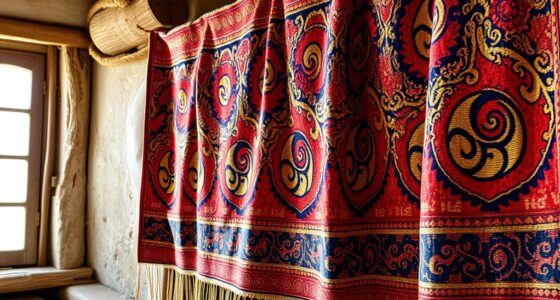
Indigenous textiles, from Navajo weavings to Andean backstrap looms, carry powerful stories and cultural meanings. As you explore these textiles, you’ll see how patterns, colors, and motifs reflect community beliefs, spiritual connections, and ancestral history. Weaving is more than craft; it’s a way of preserving traditions, resisting cultural suppression, and sharing stories across generations. Staying engaged reveals how these textiles act as living symbols of resilience and identity that you won’t want to miss.
Key Takeaways
- Both Navajo weaving and Andean backstrap loom practices serve as cultural storytelling tools, embedding symbolism and community history.
- The techniques are passed through generations, preserving traditional craftsmanship and cultural identity amidst external influences.
- Designs in Navajo and Andean textiles reflect nature, spiritual beliefs, and social status, acting as visual narratives.
- Weaving acts as a ritual connecting artisans with ancestors, reinforcing resilience and cultural continuity.
- Textiles function as cultural resistance, showcasing indigenous identity and safeguarding heritage through intricate craftsmanship.
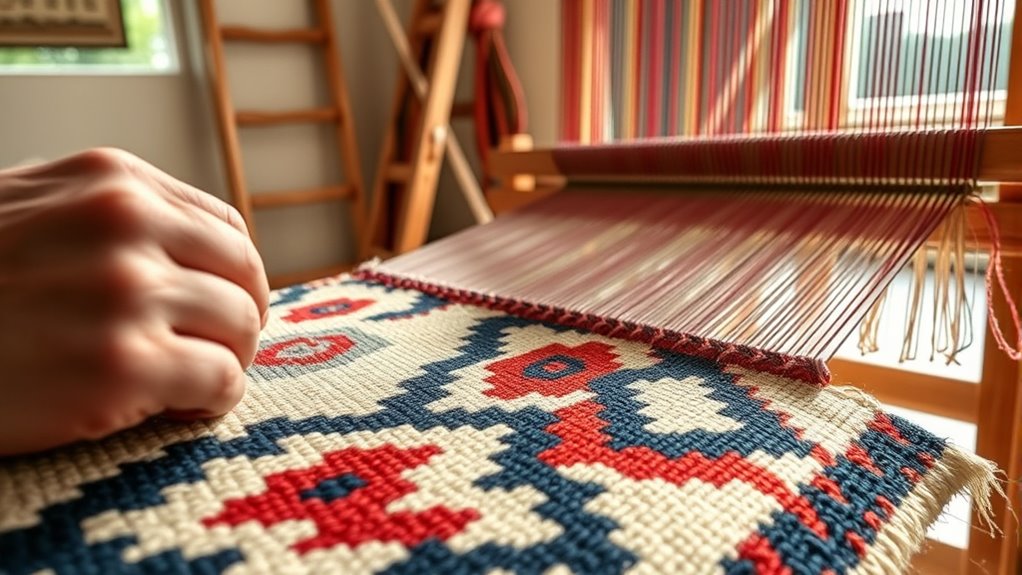
Indigenous textile stories weave more than just fabric; they carry centuries of history, culture, and identity. When you observe their intricate designs and vibrant colors, you’re witnessing a visual language that speaks of ancestors’ beliefs, social status, and spiritual connections. Each thread, pattern, and motif carries symbolism in textiles, transforming cloth into a powerful narrative tool. For example, Navajo weavings often feature geometric patterns representing elements of nature, spiritual symbols, or clan heritage. These symbols aren’t random; they embody stories passed down through generations, serving as a visual record of cultural identity. By understanding these symbols, you gain insight into a community’s worldview and the values they hold dear.
As you explore indigenous textiles, you’ll also notice how they serve as a means of the preservation of traditions. The act of weaving itself becomes a ritual, a way to connect with ancestors and ensure the continuity of cultural practices. Many indigenous communities prioritize passing down weaving techniques through apprenticeships and family lines, making each piece a living testament to their heritage. This transmission of knowledge isn’t just about craft; it’s about safeguarding identity amid changing times. You’ll see that preserving these traditions is crucial to maintaining cultural resilience, especially as external influences threaten to erode indigenous practices. Additionally, cultural resilience is strengthened through the storytelling embedded in each textile, allowing communities to resist cultural assimilation and maintain their unique identities.
The significance of textiles extends beyond their aesthetic appeal; they’re repositories of collective memory. When you see a woven blanket or a tapestry, recognize that it’s more than decoration—it’s a storybook woven into fabric. Indigenous artisans often incorporate specific colors, symbols, and techniques that reflect their community’s history, environment, and spiritual beliefs. These textiles become cultural ambassadors, connecting present-day artisans with their ancestors’ wisdom. As you admire their craftsmanship, remember that each piece is also a form of resistance, a declaration that their traditions are alive and valued.
Frequently Asked Questions
How Do Indigenous Textiles Influence Modern Fashion Trends?
You see indigenous textiles influencing modern fashion trends by inspiring designers to embrace sustainable fibers and authentic craftsmanship. You might notice eco-friendly materials, vibrant patterns, and traditional techniques incorporated into contemporary collections. This shift promotes the use of sustainable fibers, reducing environmental impact. As a result, the fashion industry becomes more conscious of cultural heritage, blending tradition with innovation and encouraging consumers to value ethically produced, unique pieces rooted in indigenous textile stories.
What Are the Environmental Impacts of Traditional Weaving Materials?
You should know that traditional weaving materials often have minimal environmental impact when sourced sustainably. By practicing sustainable farming, you reduce soil degradation and conserve water. Using eco-friendly dyes made from natural ingredients minimizes chemical pollution and protects ecosystems. These methods guarantee that your textile production stays eco-conscious, preserving natural resources and supporting local communities. Embracing sustainable materials and dyes helps you create beautiful, environmentally responsible textiles that honor cultural traditions.
How Do Indigenous Textile Techniques Vary Across Different Regions?
Imagine the vibrant tapestry of our world, each region weaving its own story. You’ll see technique variations—from the Navajo’s intricate tapestry to the Andean backstrap loom’s fluidity—shaped by regional symbolism. These differences reflect local culture, resources, and history. You can feel the unique identity in every thread, showcasing how indigenous techniques adapt and flourish, turning simple materials into powerful expressions of community and tradition across diverse landscapes.
What Challenges Do Indigenous Weavers Face Today?
You face significant challenges as an indigenous weaver today, including preserving cultural identity amidst modern influences and economic challenges that threaten your livelihood. Market pressures and limited access to global markets make it harder to sustain traditional techniques. Despite these hurdles, your craftsmanship remains essential for cultural continuity, and finding support networks can help you maintain your heritage while steering through economic realities.
How Can Cultural Preservation Be Supported Through Textile Arts?
You can support cultural preservation through textile arts by promoting traditional techniques and stories that strengthen cultural identity. Encourage communities to share their weaving methods and designs, and invest in preservation strategies like workshops and cultural exchanges. By valuing and showcasing indigenous textiles, you help maintain these rich traditions for future generations, ensuring their cultural identity remains vibrant and respected worldwide.
Conclusion
As you explore these ancient arts, remember that weaving words and wisdom weaves a strong, sacred story. The threads of tradition thrive through time, tying generations with tender, talented hands. Embrace the enduring energy of indigenous expressions, where history hums in every hem and hue. Let these stories serve as a sacred safeguard, showcasing the strength, skill, and spirit stitched into every strand—sustaining culture, connecting communities, and carrying the timeless tapestry forward.