
Fabrics go from loom to runway as they transform into powerful fashion statements reflecting your values and style. Designers now focus on textiles that emphasize sustainability, innovation, and unique textures, making fabrics essential in shaping modern fashion. Using eco-friendly fibers and cutting-edge techniques, textiles become symbols of responsibility and creativity. If you want to discover how these materials are driving fashion forward, there’s much more to explore behind the scenes of textile innovation.
Key Takeaways
- Fabrics start as raw fibers, woven or knitted into textiles that form the foundation of garments.
- Designers select and innovate textiles, incorporating sustainable and advanced materials to reflect fashion statements.
- The fabrics are cut, sewn, and finished into clothing, with craftsmanship highlighting texture, color, and design.
- Fashion brands showcase textiles on runways, emphasizing their story, sustainability, and technological innovation.
- The final garments embody the fabric’s evolution, transforming raw materials into stylish, meaningful fashion statements.
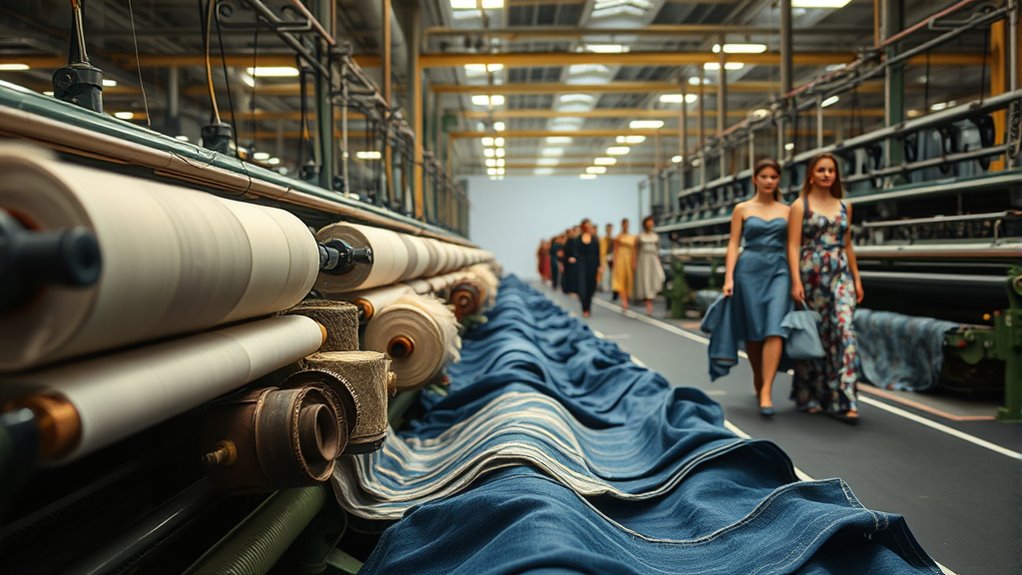
Fabrics are no longer just materials; they’re becoming central to fashion statements. As you explore the latest trends, you’ll notice that designers and brands are increasingly focusing on the story behind the textiles they use. Sustainable textiles, in particular, have gained momentum, allowing you to wear your values on your sleeve. These eco-friendly fabrics reduce environmental impact by using organic fibers, recycled materials, and innovative production processes. When you choose garments made from sustainable textiles, you’re supporting efforts to lower carbon footprints, conserve water, and minimize waste. This shift isn’t just a passing fad; it’s a reflection of a growing awareness that fashion can be responsible without sacrificing style.
The fashion industry is embracing innovative materials that push the boundaries of traditional textiles. You might see fabrics that incorporate bio-engineered fibers, plant-based dyes, or even textiles made from waste products. These materials aren’t just eco-conscious; they’re also cutting-edge, opening new possibilities for designers and consumers alike. For instance, lab-grown fabrics can mimic the look and feel of natural fibers but with a much smaller environmental footprint. This allows you to enjoy luxurious textures and vibrant colors while supporting sustainability. The integration of innovative materials means that the clothing you wear isn’t just about aesthetics—it’s about pushing the limits of what textiles can do.
Innovative fabrics like bio-engineered fibers and waste-based textiles are redefining sustainable, cutting-edge fashion.
This evolution from traditional to more sustainable and innovative fabrics influences everything from high fashion to everyday wear. You’ll notice brands emphasizing transparency about their sourcing and manufacturing processes, giving you confidence in what you wear. The use of sustainable textiles and innovative materials also encourages a more circular approach to fashion, where garments are designed to be recycled or repurposed at the end of their life cycle. This means your wardrobe can be stylish and environmentally responsible at the same time. Additionally, the use of natural and recycled materials often aligns with creating a more sustainable wardrobe, which is increasingly important for conscious consumers.
As you follow runway shows and street style, you’ll see how fabrics are evolving from simple coverings to powerful symbols of change. They’re becoming a way to express your identity, values, and commitment to a better future. With the rise of sustainable textiles and innovative materials, fabrics are no longer passive components but active drivers of fashion’s future. Whether it’s a sleek jacket made from recycled ocean plastics or a dress crafted from bioengineered fibers, the textiles you wear are shaping the narrative of responsible, forward-thinking fashion. So, as you pick out your next outfit, remember that the fabric itself is part of the statement—one that reflects innovation, sustainability, and style.
Frequently Asked Questions
How Do Designers Choose Fabrics for Their Collections?
You choose fabrics for your collections by considering fiber types that suit your design vision and season. You evaluate pattern selection, ensuring the fabric’s texture and drape enhance your ideas. You also think about durability, color, and cost, matching these factors with your collection’s theme. By balancing these elements, you create cohesive, innovative pieces that resonate with your target audience and stay true to your creative goals.
What Are the Latest Innovations in Sustainable Fabrics?
You’re likely to be surprised by the latest innovations in sustainable fabrics. Biodegradable fibers now break down naturally, reducing landfill waste, while eco-friendly dyes minimize water pollution. These advancements make it easier to create stylish, environmentally conscious designs that resonate with consumers. By embracing these innovations, you help promote a greener future, turning fashion into a powerful statement for sustainability, one fabric at a time.
How Does Fabric Quality Affect Clothing Durability?
Fabric quality directly impacts your clothing’s durability by influencing its fabric lifespan and wear resistance. Higher-quality fabrics tend to last longer, resisting tears and fraying while maintaining their appearance over time. When you choose well-made materials, your clothes withstand frequent washing and everyday wear better, saving you money and reducing waste. So, investing in quality fabrics means you enjoy durable, long-lasting garments that look good longer.
What Are Some Common Fabric Treatments Used in Fashion?
You’ll find fabric treatments like fabric dyeing and textile printing used often in fashion. Fabric dyeing adds vibrant colors or subtle shades, giving your garments unique appeal. Textile printing creates intricate patterns or designs directly on the fabric surface, enhancing visual interest. These treatments not only improve aesthetics but can also add durability or special finishes. By applying these methods, designers turn plain fabrics into eye-catching fashion pieces that stand out.
How Do Cultural Influences Shape Fabric Choices in Fashion?
Cultural influences strongly shape your fabric choices by highlighting traditional textiles and cultural patterns. You might opt for intricate embroidery or vibrant prints that reflect a community’s heritage, showcasing authenticity and storytelling. These textiles connect you to history and identity, adding depth to your fashion. By incorporating traditional textiles and cultural patterns, you celebrate diversity and make sure your style honors the origins and meanings behind each fabric.
Conclusion
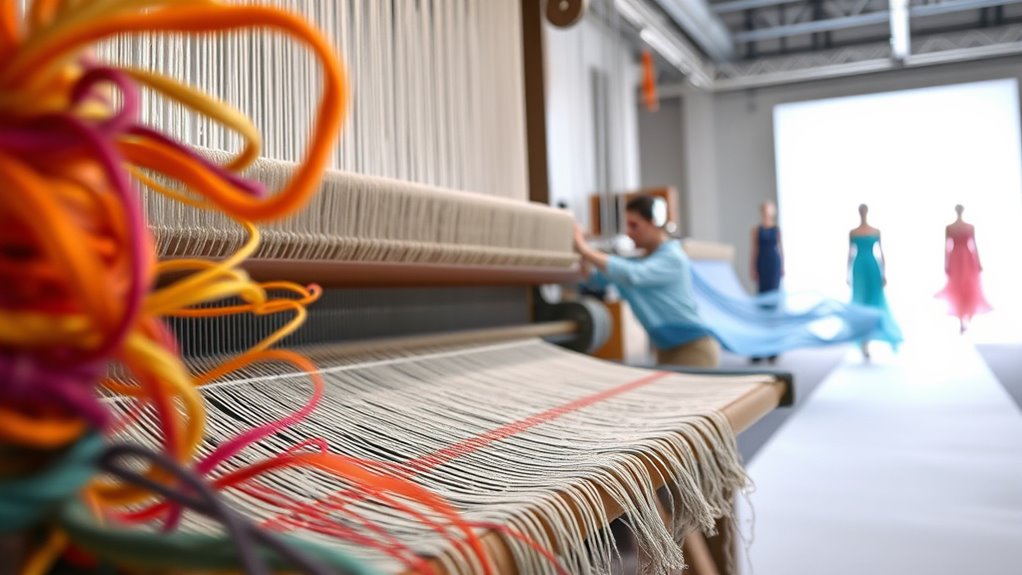
As you watch the fabric transform from shimmering threads on a loom to a stunning runway masterpiece, you realize the magic lies in every stitch and weave. The vibrant colors, soft textures, and intricate patterns come alive under the designer’s touch, breathing life into mere fibers. It’s a dance of creativity and craftsmanship, turning raw materials into wearable art. So next time you see a fashion piece, remember the enchanting journey it took—truly a story woven from loom to runway.