
Fabrics in fine art serve as expressive mediums for textile artists, showcasing techniques like weaving, embroidery, and dyeing that carry rich cultural meanings. Through their works, artists illustrate stories of heritage, social status, and identity, using fibers like silk, wool, and cotton to symbolize different values. These textiles communicate powerful cultural messages and transform everyday materials into meaningful artistic expressions. If you continue exploring, you’ll discover how these textiles reflect diverse histories and creative innovations.
Key Takeaways
- Textile artists incorporate traditional techniques like weaving, embroidery, and dyeing to create culturally significant artworks.
- Fabrics in fine art serve as mediums to convey social, spiritual, and cultural messages through patterns and materials.
- Renowned textile artists, such as Faith Ringgold and Lenore Tawney, use fiber arts to explore identity, history, and community narratives.
- Fiber symbolism, including material choices like silk or wool, enhances the expressive power and cultural meaning of textile artworks.
- Contemporary textile art often blends traditional craftsmanship with modern concepts, inspiring new interpretations of fabric in fine art.
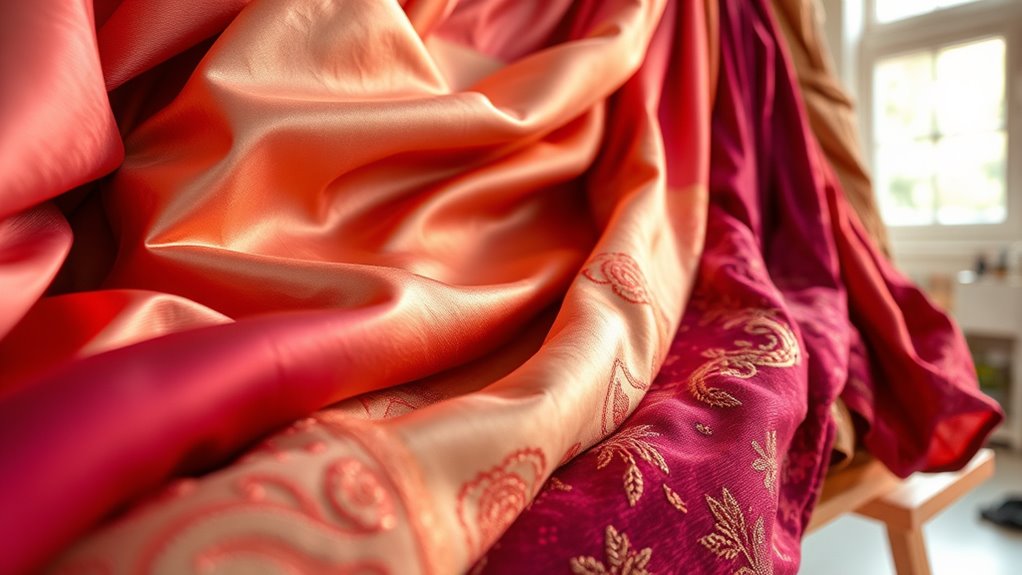
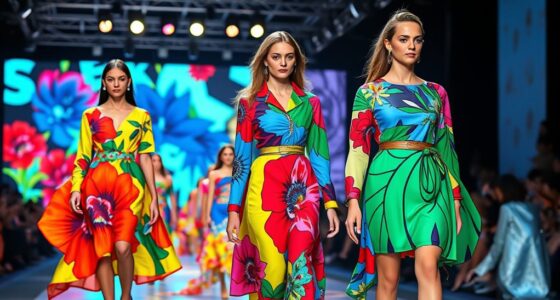
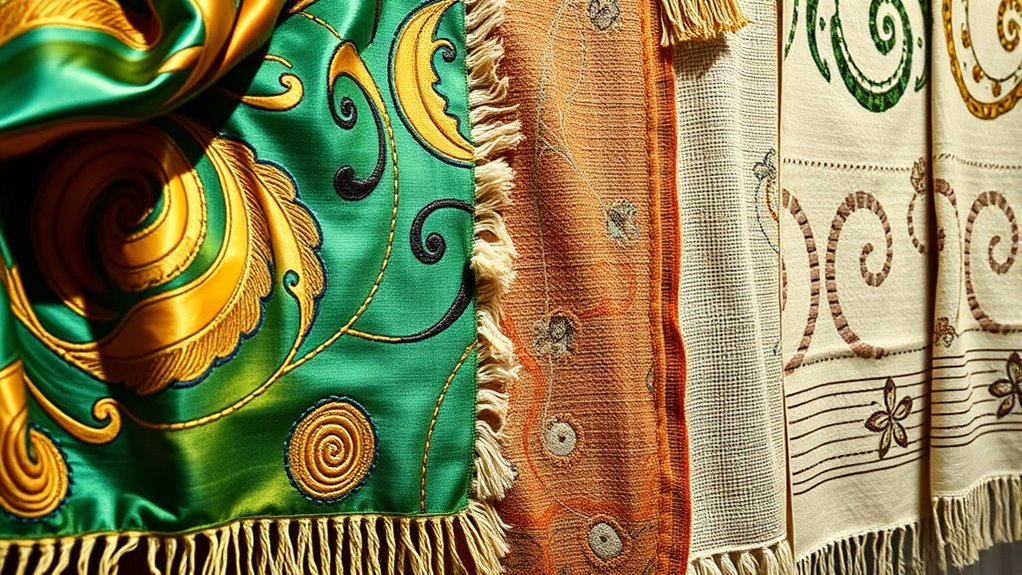
Fabrics have played a pivotal role in fine art, serving not just as mediums for painting and textile arts but also as symbols of culture, status, and craftsmanship. When you explore the world of textile arts, you’ll notice how artists utilize various textile techniques to transform raw fibers into intricate works of art. These techniques—such as weaving, embroidery, quilting, and dyeing—are not just methods of creation; they carry deep cultural significance. Each technique reflects a specific tradition or community, allowing you to appreciate the craftsmanship and history embedded in every piece. For instance, intricate embroidery can symbolize social status or spiritual beliefs, while complex weaving patterns often tell stories of ancestral heritage. By understanding these textile techniques, you gain insight into the cultural context behind each work, recognizing that these fabrics are more than just material—they’re carriers of meaning. Additionally, the choice of colors and patterns in textiles can also convey symbolic messages rooted in cultural narratives. Fiber symbolism further enhances the depth of textile art. As you examine different fabrics, you’ll see how fibers—whether silk, cotton, wool, or plant-based fibers—represent more than their physical properties. They often carry symbolic meanings linked to identity, spirituality, or social hierarchy. For example, silk, historically associated with wealth and luxury, was reserved for royalty and high-status individuals. Wool, on the other hand, might symbolize humility or pastoral life, depending on the cultural setting. The choice of fibers isn’t arbitrary; it reflects the values, beliefs, and social structures of the communities that produce them. When textile artists incorporate specific fibers into their works, they’re embedding subtle messages, making the fabric itself a language of symbolism. This layered communication invites you to look beyond the surface, recognizing that each fiber choice contributes to the narrative. Moreover, fiber symbolism often intersects with textile techniques to produce powerful visual and cultural statements. A hand-stitched quilt might incorporate fibers that signify protection or healing, while a woven tapestry could depict stories of migration and resilience through specific patterns and materials. As you explore these works, you’ll begin to see how artists use fiber symbolism and textile techniques intentionally, turning everyday fabrics into profound expressions of identity and history. Understanding the significance behind these choices helps you appreciate fabrics not just as decorative elements but as cultural artifacts that embody collective memories and individual stories. Preppy Dog Names can sometimes be inspired by classic textiles or patterns associated with fashion trends, making them fitting for dog owners who appreciate style. In this way, textiles become a vibrant language, speaking volumes about the communities and histories they represent, making the study of fabrics in fine art a truly enriching experience.
Top picks for "fabric fine textile"
Open Amazon search results for this keyword.
As an affiliate, we earn on qualifying purchases.
Frequently Asked Questions
How Do Textile Artists Choose Their Fabrics?
You choose your fabrics by considering fiber selection, which impacts texture and durability, and material symbolism, reflecting cultural or personal meanings. You might opt for natural fibers like cotton or silk for their organic feel or synthetic ones for bold colors and durability. Your decisions are guided by the message you want to convey and how the materials enhance your artistic vision, ensuring your work resonates with viewers on both tactile and symbolic levels.
What Are the Latest Innovations in Fabric Art?
You’re witnessing the frontier of fabric art, where digital embroidery transforms traditional techniques with precision and speed, echoing Da Vinci’s mastery. Biodegradable textiles lead the eco-conscious movement, blending art and sustainability. These innovations enable artists to create intricate, environmentally friendly works that push boundaries. Embrace this evolution, where technology and nature converge, empowering you to craft meaningful, cutting-edge textile art that speaks to both innovation and responsibility.
How Does Fabric Preservation Differ From Traditional Art Preservation?
You’ll find fabric preservation differs from traditional art preservation because it tackles fabric deterioration, which requires specialized preservation techniques. Unlike paintings, textiles are vulnerable to light, humidity, and pests, so you need methods like controlled environments, gentle cleaning, and proper storage. These tailored techniques help prevent fabric deterioration, ensuring the textile’s longevity. By understanding these differences, you can better protect fabric artworks for future generations.
Can Textile Art Be Considered as Fine Art or Craft?
You might find it delightful to see textile art as a beautiful blend of craft and fine art. Its classification often depends on intent and presentation, with some pieces elevating craft to fine art status. While traditionally viewed as craft, many textile works showcase artistic mastery and conceptual depth, blurring the lines. Ultimately, whether you see it as craft or fine art, its expressive power and craftsmanship make it truly special.
What Are the Environmental Impacts of Textile Art Materials?
You should know that the environmental impacts of textile art materials can be significant, especially if you don’t choose sustainable practices. Chemical impacts from dyes and treatments can pollute water and harm ecosystems. To reduce this, you can opt for eco-friendly dyes, natural fibers, and low-impact methods. By doing so, you help protect the environment while creating your artwork, making your art both beautiful and responsible.
Conclusion
As you explore the world of textile art, you’ll see fabrics transform from everyday materials into striking masterpieces. Just like a simple cloth can hold intricate stories, these artists turn mundane fibers into vivid expressions of creativity. It’s fascinating how something as soft and fragile as fabric can convey strength and emotion. So next time you touch a piece of fabric, remember—you’re holding a canvas that’s both delicate and powerful, blending art and life in perfect harmony.