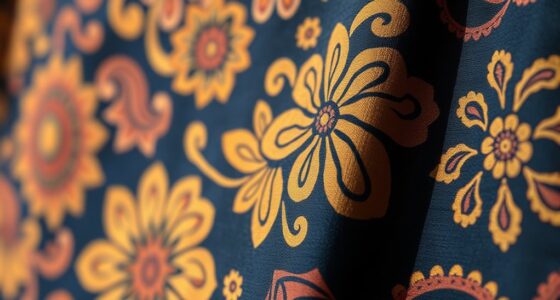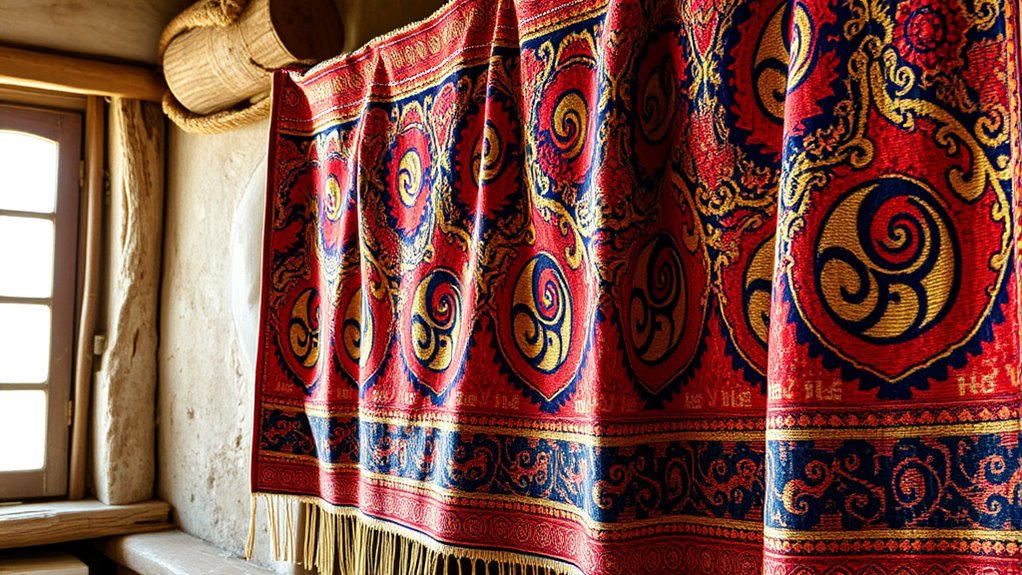
Textiles play a vital role in expressing your cultural identity, using colors, patterns, and techniques that tell stories about your community’s history, beliefs, and traditions. They serve as visual languages to communicate values, social roles, and spiritual beliefs, often through motifs and symbols with sacred or regional significance. When you explore these fabrics, you connect with ancestral roots and shared memories, uncovering deeper stories of origin and pride that continue to shape your cultural identity.
Key Takeaways
- Textiles serve as visual symbols conveying cultural values, social status, and spiritual beliefs.
- Weaving techniques and motifs reflect community history, traditions, and local pride.
- Colors and patterns in textiles encode cultural stories, ceremonies, and ancestral connections.
- Handwoven fabrics symbolize community effort and preserve cultural craftsmanship across generations.
- Textiles connect communities to their roots, enabling the expression of identity, history, and collective memory.
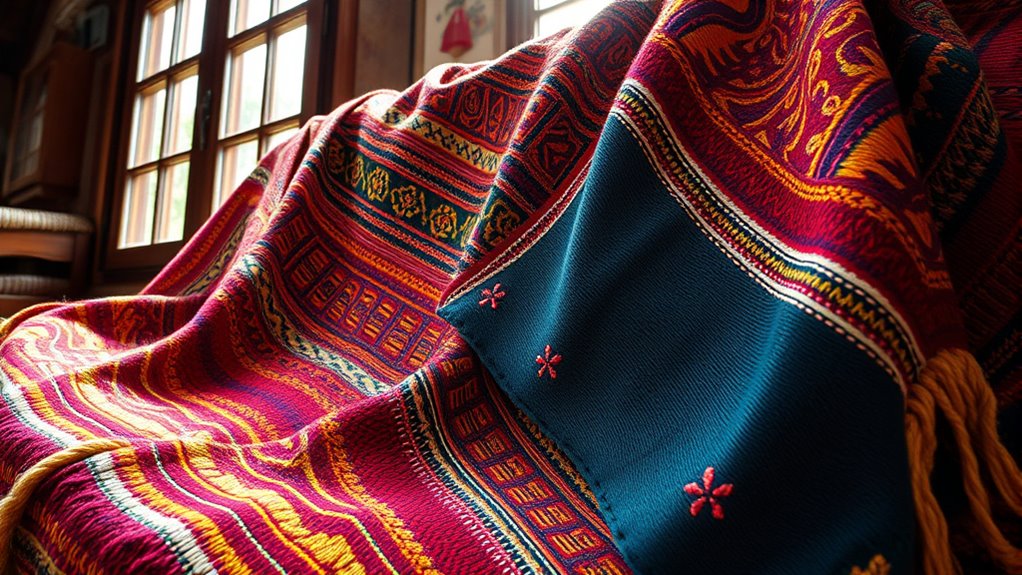
Textiles have long served as a powerful expression of cultural identity, revealing a community’s history, beliefs, and traditions through their colors, patterns, and techniques. When you look closely at a piece of fabric, you’re seeing more than just a material—you’re uncovering stories passed down through generations. Weaving traditions are central to this storytelling, as they preserve specific methods and motifs that define a community’s unique style. These traditions often involve intricate techniques that have been handed down over centuries, reflecting a community’s craftsmanship and resilience. As you observe the textiles, you notice how each weave pattern carries meaning, serving as a visual language that communicates values, social status, or spiritual beliefs. This is where textile symbolism comes into play, transforming simple fibers into powerful symbols of cultural identity. For example, certain colors might be reserved for special occasions, or specific motifs could signify societal roles or ancestral lineage. These symbols often hold sacred significance, acting as a bridge between the past and present, linking individuals to their ancestors and cultural roots.
When you engage with textiles from different cultures, you begin to recognize how weaving traditions shape identity. In some societies, handwoven fabrics are a source of pride, representing community effort and individual skill. You might see a particular pattern that’s exclusive to a region, making it a badge of local pride. Textile symbolism, thus, isn’t just decorative; it’s deeply embedded in cultural narratives. It tells stories of origin, migration, or historical events, making each textile a living document of cultural memory. The techniques used—such as dyeing, embroidery, or knotting—also carry cultural significance, often rooted in specific rituals or ceremonies. As you explore these textiles, you might learn how certain colors are derived from natural dyes, each holding symbolic meaning—red for vitality, blue for spirituality, yellow for prosperity.
In essence, weaving traditions and textile symbolism serve as powerful tools for cultural expression. They allow communities to communicate their identity visually, preserving their history and beliefs in every fiber. When you appreciate these textiles, you’re not just admiring craftsmanship—you’re connecting with a culture’s soul, understanding the values and stories that have shaped it through the ages.
Frequently Asked Questions
How Do Textiles Influence Modern Fashion Trends Globally?
Textiles influence modern fashion trends globally by introducing trendy fabrics that catch your eye and inspire new styles. You see designers blending traditional patterns with innovative textiles, creating fashion innovation that appeals worldwide. This fusion allows you to embrace diverse cultural elements in everyday wear, making your wardrobe more unique. By incorporating trendy fabrics, fashion continues to evolve, reflecting a global exchange of ideas and craftsmanship that directly impacts what you wear today.
What Are the Environmental Impacts of Textile Production in Cultural Contexts?
You might not realize it, but textile production impacts the environment through pollution and resource use. By adopting sustainable practices, you can reduce waste and conserve water, helping to manage pollution. Cultural contexts often emphasize traditional methods, which can be eco-friendly. When you support eco-conscious brands and practices, you contribute to healthier ecosystems, ensuring that cultural textile traditions remain vibrant without harming the planet.
How Do Textiles Preserve Endangered Cultural Practices?
You can help preserve endangered cultural practices through textiles by supporting ethnic preservation initiatives and craft revitalization programs. When you buy handcrafted textiles or learn traditional weaving techniques, you actively contribute to maintaining these unique skills. Your participation keeps these practices alive, ensuring they aren’t lost to time. By valuing and sharing these textiles, you promote cultural diversity and help sustain the artisans and communities that keep these traditions thriving.
Can Textiles Be Used as Political Symbols in Societies?
Yes, textiles can be powerful political symbols in societies. You can use them to convey political messages and promote cultural resistance, making your stance visually impactful. For example, wearing or displaying specific textiles can challenge oppressive regimes or highlight cultural pride. These fabrics serve as tangible expressions of identity, allowing you to communicate resistance and solidarity non-verbally, often sparking conversations and inspiring collective action.
What Role Do Textiles Play in Intercultural Exchanges and Diplomacy?
Textiles act as bridges in intercultural exchanges and diplomacy, like woven threads tying different worlds together. You see this in cultural symbolism, where traditional fabrics showcase heritage and values, and in diplomatic attire, where garments convey respect and shared identity. By wearing or exchanging specific textiles, you foster understanding and trust, turning fabric into a silent ambassador that speaks volumes across borders.
Conclusion
So, next time you proudly wear your “authentic” cultural garment, remember—you’re not just making a fashion statement; you’re practically waving a cultural flag. Who knew that a simple piece of cloth could carry centuries of history, identity, and a dash of sarcasm? So go ahead, flaunt those textiles—after all, nothing says “cultural pride” quite like a fabric that’s been through more history than your favorite sitcom.