Implementing IoT sensors and advanced analytics in your textile factory allows you to monitor machinery in real time, detect issues early, and schedule maintenance more effectively. Proper sensor calibration guarantees data accuracy, which is vital for reliable predictions. Securing this data protects your operations from cyber threats. When you combine these technologies, you boost operational efficiency and equipment lifespan. To learn how to optimize these systems further, keep exploring these innovative solutions.
Key Takeaways
- IoT sensors enable real-time monitoring of textile machinery for early fault detection and predictive maintenance.
- Sensor calibration ensures data accuracy, reducing false alarms and improving maintenance decision reliability.
- Advanced analytics interpret sensor data to forecast equipment failures, minimizing downtime and operational costs.
- Securing sensor data through encryption and access controls protects factory information against cyber threats.
- Integrating calibrated sensors and security measures enhances predictive maintenance precision and overall factory efficiency.
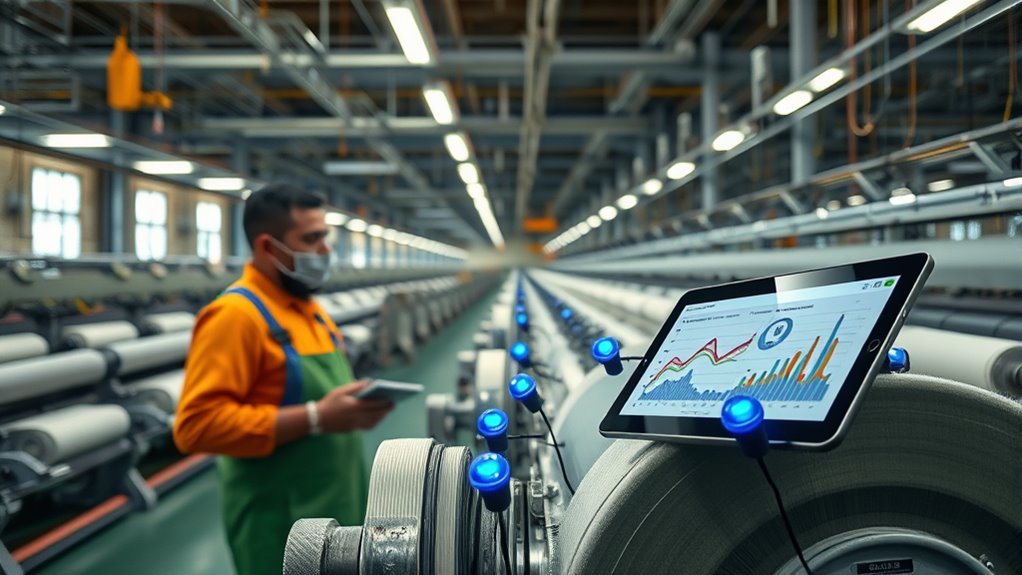
Predictive maintenance is transforming textile factories by helping you identify equipment issues before they cause costly breakdowns. By leveraging IoT sensors and advanced analytics, you can monitor machinery in real-time, catching problems early and minimizing downtime. Central to this process is sensor calibration, which guarantees your sensors deliver accurate and reliable data. Proper calibration means the sensors truly reflect the true state of your equipment, avoiding false alarms or missed warnings. Regularly calibrating sensors becomes a critical step; it maintains the integrity of your data and guarantees your predictive models work effectively. When your sensors are well-calibrated, you gain confidence that the insights guiding your maintenance decisions are precise, allowing you to act proactively rather than reactively.
Additionally, understanding the cultural significance of accurate data and reliable systems can foster a greater appreciation for the importance of technological precision in maintaining operational excellence.
Alongside calibration, data security plays an essential role in safeguarding your operational information. As your factory becomes more connected, sensitive production data and machine health insights are transmitted across networks. Protecting this information from unauthorized access or cyber threats is fundamental to maintaining your factory’s integrity and confidentiality. Implementing robust data security measures, such as encryption, secure access controls, and regular security audits, ensures that your predictive maintenance system remains resilient against cyberattacks. You need to be proactive about cybersecurity, especially when dealing with critical operational data that could impact your factory’s efficiency and reputation if compromised.
Furthermore, integrating sensor calibration and data security into your predictive maintenance strategy allows you to optimize your operations fully. When sensors are accurately calibrated, you get dependable data, which enhances the accuracy of your analytics. Reliable data enables you to predict failures more precisely, schedule maintenance at ideal times, and extend the lifespan of your equipment. Meanwhile, safeguarding that data ensures your insights remain confidential and uncompromised, preventing competitors or malicious actors from gaining access to sensitive information.
Implementing these measures also boosts your overall efficiency. You spend less time troubleshooting false alarms caused by miscalibrated sensors and avoid costly data breaches that could disrupt your operations. This integrated approach creates a more resilient and responsive maintenance system—one that adapts to your factory’s needs while protecting your valuable information.
In essence, focusing on sensor calibration and data security within your predictive maintenance framework means you’re setting your textile factory up for long-term success. Accurate sensors and secure data not only improve your maintenance accuracy but also foster trust in your digital systems. As technology advances, maintaining this balance becomes even more critical, ensuring you stay ahead of potential risks and keep your production running smoothly.
Frequently Asked Questions
What Are the Initial Costs of Implementing Iot Sensors in Textiles?
You’ll likely spend between $10,000 and $50,000 on initial IoT sensor installation and data analytics setup in textile factories. This includes costs for sensor hardware, installation, and configuring data systems. The total depends on factory size and sensor complexity. Remember, investing upfront can reduce long-term maintenance costs and downtime, making it a worthwhile expense to improve efficiency and predictive capabilities in your textile operations.
How Does Predictive Maintenance Impact Worker Safety in Textile Factories?
You’ll find that predictive maintenance markedly improves worker safety by reducing risks. Studies show factories implementing IoT sensors experience up to a 40% decrease in accidents. By proactively identifying equipment issues, you minimize hazardous situations, ensuring a safer environment. This risk reduction not only protects your team but also boosts overall productivity. Embracing predictive maintenance truly transforms safety standards and helps you maintain a healthier, accident-free workplace.
Can Small Textile Manufacturers Afford Iot-Based Predictive Maintenance?
Yes, small textile manufacturers can afford IoT-based predictive maintenance. By conducting a cost-benefit analysis, you’ll see how initial investments reduce downtime and repair costs over time. Scalability considerations allow you to start small, with essential sensors, and expand as your budget permits. This approach makes adopting IoT technology feasible, helping you improve efficiency without overwhelming your resources.
What Are the Common Challenges Faced During Iot Integration?
You’ll face hurdles like fine-tuning sensor calibration, ensuring each device speaks the same language, and managing data interoperability across systems. It’s like trying to orchestrate a symphony where every instrument must harmonize perfectly. Misaligned sensors can cause false alarms, while incompatible data formats slow down insights. Overcoming these challenges requires careful planning, standardization, and ongoing calibration to keep your IoT integration smooth and effective.
How Is Data Privacy Maintained With Iot Sensors in Textiles?
To maintain data privacy with IoT sensors in textiles, you guarantee data encryption is in place to protect sensitive information during transmission and storage. Implement strict access control measures so only authorized personnel can view or modify data. Regularly update security protocols and monitor network activity. These steps help prevent unauthorized access, safeguarding your data and maintaining trust in your predictive maintenance system.
Conclusion
Implementing IoT sensors and analytics in your textile factory transforms maintenance from a tedious chore into a game-changing superpower. You’ll catch equipment issues before they become catastrophic, saving you from endless downtime and costly repairs. With predictive maintenance, your factory runs smoother than a silk thread, pushing productivity to levels you never imagined possible. Embrace this technology now, and watch your operations soar to new heights — it’s like giving your factory a sixth sense!