

Automation in textile production using robots, Sewbots, and microfactories helps you improve efficiency, sustainability, and customization. These technologies speed up manufacturing, reduce waste, and cut costs by seamlessly handling sustainable materials. They also enable small, local factories to produce on demand, lowering transportation emissions. By integrating smart systems, you can achieve consistent quality and adapt quickly to market needs. Keep exploring to discover how these innovations are shaping the future of textiles.
Key Takeaways
- Robots and Sewbots automate sewing, cutting, and assembly, increasing efficiency and consistency in textile manufacturing.
- Microfactories leverage automation to enable localized, on-demand production, reducing transportation and inventory costs.
- Automated systems optimize sustainable material sourcing, minimizing waste and ensuring eco-friendly raw material selection.
- IoT and machine learning enhance quality control, production speed, and responsiveness in automated textile manufacturing.
- Automation promotes transparent, environmentally conscious practices, revolutionizing industry standards with smart, eco-friendly textiles.
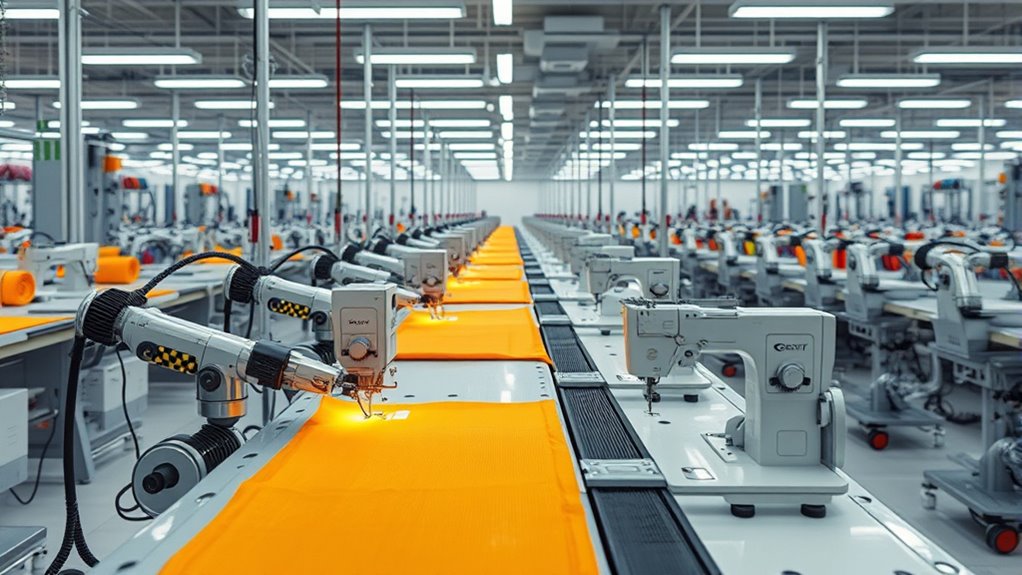
Have you ever wondered how automation is transforming textile production today? One of the most exciting developments is the integration of smart fabric technology. Using automation, manufacturers can embed sensors, conductive threads, and other electronic components directly into fabrics during the production process. This smart fabric integration allows textiles to do more than just serve as clothing; they can monitor health, track activity, or even regulate temperature. Automated systems enable precise placement of these components, ensuring consistent quality and functionality at scale. As a result, you can get innovative products like athletic wear that adjusts to your body’s needs or medical textiles that provide real-time health data. Automation also streamlines the sourcing of sustainable materials. With advanced robotics and data-driven supply chain management, manufacturers can select eco-friendly raw materials more efficiently. By automating the sourcing process, companies reduce waste and minimize their environmental footprint, aligning with growing consumer demand for sustainability. This integration of sustainable material sourcing helps create textiles that are not only high-quality but also environmentally responsible. Robots and automated machinery work seamlessly to handle raw materials, ensuring that only the best sustainable fibers are used, and that waste is minimized throughout production. This approach enhances transparency and traceability in sourcing, so you know exactly where your fabrics originate and how they were produced. Automation also facilitates just-in-time production, reducing excess inventory and waste, which further supports sustainable practices. Additionally, incorporating advanced technology such as machine learning and IoT devices into the manufacturing process can optimize production efficiency and quality control. By combining smart fabric integration with sustainable sourcing, manufacturers can produce innovative textiles that are both functional and eco-friendly, meeting modern demands for responsible manufacturing. The use of automation in these areas accelerates production cycles, reduces labor costs, and improves product consistency. It also opens the door for smaller, microfactories to operate efficiently, bringing production closer to markets and reducing transportation emissions. These microfactories leverage automation to produce customized textiles on demand, giving you more options and faster delivery times. As a result, the entire supply chain becomes more agile and environmentally conscious. In essence, automation is revolutionizing textile production by enabling smart fabric integration and sustainable material sourcing. This technological shift not only enhances product capabilities but also aligns manufacturing practices with sustainability goals. You benefit from innovations that offer smarter, more responsible textiles, crafted with precision and care through automated processes that are setting new standards in the industry.
Frequently Asked Questions
How Do Robots Adapt to Different Textile Designs?
You can see that robots adapt to different textile designs through adaptive algorithms, allowing them to recognize and modify to various patterns and materials. This design flexibility enables you to switch between different styles effortlessly, as the robots learn and optimize their actions based on the specific project requirements. By integrating these smart systems, you guarantee efficient, versatile production that keeps up with evolving fashion trends and custom designs.
What Are the Cost Implications for Small Textile Businesses?
You’ll find that adopting automation can lead to significant cost reduction for your small textile business, especially by streamlining processes and reducing labor expenses. While initial investments might seem high, the long-term boost in profit margins outweighs these costs. Automation helps you stay competitive, improve efficiency, and produce higher-quality textiles faster, ultimately making your business more profitable and resilient against market fluctuations.
How Is Worker Safety Managed Around Automated Systems?
Ever wonder how worker safety is maintained around automation? You’re responsible for ensuring proper worker training and adherence to safety regulations. You should implement safety protocols, install protective barriers, and regularly inspect automated systems. By doing so, you reduce risks and create a safer environment. Are your staff fully trained and aware of safety procedures? Staying vigilant and proactive helps prevent accidents, safeguarding everyone around your automated systems.
Can Automation Reduce Textile Waste and Environmental Impact?
Automation can considerably reduce textile waste and environmental impact by implementing recycling innovations and using sustainable materials. You’ll see less excess fabric, thanks to precise cutting and production control, minimizing waste. Automated systems also enable better sorting and recycling of scraps, and facilitate the use of eco-friendly fibers. This approach helps you produce more responsibly, reducing your carbon footprint while promoting sustainable practices in the textile industry.
What Skills Are Required for Maintenance of Textile Robots?
You need to develop skills in robot calibration and maintenance scheduling to effectively maintain textile robots. You should understand how to fine-tune robot movements, diagnose issues, and perform routine checks to guarantee peak performance. Staying updated on the latest calibration techniques and scheduling regular maintenance helps prevent breakdowns. By honing these skills, you keep the robots running smoothly, minimizing downtime and maintaining production efficiency.
Conclusion
So, as you watch robots and sewbots take over your favorite textile factories, you might think manual labor is finally obsolete. Ironically, while technology promises efficiency and precision, it also risks turning craftsmanship into just another automated commodity. Maybe, in the end, your favorite handcrafted fabric will be replaced by perfectly stitched, emotionless microfactories. After all, who needs human touch when machines can produce perfection—at least until they decide to rebel?