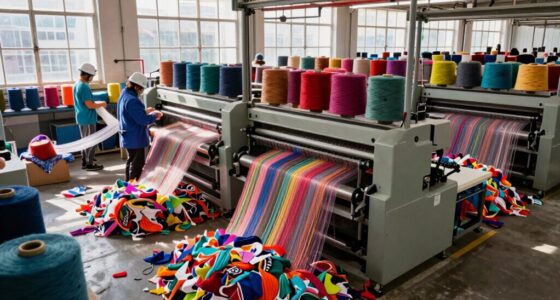
Thermal fabrics help regulate your temperature by trapping heat close to your body with innovative weaving and special fibers. They also wick sweat away, keeping your skin dry and preventing chills caused by dampness. The brushed or fleece lining creates tiny air pockets that boost insulation, while advanced tech adjusts to changing temperatures. This keeps you comfortable and safe in any outdoor conditions. Stick around to discover how these fabrics adapt to different activities and environments.
Key Takeaways
- Thermal fabrics trap body heat using innovative weaving techniques and specialized fibers, providing insulation and warmth.
- They incorporate fleece or brushed linings that create air pockets for extra insulation and heat retention.
- Moisture-wicking systems keep skin dry, reducing heat loss caused by dampness or sweat.
- Advanced fabrics regulate temperature by adapting to activity levels and environmental changes.
- They prevent chills and maintain comfort by controlling moisture and ensuring consistent body temperature.

Have you ever wondered how to stay warm in cold weather without sacrificing comfort or mobility? Thermal fabrics are designed precisely for that purpose, helping you maintain a comfortable body temperature while on the move. These fabrics excel because of their unique insulation properties, which trap heat close to your body, preventing warmth from escaping. Unlike traditional materials, thermal fabrics are engineered to maximize heat retention without adding bulk, so you stay warm without feeling weighed down or restricted.
Thermal fabrics keep you warm and mobile without bulk, with advanced insulation properties that trap heat close to your body.
A key feature of thermal fabrics is their ability to manage moisture effectively. When you exert yourself, sweat can quickly cool your body down, making you feel colder. Thermal fabrics combat this by incorporating moisture management systems that wick sweat away from your skin. This process keeps you dry and prevents the chilling effect of damp clothing, which is especially important in cold weather. By pulling moisture to the outer layers, these fabrics allow it to evaporate more quickly, maintaining a dry interior that helps your body retain heat. Additionally, the insulation properties of thermal fabrics are often enhanced through innovative weaving techniques and the use of specialized fibers. Some fabrics feature a brushed or fleece lining that creates tiny air pockets, acting as an extra layer of insulation. These pockets trap body heat and prevent it from escaping, ensuring that warmth stays close to your skin. Incorporating advanced fabric technology further enhances their ability to adapt to changing temperatures and activity levels, making them versatile for various outdoor conditions.
Moisture management also plays a significant role in how thermal fabrics help regulate temperature. By controlling sweat and moisture, these fabrics prevent the feeling of dampness that can quickly lead to chills. Instead, they keep you feeling dry and comfortable, even during vigorous activity or changes in weather conditions. This ability to wick moisture away from the skin is essential because it helps maintain a consistent body temperature, which is vital for comfort and safety in cold environments. Additionally, the color accuracy of thermal fabrics can be optimized to enhance visibility and safety in outdoor conditions. Properly designed fabrics can also incorporate body piercing considerations, ensuring that they remain comfortable and do not irritate sensitive skin areas.
thermal fleece lined base layers
As an affiliate, we earn on qualifying purchases.
As an affiliate, we earn on qualifying purchases.
Frequently Asked Questions
Are Thermal Fabrics Suitable for All Weather Conditions?
Yes, thermal fabrics are suitable for all weather conditions because of their seasonal versatility. They adapt well to both cold and warm environments, keeping you comfortable year-round. Plus, their fabric durability guarantees they withstand frequent wear and washing, making them a reliable choice. Whether you’re facing winter chills or summer heat, thermal fabrics provide the right balance of warmth and breathability, making them a versatile addition to your wardrobe.
How Do Thermal Fabrics Compare to Traditional Insulating Materials?
Think of thermal fabrics as the sturdy shield guarding you, more flexible and lightweight than traditional insulation. They often surpass conventional materials in material durability, resisting wear over time. Plus, their cost efficiency shines through, providing long-term savings without sacrificing performance. Unlike bulky insulations, thermal fabrics adapt seamlessly to your needs, offering a reliable, durable barrier that keeps you comfortable, no matter the weather.
Can Thermal Fabrics Be Recycled or Environmentally Friendly?
Thermal fabrics can be eco-friendly options, especially when made from recycled materials or sustainable fibers. However, recycling challenges exist due to the complex manufacturing processes and blending of different fibers, making recycling difficult. You can look for brands that prioritize environmentally friendly options and innovative recycling methods. While not all thermal fabrics are easily recyclable, choosing eco-conscious brands helps reduce environmental impact and promotes more sustainable fashion choices.
Do Thermal Fabrics Affect Skin Comfort and Breathability?
Thermal fabrics tend to improve skin comfort and breathability, making them a smart choice for active wear. They allow your skin to breathe, preventing overheating and excess moisture buildup. Thanks to their special structure, they wick sweat away efficiently, ensuring you stay dry and comfortable. With good airflow, thermal fabrics help you enjoy a cozy yet breathable experience, so you stay comfortable no matter the activity or environment.
How Long Do Thermal Fabrics Typically Retain Their Insulating Properties?
Thermal fabrics typically retain their insulating properties for about 20 to 50 washes, but this can vary based on material durability and care. You’ll find that high-quality fabrics offer better insulation longevity, maintaining warmth longer. To maximize their insulating lifespan, follow proper washing instructions and avoid harsh detergents. With proper care, thermal fabrics can keep providing effective insulation for quite a while, ensuring your comfort over time.
Conclusion
In the end, thermal fabrics are like your trusty armor against the cold, keeping you warm without the bulky weight of a knight’s armor. They work tirelessly, much like a loyal squire, to regulate your temperature and keep discomfort at bay. So, next time you bundle up, remember—these fabrics are your modern-day equivalent of a cozy cloak, ensuring you stay comfortable whether you’re braving the elements or simply enjoying a brisk walk through the park.