To create beautiful decorative table runners, choose fabrics like linen or cotton for versatility, or silk for luxury, depending on your style. Use simple sewing techniques like straight stitching, narrow hems, or French seams to achieve a professional finish. Embellishments such as lace, embroidery, or appliqués can add texture and personality. Paying attention to details like pressing and measuring will guarantee a polished look. Keep exploring for more tips to perfect your craft and elevate your table decor.
Key Takeaways
- Choose fabrics like linen, cotton, silk, or burlap to match your desired style and occasion.
- Use straight stitching, narrow hems, and proper pressing techniques for a professional finish.
- Add embellishments such as lace, embroidery, or appliqués to enhance visual interest.
- Finish raw edges with a serger, zigzag stitch, or binding to ensure durability.
- Incorporate layered or decorative elements and practice sewing skills for a personalized touch.
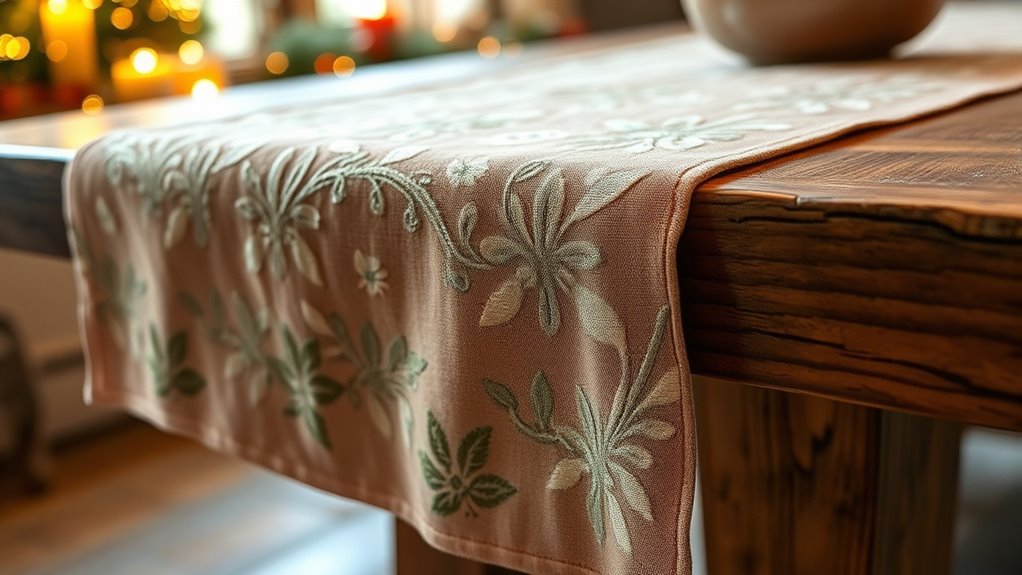
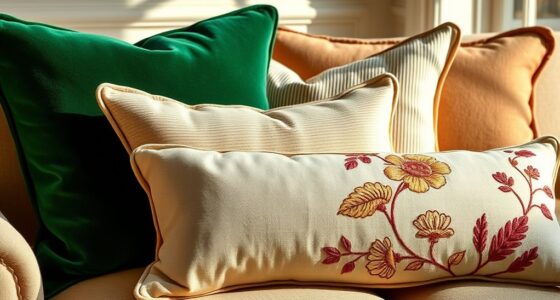
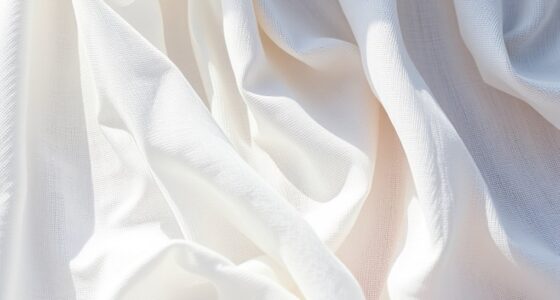
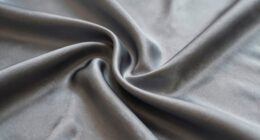
Decorative table runners instantly elevate the look of any table, adding a touch of elegance and personality to your space. When choosing fabrics for table runners, you want materials that not only look beautiful but also hold up well over time. Popular options include linen, cotton, silk, and burlap. Linen offers a natural, textured appearance that’s perfect for both casual and formal settings. Cotton is versatile, easy to work with, and comes in countless patterns and colors. Silk adds a luxurious touch, ideal for special occasions, while burlap provides a rustic charm, great for country or vintage themes. Whichever fabric you select, verify it complements your decor and fits the mood you want to create.
Decorative table runners enhance your table’s style with fabrics like linen, cotton, silk, or burlap, adding elegance and charm.
Once you’ve picked the right fabrics for table runners, mastering sewing techniques becomes essential to achieving a professional look. Start with simple techniques like straight stitching to secure your edges and create a clean, finished appearance. Using a sewing machine, set the stitch length to around 2.5mm for a balanced seam. For a polished look, consider adding a narrow hem or binding around the edges. You can fold the fabric edge inward by about a quarter inch, then press and sew to prevent fraying. For a more decorative finish, try French seams or topstitching, which add durability and visual interest. If you’re working with delicate fabrics like silk, use fine pins and a sharp needle to avoid snagging or puckering.
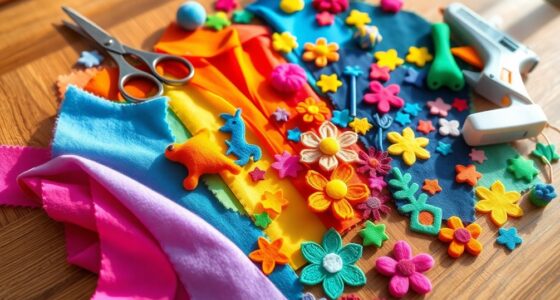
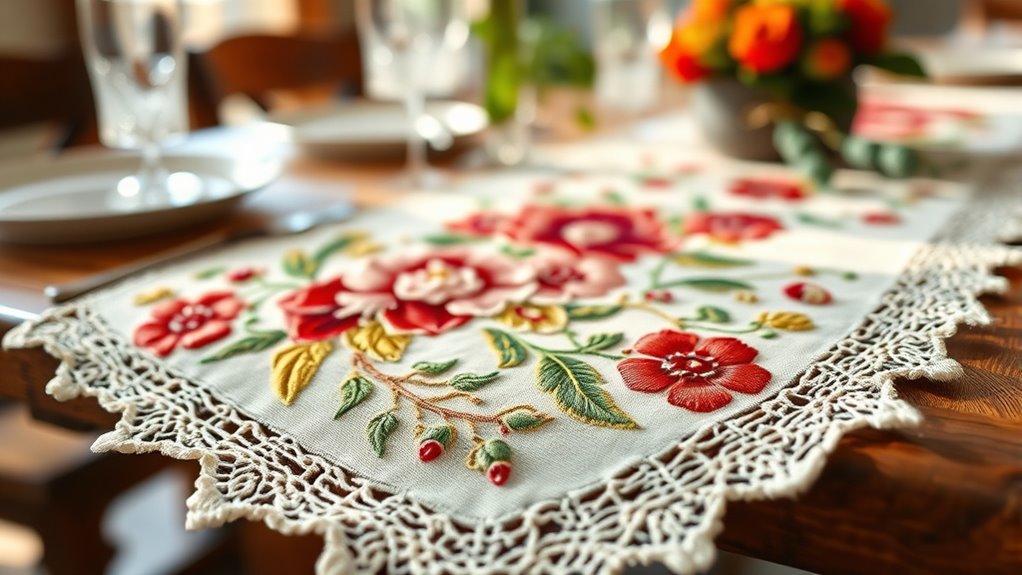
Incorporating sewing techniques such as layering or adding embellishments can give your table runners a unique flair. For example, sew on lace, embroidery, or appliqués to create texture and detail. When working with thicker fabrics like burlap, consider using a walking foot to help feed the fabric evenly through your machine. If you want a more professional look, finish raw edges with a serger or zigzag stitch to prevent fraying. Remember to measure twice and pin thoroughly before sewing to keep your edges straight and your design centered. Additionally, choosing rustic materials can enhance the farmhouse charm of your table decor. Taking your time with seam allowances and pressings will ensure your finished table runner looks crisp and refined.
Ultimately, choosing the right fabrics for table runners and applying the correct sewing techniques will help you craft stunning, durable pieces that beautifully dress your table. Whether you prefer simple, minimalist designs or intricate, decorative accents, your skill and attention to detail will shine through in every stitch. The more you practice, the more your confidence grows, and soon creating custom table runners becomes a rewarding way to showcase your style and elevate your home decor.
Top picks for "decorative table runner"
Open Amazon search results for this keyword.
As an affiliate, we earn on qualifying purchases.
Frequently Asked Questions
What Are the Best Fabrics for Outdoor Table Runners?
You should choose weather-resistant fabrics like acrylic or polyester for outdoor table runners to withstand the elements. Stain-resistant textiles, such as treated canvas or outdoor-grade nylon, are also excellent options because they repel spills and dirt. These fabrics are durable, easy to clean, and maintain their appearance over time. Opt for these materials to guarantee your table runner stays beautiful and functional, even in challenging outdoor conditions.
How Can I Make a Reversible Table Runner?
You can make a reversible table runner by using double sided quilting techniques, ensuring both sides are neatly finished. Start by choosing fabric pairs with complementary or contrasting reversible pattern ideas. Sew each side separately, then attach them with a clean, hidden seam in the middle. When finished, press carefully. This creates a versatile piece that’s both functional and beautiful, reminding you that duality adds depth to everyday decor.
What Are Eco-Friendly Fabric Options for Table Runners?
You can choose eco-friendly fabrics like those made from sustainable fibers such as organic cotton, hemp, or linen for your table runner. Recycled textiles, like repurposed denim or vintage fabrics, also make fantastic sustainable options. These choices reduce environmental impact, are durable, and add unique charm to your table setting. Opting for eco-friendly fabrics helps you create beautiful, sustainable decor that’s kind to the planet.
How Do I Prevent Fraying on Delicate Fabrics?
To prevent fraying on delicate fabrics, you should focus on fabric edge finishing and fraying prevention techniques. Use a zigzag stitch or serger along the edges to secure the fabric fibers. You can also apply a fabric sealant or pinking shears to cut edges at a zigzag pattern. These methods help keep your delicate fabric intact, ensuring your decorative table runner stays beautiful and durable for years to come.
Can I Machine Wash All Types of Fabric Used?
Can you machine wash all fabric types used in your table runners? Not always. Some fabrics, especially delicate ones, may bleed dye or shrink, risking your sewing machine’s maintenance and fabric dyeing success. Always check care labels first. When in doubt, hand wash or spot clean to preserve the fabric’s integrity. This way, your sewing projects stay vibrant, and your machine remains in top shape for future creations.
Conclusion
Decorative table runners bring style and personality to any space, making your table truly stand out. With over 65% of homeowners decorating their homes with handmade touches, sewing your own runner adds a personal, creative flair. Whether you choose bold fabrics or delicate embroidery, your unique creation will impress guests and reflect your taste. So grab your fabric and sewing machine—your beautiful, custom-made table runner is just a stitch away!