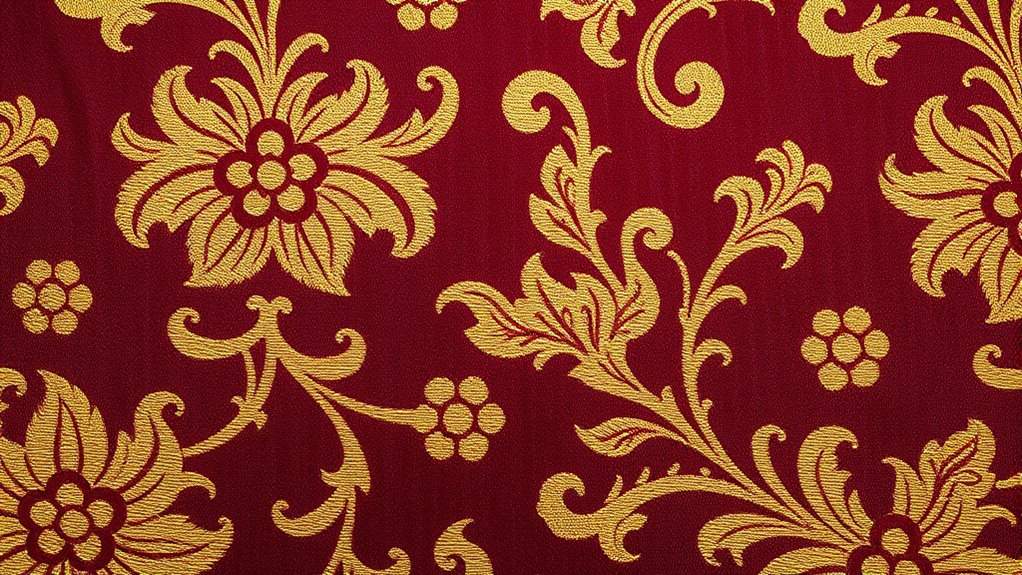
Brocade and Jacquard woven patterns carry a rich history rooted in cultural identity, craftsmanship, and technological advances. Brocade features intricate silk designs often with gold threads, while Jacquard introduced punched-card looms that made detailed, repeatable patterns possible. These textiles showcase regional symbols, social status, and artistic innovation, reflecting centuries of tradition. Exploring these techniques reveals stories of trade, tradition, and cultural exchange — uncover more to appreciate the depth behind each pattern.
Key Takeaways
- Brocade involves intricate silk designs with metallic threads, symbolizing wealth and cultural significance across regions.
- Jacquard weaving introduced punched-card systems, enabling complex, repeatable woven patterns and revolutionizing textile production.
- Both techniques showcase regional craftsmanship, reflecting local motifs, symbols, and technological innovations.
- Woven patterns in brocade and Jacquard textiles often encode cultural stories, social status, and historical symbolism.
- These textiles serve as enduring cultural artifacts, illustrating centuries of artistic mastery and technological advancement.
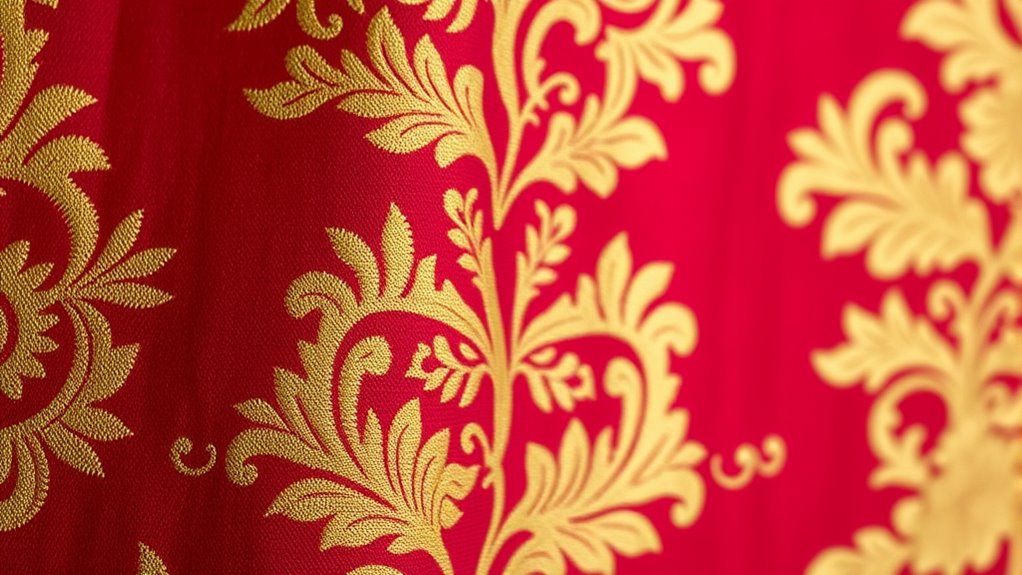
Woven patterns have long served as a vibrant expression of cultural identity and artistic craftsmanship across civilizations. When you explore brocade and jacquard textiles, you’ll notice that their intricate designs often carry deep meanings rooted in textile symbolism. These patterns aren’t just decorative; they represent stories, beliefs, and social status, making each piece uniquely significant. The symbolism varies greatly depending on regional variations, meaning that the motifs you see in one culture might hold entirely different meanings elsewhere. For example, in Asian textiles, dragons symbolize power and protection, while in European traditions, floral motifs often signify fertility or renewal. Recognizing these differences enriches your appreciation of these woven patterns, revealing layers of cultural history embedded within the fabric.
Woven patterns reveal cultural stories, beliefs, and social status through regional symbolism and intricate craftsmanship.
As you examine brocade and jacquard textiles, you’ll see how regional variations influence the motifs and techniques used. In China, brocade fabrics are known for their complex silk designs featuring auspicious symbols like phoenixes and peonies, often woven to celebrate important events or status. Meanwhile, in India, rich gold threads are woven into textiles that showcase paisleys and floral patterns, reflecting regional artistic styles and cultural values. Moving to Europe, the Jacquard loom revolutionized textile production in France, allowing for highly detailed woven patterns that often depicted historical scenes, heraldic symbols, or elaborate motifs associated with nobility. Each region’s distinct approach to weaving and pattern creation tells you about its history, climate, resources, and social structure.
The regional variations in textile symbolism are also evident in the techniques used. Brocade weaves often incorporate metallic threads, creating a luxurious appearance that signifies wealth and prestige, especially in courtly settings. Jacquard weaving, with its complex punched-card system, enabled artisans to produce intricate, repeatable designs that reflected the technological innovation of their time. When you observe these textiles, you’re not just seeing decorative art but witnessing a tradition of craftsmanship passed down through generations. These patterns serve as a visual language, communicating cultural values and societal hierarchies. They also adapt over time, influenced by trade, conquest, and cultural exchange, which further enriches the regional tapestry of textile symbolism. Additionally, modern advancements in predictive analytics are helping archivists and museums to better preserve and categorize these historical textiles, ensuring their stories endure for future generations.
In essence, exploring brocade and jacquard textiles allows you to connect with centuries of history and cultural expression. Every pattern you observe embodies a story—one shaped by regional variations, symbolism, and technical mastery. Understanding these nuances deepens your appreciation, turning each woven piece into a tangible link to the cultures and communities that created them.
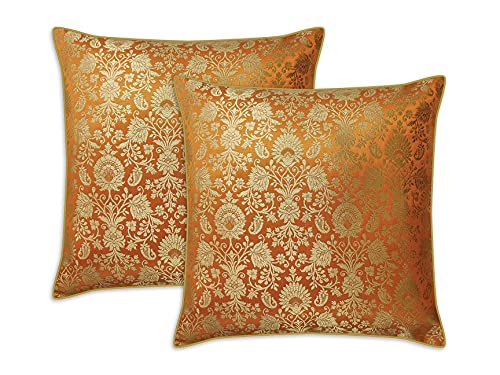
AVKA Studio Damask Throw Pillow Covers – Pack of 2 Faux Silk Brocade Decorative Pillows – 20×20 Inch – Dull Orange Gold – Indian Cushion Cover-Cover Only
QUANTITY: You get 2 gorgeous toss pillow covers measuring 20×20 Inches.INSERT IS NOT INCLUDED.
As an affiliate, we earn on qualifying purchases.
As an affiliate, we earn on qualifying purchases.
Frequently Asked Questions
How Did Brocade and Jacquard Techniques Evolve Over Centuries?
You see, brocade and jacquard techniques evolved over centuries through significant technological advancements and their historical significance. You might notice how handwoven brocade shifted to loom-based methods, improving complexity and speed. Jacquard’s invention revolutionized pattern creation, paving the way for automation in textiles. These innovations allowed artisans to produce intricate, durable designs, reflecting cultural heritage and technological progress, shaping the rich history of textile artistry you’re exploring today.
Which Cultures First Popularized Brocade and Jacquard Weaving?
You might think the most famous cultures popularized brocade and jacquard, but it’s actually the ancient textile origins that matter. Chinese artisans first mastered brocade, embedding cultural symbolism into luxurious fabrics, while France’s Jacquard revolutionized weaving with intricate patterns. These techniques spread across civilizations, proving that rich history and cultural symbolism often outshine modern fame. Ironically, the roots of these woven arts lie deep in ancient traditions, not just fashion trends.
What Materials Are Traditionally Used in Making Brocade and Jacquard Fabrics?
You’ll find that traditional brocade and jacquard fabrics often use luxurious materials like silk embroidery and metallic threads. Silk provides a smooth, shiny base, while metallic threads add richness and intricate detail. These fabrics are crafted with care, combining natural silk fibers and shiny metallic accents to create stunning, durable patterns. This combination results in textiles that are both elegant and historically significant, reflecting the craftsmanship of their cultures.
How Do Modern Technologies Influence Brocade and Jacquard Weaving?
You might think modern tech is just a small tweak, but it’s revolutionized brocade and jacquard weaving entirely. Digital weaving and automated looms allow you to create intricate patterns faster, with incredible precision, and less waste. These innovations enable you to experiment with complex designs and vibrant colors effortlessly, making traditional craftsmanship more accessible and dynamic than ever before. Embrace these tools to elevate your weaving projects to stunning new heights.
Are There Specific Symbols or Motifs Unique to Certain Regions?
Yes, regional embroidery and cultural symbolism influence specific motifs in brocade and jacquard weaving. You’ll notice patterns unique to certain areas, like floral designs in Asian textiles or geometric shapes in European fabrics. These symbols often represent local beliefs, history, or nature. When you explore different regions, you can see how cultural symbolism shapes the intricate designs, making each piece a reflection of its cultural identity.

Empress Eugénie & Ladies Tapestry Wall Hanging, French Court Jacquard Woven Textile Art, Floral Garden Scene Decor with 2 Rod Pockets & Lining, 31.5" x 26" Decorative Fabric Poster (Pastels:Empress Eugénie small size)
【Exquisite Jacquard Woven Craftsmanship】: Unlike cheap printed posters, this wall tapestry is intricately woven using professional Jacquard technology….
As an affiliate, we earn on qualifying purchases.
As an affiliate, we earn on qualifying purchases.
Conclusion
You now hold the key to understanding these ancient, intricate fabrics that have shaped civilizations and dazzled kings and queens alike. Brocade and jacquard aren’t just textiles; they’re the very threads of history, weaving stories so rich they could fill an empire! Next time you see these patterns, remember—they’re not just beautiful; they’re the most glorious, timeless masterpieces ever spun by human hands. Truly, no other art form comes close to their grandeur!

Loom and Mill Luxury Chenille Table Runner 72 Inches Long, Black Damask Jacquard Table Runners with Multi-Tassels for Halloween Dining Room Dresser Party Holiday Banquet Decorations(Black,13*72 inch)
GORGEOUS TABLE RUNNER: This stunning and opulent Jacquard Table Runners in the classic traditional style will create a…
As an affiliate, we earn on qualifying purchases.
As an affiliate, we earn on qualifying purchases.

Decora Furnishings Luxurious Woven Jacquard Victorian Floral Damask Design Heavy Fabric for Upholstery Chair Window Treatment Craft – Renaissance Rococo – 54" Width – Fabric by The Yard (Peach)
TIMELESS ELEGANCE: Elevate your interiors with the timeless elegance of our woven jacquard fabric. Its luxurious feel and…
As an affiliate, we earn on qualifying purchases.
As an affiliate, we earn on qualifying purchases.