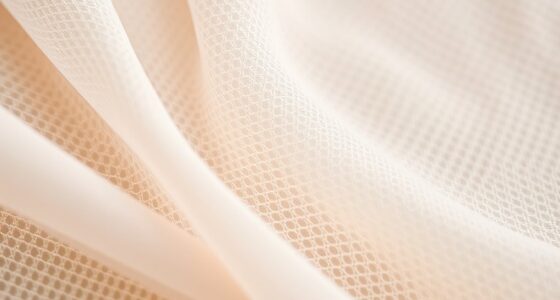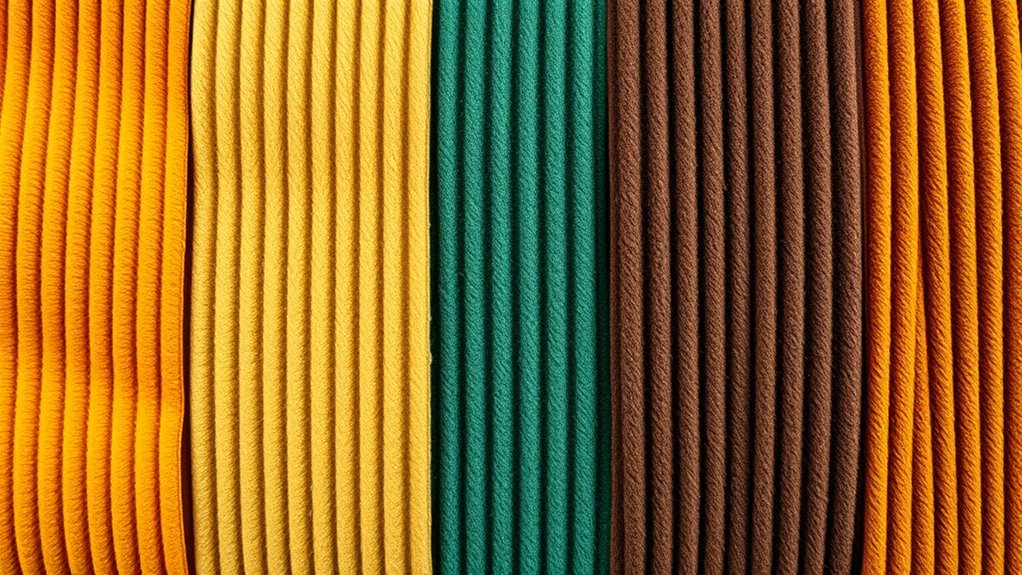

Corduroy variations primarily depend on wale counts, which are the ridges per inch. Wide wale styles have fewer ridges, creating a bold, chunky look perfect for casual jackets and pants. Pinwale, with more ridges, appears finer and more refined, ideal for tailored garments. Choosing between them helps you match your style and the look you want. To explore how these differences can enhance your wardrobe, discover more about how wale counts shape corduroy’s style and feel.
Key Takeaways
- Wale count indicates the number of ridges per inch, influencing the fabric’s appearance and texture.
- Wide wale corduroy has fewer ridges per inch, creating a bold, chunky look ideal for casual wear.
- Pinwale corduroy features a higher wale count, resulting in a finer, more delicate texture suitable for tailored garments.
- Wale variations determine the fabric’s weight, durability, and suitability for different styles and occasions.
- Understanding wale styles helps in selecting corduroy pieces that match personal style and fashion trends.
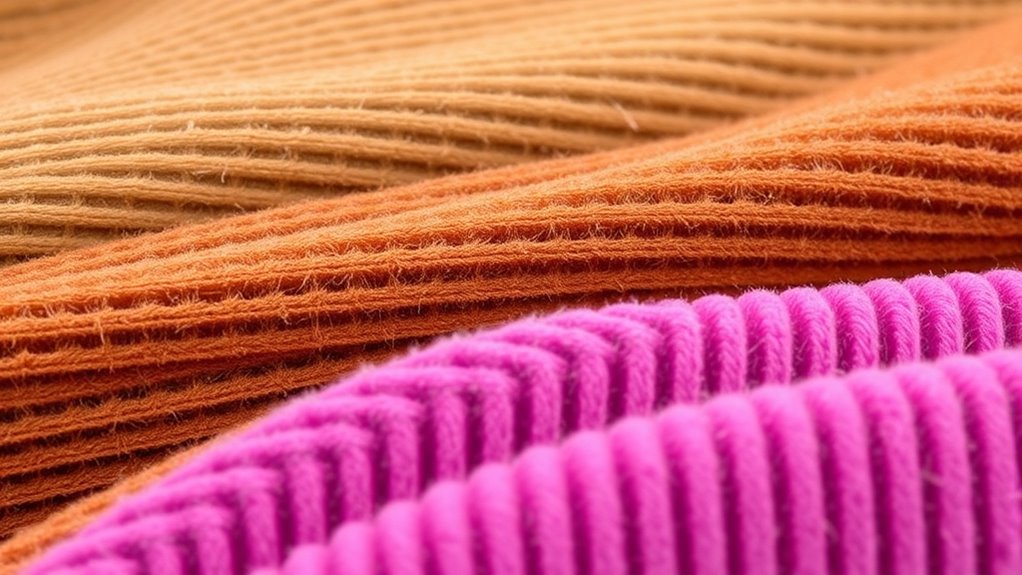
Corduroy variations offer a fascinating glimpse into the versatility of this textured fabric, transforming it from traditional clothing into innovative fashion statements. To understand how this transformation happens, it helps to look back at the history of corduroy. Originally, corduroy dates back to 18th-century England, where it was used as durable workwear for laborers and farmers. Its name, derived from the French “corde du roi,” hints at its royal connections, though it became more associated with practicality over time. As the fabric gained popularity in the 19th century, it was embraced by tailors and designers for its durability and unique ribbed texture. Fast forward, and corduroy has made its way into mainstream fashion, with iconic brands like Levi’s and J.Crew popularizing it in casual and semi-formal wear. These brands helped cement corduroy’s reputation as a stylish yet functional fabric, appealing to a broad audience. Today, you see corduroy in a variety of styles, from classic trousers to modern jackets, all owing much of their appeal to the fabric’s rich history and the brands that popularized it.
When exploring corduroy variations, one key element is the wale count, which refers to the number of ridges per inch. You might hear terms like “wide wale” or “pinwale” to describe different styles. Wide wale corduroy, with fewer ridges per inch, creates a bold, chunky look that’s perfect for statement pieces like oversized jackets or casual pants. Its thick ribs give a rugged, vintage feel that’s perfect for colder weather. Conversely, pinwale corduroy has a higher wale count, giving it a finer, more delicate appearance that’s suited for more refined or tailored garments. The variation in wale counts influences not just the look but also the feel and weight of the fabric, affecting how you style your pieces. For example, wide wale corduroy offers a more casual, laid-back vibe, while pinwale can lend a sophisticated touch to your wardrobe. Additionally, the fabric’s history and evolution demonstrate how textiles adapt over time to meet changing fashion trends and functional needs. When choosing your corduroy pieces, consider these variations to match your personal style and the statement you want to make. Whether you prefer the boldness of wide wale or the subtle elegance of pinwale, understanding these differences helps you select pieces that elevate your fashion game while paying homage to corduroy’s rich history.
Top picks for "corduroy variation wale"
Open Amazon search results for this keyword.
As an affiliate, we earn on qualifying purchases.
Frequently Asked Questions
What Are the Best Occasions to Wear Corduroy?
You can wear corduroy for both casual outings and formal events, depending on the style. For casual days, opt for relaxed-fit corduroy pants or jackets paired with sneakers or boots. For more formal occasions, choose tailored corduroy pieces like blazers or skirts, matching them with dress shoes and accessories. Corduroy’s versatility makes it suitable year-round, giving you a stylish, comfortable look no matter the event.
How Do Corduroy Styles Differ Across Regions?
Did you know that regional fabric variations influence corduroy styles markedly? In Europe, thicker wale counts are popular for a vintage look, while in Japan, finer wales reflect meticulous craftsmanship and modern aesthetics. Cultural styling influences also shape design choices, making corduroy versatile across regions. You’ll notice these differences in details, cuts, and color palettes, giving each style a unique regional identity that appeals to diverse fashion sensibilities.
Are Corduroy Waistbands Comfortable for All-Day Wear?
Yes, corduroy waistbands can be comfortable for all-day wear, especially if they feature waistband stretch. Comfort factors like soft fabric, proper fit, and elasticized sections help prevent discomfort. When you choose cords with a flexible waistband, you’ll notice less pinching or tightness, making them ideal for extended wear. Just make certain the waistband isn’t too tight and offers enough stretch to move comfortably throughout your day.
Can Corduroy Be Dyed in Vibrant Colors Easily?
Yes, you can dye corduroy in vibrant colors, but the dyeing process can be tricky. You’ll need to choose the right dye for the fabric to achieve bold shades. Keep in mind, colorfastness challenges may occur, causing the color to fade or bleed over time. To get the best results, follow proper dyeing techniques, wash the fabric thoroughly afterward, and consider using dyes designed specifically for corduroy or similar textiles.
How Does Corduroy Perform in Different Weather Conditions?
Corduroy performs well in various weather conditions, thanks to its fabric insulation and moisture absorption qualities. In colder weather, it provides warmth and insulates effectively, keeping you comfortable. When it rains or there’s humidity, its moisture absorption helps wick away sweat and light moisture, though it’s not entirely waterproof. You’ll find it versatile for different climates, making it a practical choice for year-round wear.
Conclusion
Just like the legendary tales of Robin Hood’s trusty bow, your choice of corduroy wales and styles can define your unique look. Whether you prefer the bold ridges of wide wales or the subtle charm of narrow ones, you’re crafting a story with every stitch. Embrace these variations and channel your inner hero—bold, timeless, and always ready for adventure. After all, isn’t style just another kind of legend waiting to be written?