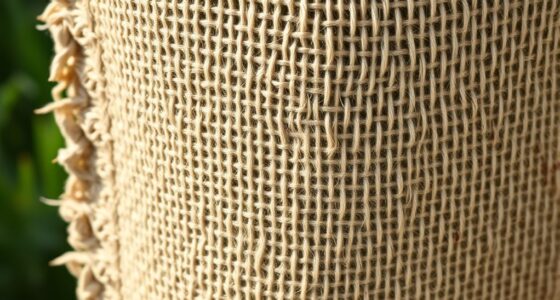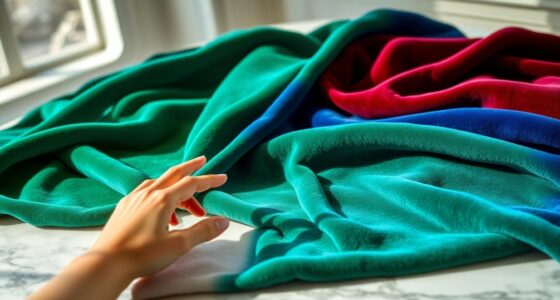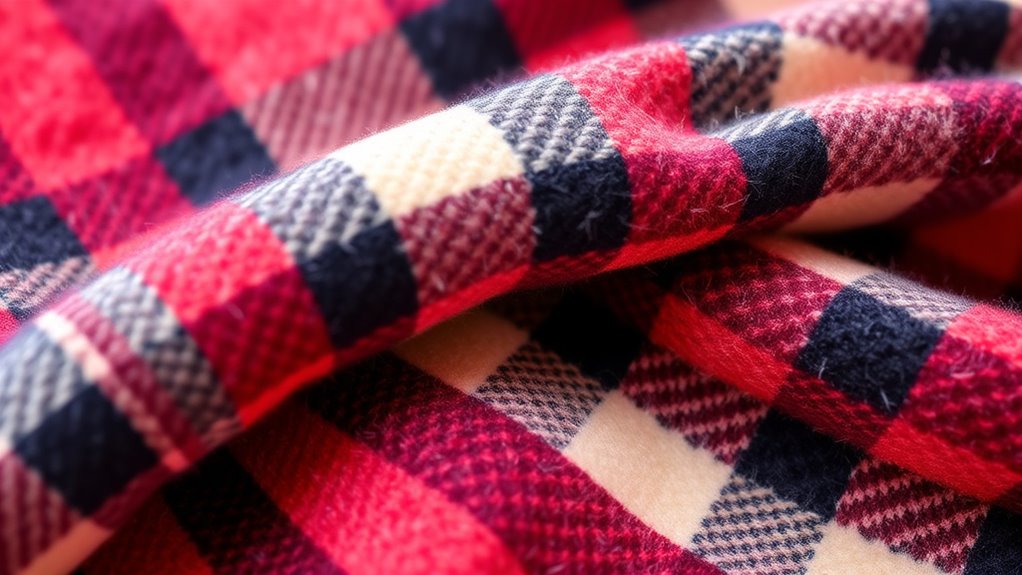

Flannel is a soft, brushed fabric crafted to keep you warm during cold weather. Its fuzzy texture comes from brushing the fibers, creating a cozy, plush feel that’s perfect for chilly days. Modern manufacturing methods also emphasize sustainable sourcing, using organic or recycled materials, making it eco-friendly. Plus, innovations improve its durability and comfort without sacrificing warmth. Curious about how flannel keeps you so cozy and eco-conscious? Keep exploring to discover more.
Key Takeaways
- Flannel is a soft, brushed fabric known for its warmth and fuzzy texture, ideal for cold weather.
- It is traditionally made from cotton, often organic or recycled, supporting sustainable sourcing.
- The brushing process creates a plush surface that enhances insulation and comfort.
- Modern manufacturing uses eco-friendly techniques like enzyme or ozone treatments to reduce environmental impact.
- Flannel combines cozy warmth with sustainable production, making it a popular choice for winter apparel.

Have you ever wondered what makes flannel such a cozy choice for colder days? The answer lies in its unique fabric qualities and the way it’s made. Flannel is a soft, brushed fabric that provides exceptional warmth, making it a favorite for winter clothing. But beyond its comforting feel, many manufacturers are now focusing on sustainable sourcing and innovative fabric manufacturing techniques to produce flannel in an eco-friendly way. This means you can enjoy its warmth while also supporting more environmentally responsible practices.
Discover how sustainable sourcing and innovative manufacturing make flannel cozy, eco-friendly, and perfect for responsible winter comfort.
Sustainable sourcing plays a significant role in the production of modern flannel. Instead of relying on conventional cotton or synthetic fibers, some brands prioritize organic or recycled materials. Organic cotton, for example, is grown without harmful chemicals or pesticides, which reduces environmental impact and promotes healthier ecosystems. Recycled fibers, on the other hand, help minimize waste by turning post-consumer textiles or plastic bottles into high-quality fabrics. When you choose flannel made from sustainably sourced materials, you’re making a conscious decision to support environmentally friendly practices and reduce your carbon footprint.
Fabric manufacturing techniques are equally important in creating the soft, brushed surface that makes flannel so appealing. Traditional methods involve brushing the fabric to raise tiny fibers on the surface, creating that plush, fuzzy feel you associate with flannel. Today, manufacturers are refining these techniques to improve durability and comfort while also reducing water and energy use during production. For instance, some use ozone or enzyme treatments that achieve the same softening effect with less environmental impact. These innovative fabric manufacturing techniques not only enhance the tactile qualities of flannel but also ensure that the process is more sustainable and less resource-intensive.
When you pick a flannel shirt or blanket, you’re not just choosing warmth—you’re also choosing a product that can be produced with a focus on sustainability and responsible manufacturing. Modern brands are transparent about their sourcing and often provide information about how their fabrics are made, giving you peace of mind that your cozy garment aligns with your values. This combination of comfort and conscientious production means you can enjoy the soft, brushed texture of flannel without guilt. As the industry continues to evolve, expect even more environmentally friendly options that maintain the fabric’s traditional warmth and softness, making flannel an even better choice for chilly days and eco-conscious living. Additionally, attention to attention in creative practice can inspire manufacturers to innovate further in sustainable fabric development, blending tradition with modern environmental awareness.
Frequently Asked Questions
Is Flannel Suitable for Summer Wear?
Flannel isn’t ideal for summer wear because it’s a warm, brushed fabric designed for cold weather. You might find it too heavy and not breathable enough to keep you comfortable in hot temperatures. Instead, opt for breathable fabrics like cotton or linen during summer, as they help you stay cool and dry. Flannel is better suited for layering or wearing in cooler seasons when warmth is needed.
Can Flannel Be Machine Washed Without Damage?
You can absolutely machine wash flannel without risking damage—if you follow the right washing instructions! Flannel’s fabric quality shines when cared for properly, making it as durable as it is cozy. Use cold water and gentle cycles to preserve its softness and prevent pilling. Avoid bleach and high heat, and your flannel will stay plush, vibrant, and ready to keep you warm through countless cold weather adventures!
What Are the Best Ways to Care for Flannel?
To care for your flannel and maintain its fabric softness, always wash it in cold water on a gentle cycle. Use mild detergent and avoid fabric softeners that can dull the fabric. When stain removal is needed, treat stains promptly with a gentle stain remover before washing. To keep your flannel cozy and fresh, tumble dry on low heat or hang to dry, ensuring it stays soft and comfortable.
How Does Flannel Compare to Fleece in Warmth?
Ever wondered which keeps you warmer, flannel or fleece? Flannel offers great versatility with its cozy, brushed surface, but fleece provides superior insulation, trapping more heat. While flannel feels soft and is perfect for layered looks, fleece is lightweight yet remarkably warm, making it ideal for colder days. If warmth is your priority, fleece generally outperforms flannel in insulation, but both are excellent choices for winter comfort.
Is Flannel Eco-Friendly and Sustainably Sourced?
Yes, flannel can be eco-friendly and sustainably sourced. When you choose flannel made from sustainable production practices and eco-conscious materials like organic cotton or recycled fibers, you’re reducing your environmental impact. Look for brands committed to ethical sourcing and environmentally responsible manufacturing. By doing so, you support eco-friendly options that prioritize sustainability, helping to preserve resources and promote greener fashion choices in your wardrobe.
Conclusion
Imagine wrapping yourself in a cozy blanket on a chilly day—flannel feels just like that. Its brushed fabric traps heat and offers comfort, making cold mornings much easier to face. When I first discovered flannel, it was like finding a warm hug in clothing form. With its soft touch and insulating qualities, flannel isn’t just fabric; it’s your go-to shield against winter’s chill, turning cold days into moments of warmth and coziness.