To clean upholstery fabrics at home, start by vacuuming thoroughly with the attachment to remove dirt and debris. For spots and stains, use a gentle mixture of mild dish soap and cool water to blot the affected area, working from outside inward. For stubborn stains, try a solution of equal parts white vinegar and water, testing it on a hidden spot first. Blot dry and allow your upholstery to air dry completely. Keep your furniture looking its best by following these simple steps, and learn more tips to maintain your fabrics effectively.

Get your wardrobe favorites delivered free — and shop member deals
- Fast, free delivery on millions of items
- Access to Prime Big Deal Days deals on October 6–7
- Prime Video, Amazon Music and more included
Key Takeaways
- Vacuum thoroughly to remove loose dirt, dust, and pet hair before cleaning upholstery.
- Blot stains immediately with a clean, damp cloth using mild soap or vinegar solutions.
- Test cleaning solutions on hidden fabric areas to prevent discoloration or damage.
- Use gentle blotting motions rather than rubbing to avoid fiber damage and spreading stains.
- Allow upholstery to air dry completely, avoiding direct sunlight or heat sources for best results.
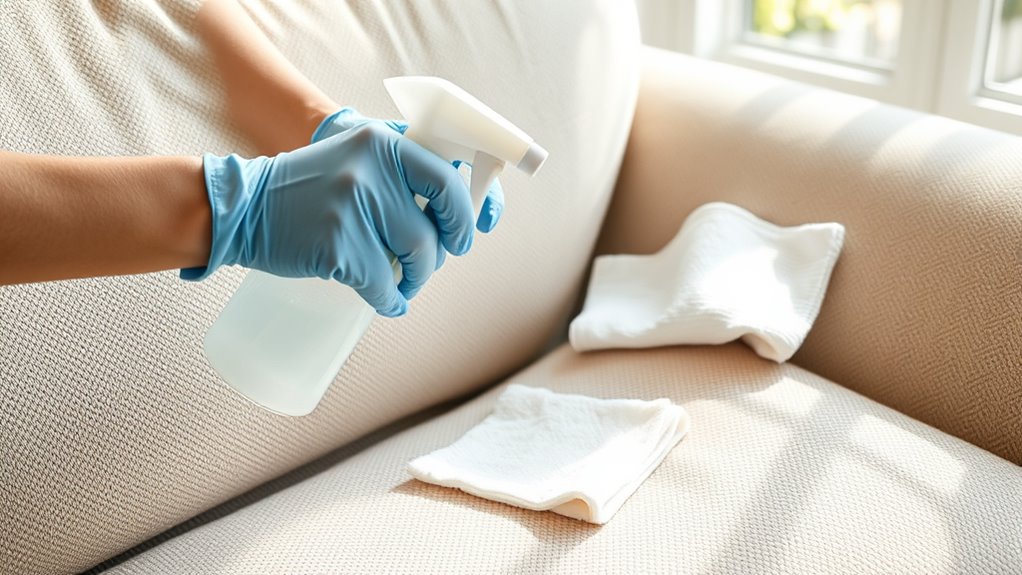
Keeping your upholstery fabrics clean at home is easier than you might think. With a few simple steps and the right techniques, you can maintain your furniture’s appearance and prolong its lifespan. One of the key elements to successful cleaning is fabric protection. Applying a fabric protector spray creates an invisible barrier that helps repel liquids and prevent stains from setting. Before you do this, check your furniture’s care label to ensure compatibility. Once protected, you’ll find it easier to keep your upholstery looking fresh, since spills and dirt won’t adhere as easily, giving you more time to respond to messes with effective stain removal techniques.
Protect your upholstery with a fabric shield to make stain cleanup easier and extend furniture life.
When it comes to cleaning, the first step is to vacuum your upholstery thoroughly. Use the upholstery attachment to remove loose dirt, pet hair, and debris from all surfaces, including crevices and seams. This prevents dirt from embedding deep into the fibers during cleaning. After vacuuming, identify any stains or spots that need extra attention. For fresh spills, act quickly by blotting—never rubbing—with a clean, absorbent cloth to soak up as much liquid as possible. For stubborn stains, you need to employ specific stain removal techniques suited to the fabric type. A common approach involves mixing a few drops of mild dish soap with cool water, then gently blotting the stain with a clean cloth dampened in this solution. Avoid saturating the fabric, as excess moisture can lead to mold or damage.
For more persistent stains, consider using a mixture of equal parts white vinegar and water. Vinegar acts as a natural deodorizer and stain remover, breaking down grime without harsh chemicals. Test any cleaning solution on a hidden area first to ensure it doesn’t discolor or damage the fabric. When cleaning, always work from the outside of the stain inward to prevent spreading. After treating the stain, rinse the area with a damp cloth to remove any residue, then blot dry with a clean towel. Allow the fabric to air dry completely, avoiding direct heat or sunlight that might cause fading.
Regular maintenance and proactive fabric protection make stain removal easier over time. If you follow these techniques—vacuuming regularly, acting swiftly on spills, and using appropriate cleaning solutions—you’ll keep your upholstery fabrics in top condition. Remember, patience and gentle handling are key; aggressive scrubbing can damage delicate fibers. Incorporating professional cleaning methods can also extend the life of your furniture and ensure a deeper cleanse. With consistent care, your furniture will stay inviting, clean, and beautiful for years to come.
As an affiliate, we earn on qualifying purchases.
Frequently Asked Questions
Can I Use Bleach on My Upholstery Fabrics Safely?
You should avoid using bleach on your upholstery fabrics unless you’re certain about its safety. Bleach safety depends on the fabric compatibility—some materials can become damaged or discolored. Always check the manufacturer’s label for cleaning instructions. If bleach is recommended, dilute it properly and do a patch test first. When in doubt, opt for gentle cleaning solutions to safeguard your furniture and ensure its longevity.
How Often Should I Clean My Upholstery Fabrics?
Did you know that dust mites and allergens can accumulate in upholstery fabrics within just three months? To maintain a healthy environment, you should follow a regular maintenance schedule, cleaning your fabrics every 6 to 12 months. This cleaning frequency helps prevent dirt buildup, stains, and odors, ensuring your furniture stays fresh and inviting. Regular upkeep also prolongs the life of your upholstery, saving you money in the long run.
Are There Natural Alternatives to Chemical Cleaners?
Yes, you can use eco-friendly solutions for DIY cleaning your upholstery. Natural alternatives like a mixture of water and white vinegar, or baking soda, work well to remove stains and odors without harsh chemicals. You might also try a gentle dish soap diluted in water. These eco-friendly solutions are safe for your family and the environment, providing effective cleaning while avoiding the use of chemical cleaners.
What Should I Do if My Stain Doesn’T Come Out?
When the saying “If at first you don’t succeed, try, try again” comes to mind, remember to be patient with stain removal. If a stain doesn’t come out, don’t force it. Instead, do a fabric test in an inconspicuous area to avoid damage, then try gentle cleaning methods again. Sometimes, stubborn stains require professional cleaning, but persistence and careful fabric testing often do the trick.
How Do I Clean Delicate or Vintage Upholstery Fabrics?
When cleaning delicate or vintage upholstery fabrics, you should always prioritize delicate fabric preservation and vintage upholstery care. Gently vacuum the surface with a soft brush attachment to remove dust. Use a mild, pH-neutral cleaner diluted with water, testing it on a hidden area first. Lightly dab the fabric with a soft cloth, avoiding excessive moisture. Avoid scrubbing or harsh chemicals to prevent damage and preserve the fabric’s integrity.
Conclusion
Now that you know how to clean your upholstery fabrics at home, you can keep your furniture looking fresh and inviting. Regular maintenance not only extends the life of your fabrics but also creates a healthier living space. Are you ready to take control of your home’s cleanliness and enjoy a more comfortable environment? With these simple tips, you’ll be surprised how easy it is to maintain beautiful, spotless upholstery on your own.
Evergreen bestsellers Picks
bestsellers
As an affiliate, we earn on qualifying purchases.