
To read a fabric care label like a pro designer, start by identifying the symbols representing washing, drying, ironing, and dry cleaning methods. Familiarize yourself with common icons, such as the tub for washing or the iron for heat settings, and understand their specific instructions. Always check for additional notes on bleaching or special treatments. Mastering these symbols helps you care for garments correctly and confidently. Keep exploring further details to become even more skilled at interpreting fabric labels.
Key Takeaways
- Familiarize yourself with standardized symbols for washing, drying, bleaching, ironing, and dry cleaning.
- Always check for specific instructions like “hand wash only” or “dry flat” to maintain fabric integrity.
- Use reliable reference guides or charts to accurately interpret less common or complex symbols.
- Pay attention to additional notes on the label that specify special care or color separation needs.
- Develop a routine to quickly decode labels, preventing damage and ensuring professional-quality garment care.

Have you ever looked at a fabric care label and felt overwhelmed by the symbols and instructions? You’re not alone. Those tiny fabric symbols can seem like a foreign language, but once you understand them, caring for your clothes becomes much simpler. The key is learning how to read these symbols correctly, which helps you avoid damaging your garments and extends their lifespan. When it comes to label troubleshooting, knowing what each symbol indicates saves you from guesswork and unnecessary mistakes.
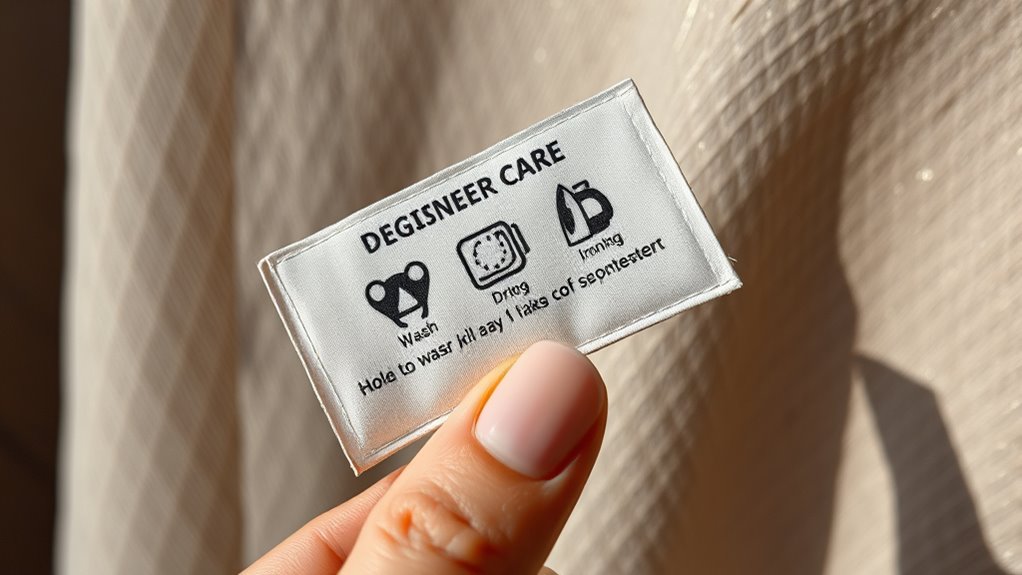
Start by familiarizing yourself with the basic fabric symbols. A washing tub, for example, indicates whether the item can be washed and at what temperature. A hand symbol means hand wash only, and a circle signifies dry cleaning options. Drying symbols, such as a square with a circle inside, tell you whether you can tumble dry or need to air dry. Iron symbols show temperature limits, with dots indicating low, medium, or high heat. Recognizing these symbols is essential for label troubleshooting because they give instant guidance on how to treat your garments safely.
Familiarize yourself with symbols like washing tubs, hand washes, and dry cleaning icons for safe garment care.
One of the most common issues is misinterpreting these symbols, which can lead to damaged clothing. For example, ignoring a “do not bleach” symbol or attempting to tumble dry a garment marked “air dry only” can ruin the fabric. This is why it’s imperative to learn what each symbol means. If you’re unsure, consult a fabric symbols chart or guide—these are widely available online and often included in garment care resources. Taking a moment to verify symbols prevents mistakes that could be costly or permanent.
Another tip for label troubleshooting is to pay attention to additional instructions on the label. Sometimes, you’ll find specific notes like “wash with like colors” or “dry flat.” These details are essential for maintaining the integrity of the fabric and preventing issues like color bleeding or stretching. If a label seems confusing, look for symbols that match or clues in the text. Remember, most labels follow a standardized system, so once you learn the basics, you’ll quickly decode even complex instructions. Furthermore, understanding the importance of contrast ratio in projector images can help you optimize your viewing experience at home.
Finally, keep in mind that some labels include symbols for special treatments like bleaching, ironing, or dry cleaning. These symbols are often overlooked but are critical for delicate or specialty fabrics. Misreading them can cause irreversible damage or discoloration. As you become more confident, you’ll find label troubleshooting becomes second nature, allowing you to care for your clothes like a professional designer. Mastering this skill guarantees your wardrobe stays in top condition, and you avoid costly mistakes—all by simply understanding those tiny fabric symbols on the label.
Frequently Asked Questions
How Often Should I Follow the Fabric Care Instructions?
You should follow fabric care instructions every time you wash or clean your garments. Doing so guarantees fabric preservation and extends garment longevity. Ignoring these instructions may cause damage, fading, or shrinking, reducing your clothing’s lifespan. Always read labels before washing, drying, or ironing. Consistently following care guidelines helps maintain the quality of your clothes, saving you money and keeping your wardrobe looking fresh and new longer.
Can I Ignore the Symbols if I Know the Fabric?
Ignoring fabric label myths might seem tempting, but don’t underestimate care label accuracy! Even if you think you know the fabric, those symbols are your secret weapon against disaster. Relying solely on your knowledge risks ruining clothes or shrinking them beyond recognition. So, no, you can’t just ignore the symbols — they’re designed to protect your wardrobe. Trust the care label; it’s the ultimate fashion lifesaver!
What Do I Do if the Label Is Missing?
If the label is missing, don’t worry—you can still care for your fabric properly. Start by fabric identification through touch and appearance. For label replacement, consider creating a custom tag with care instructions based on the fabric type. This way, you’ll remember how to wash and dry it correctly in the future. Always test a small area if unsure, ensuring your garment stays in great condition.
Are There Eco-Friendly Alternatives to Traditional Fabric Care Labels?
You can use sustainable labels with eco-friendly symbols as an alternative to traditional fabric care labels. These eco-friendly symbols clearly communicate care instructions while reducing environmental impact. By choosing garments with sustainable labels, you show your commitment to eco-conscious practices. Look for brands that prioritize eco-friendly materials and labeling, making it easier to care for your clothes responsibly without sacrificing clarity or style.
How Do Care Labels Differ for Vintage Versus New Clothing?
Reading care labels is like decoding a secret code. For vintage fabric preservation, labels often emphasize gentle cleaning, avoiding harsh chemicals, and air drying, reflecting careful handling. In contrast, new clothing standards include more detailed symbols for machine washing, tumble drying, and ironing. You’ll notice vintage labels tend to be simpler, focusing on preservation, while new clothing labels are more all-encompassing, guiding you to maintain the garment’s longevity with modern techniques.
Conclusion
Now that you’ve uncovered the secrets hidden in fabric care labels, you’re like a skilled navigator steering through a sea of textiles. With each symbol and instruction, you’re wielding a compass that keeps your wardrobe vibrant and intact. So go ahead, plunge into care labels with confidence—your clothes will thank you for the expert care, and your fashion journey will stay smooth sailing. You’re no longer just a wearer; you’re a fabric whisperer.