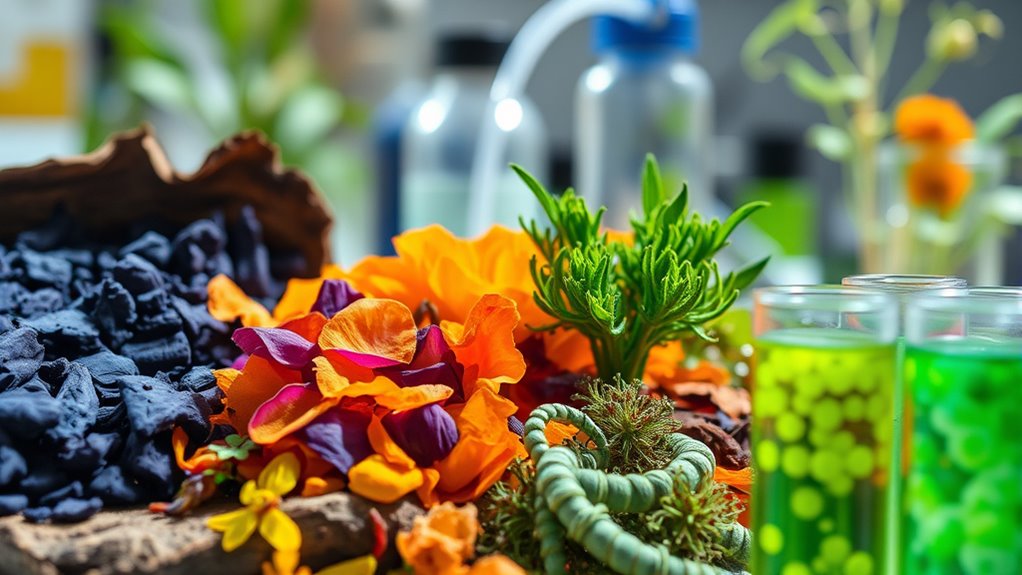

Exploring sustainable dye sources reveals eco-friendly options like natural dyes derived from plants, minerals, or insects, which are renewable and biodegradable, reducing water and chemical use. Dope dyes involve adding pigments during fiber production, cutting waste and energy consumption. Microbial dyes, produced by bacteria, fungi, or algae, turn waste into vibrant colorants with minimal environmental impact. To discover more about how these innovative dyes can transform textile sustainability, continue exploring these eco-conscious solutions.
Key Takeaways
- Natural dyes are derived from renewable plant, mineral, and insect sources, offering vibrant colors with lower environmental impact.
- Dope dyes incorporate pigments directly into synthetic fibers, reducing water and chemical use during dyeing.
- Microbial dyes are produced by bacteria, fungi, or algae, utilizing waste materials and lowering energy and chemical requirements.
- Eco-friendly mordants and biodegradable processes ensure safe dye fixation and minimal ecological footprint.
- These sustainable dye sources meet consumer demand for eco-conscious fashion while promoting resource efficiency and pollution reduction.

Sustainable dye sources are transforming the textile industry by offering eco-friendly alternatives to traditional synthetic dyes. As someone passionate about reducing environmental impact, you’ll find that using natural, dope, and microbial dyes can significantly cut down pollution and resource consumption. One key aspect is the use of eco friendly mordants, which are substances that help fix dyes onto fabrics without harming the environment. Unlike heavy metal mordants used in conventional dyeing, eco friendly mordants are derived from plant-based materials or other biodegradable substances, making the entire process safer for ecosystems and workers alike. This shift towards biodegradable mordants aligns with the broader goal of establishing biodegradable dyeing processes that break down naturally without leaving toxic residues. When you choose dyes and mordants that are biodegradable, you’re supporting a cycle that minimizes waste and pollution, turning what was once a pollutive industry into one that’s regenerative.
Natural dyes are derived from plants, minerals, and insects. They’re renewable, biodegradable, and often require less energy and water compared to synthetic dyes. For example, using indigo or madder root not only provides vibrant colors but also reduces chemical runoff into water sources. Dope dyes, or dope dyeing, involves adding pigments directly into synthetic fibers during fiber production. Although not entirely natural, this process minimizes dye wastage and reduces water and energy use, making it more sustainable than traditional dyeing methods. Microbial dyes, on the other hand, are produced through bacteria, fungi, or algae that synthesize colorants naturally. You might find microbial dyes especially appealing because they can be cultivated on waste materials, turning byproducts into valuable dyes, and they often require milder processing conditions. Additionally, exploring preppy dog names can inspire branding that emphasizes sophistication and eco-consciousness for your sustainable product line. These innovative sources are paving the way for cleaner, more sustainable dyeing practices.
The benefits of these sustainable dye sources extend beyond environmental impact. They often require less water, energy, and toxic chemicals, making the entire process safer for workers and surrounding communities. Because they’re biodegradable, they reduce long-term waste and pollution, helping you maintain a more responsible manufacturing footprint. As you explore these options, you’ll notice that integrating eco friendly mordants and biodegradable dyeing processes isn’t just good for the planet—it’s also increasingly aligned with consumer demand for eco-conscious products. By adopting these sustainable practices, you not only contribute to environmental preservation but also differentiate your brand as a leader in ethical fashion. Overall, shifting to natural, dope, and microbial dyes offers a practical, innovative way to reimagine textile dyeing—one that’s cleaner, greener, and more aligned with future sustainability goals.
Frequently Asked Questions
How Do Natural Dyes Compare in Colorfastness to Synthetic Dyes?
Natural dyes generally have lower colorfastness compared to synthetic dyes, meaning they tend to fade faster and have less resistance to washing, sunlight, and wear. You might notice reduced color longevity and fading resistance over time, especially if not properly mordanted or treated. While natural dyes offer eco benefits, synthetic dyes usually provide more vibrant, durable colors that last longer, making them preferable for applications where color retention is vital.
What Are the Environmental Impacts of Microbial Dye Production?
Microbial dye production generally has a lower environmental impact because it undergoes biodegradability assessment, ensuring the dyes break down naturally. You’ll find it uses fewer resources compared to synthetic dyes, reducing water and energy consumption. Plus, microbial dyes produce fewer toxic byproducts, which minimizes pollution. By choosing microbial dyes, you support sustainable practices and help lessen the chemical load on ecosystems, making it a greener alternative overall.
Can Dope Dyes Be Used on All Fabric Types Effectively?
Yes, dope dyes can be used effectively on many fabric types, but fabric compatibility and dye absorption vary. You’ll find they work well with synthetic fibers like polyester due to better dye affinity, while natural fibers like cotton may need additional treatment for ideal results. To guarantee vibrant, long-lasting colors, test dye absorption on your specific fabrics and adjust dyeing conditions accordingly.
Are There Any Health Risks Associated With Microbial Dyes?
You might wonder if microbial dyes pose health risks, and research suggests they generally don’t. However, some health concerns and microbial toxicity could arise if dyes aren’t properly processed or tested. It’s essential to guarantee these dyes meet safety standards, as improper handling might cause skin irritation or allergic reactions. Staying informed about regulatory approvals helps you avoid potential health issues linked to microbial dyes.
How Scalable Are Sustainable Dye Sources for Industrial Use?
Sustainable dye sources can be scaled for industrial adoption, but supply chain challenges exist. You need to contemplate consistent raw material supply, production costs, and infrastructure readiness. While microbial dyes and natural options show promise, developing reliable, large-scale production processes is essential. Overcoming these hurdles will help businesses adopt eco-friendly dyes more broadly, making sustainable options viable for large-scale textile manufacturing.
Conclusion
By choosing sustainable dye sources like microbial dyes, you can drastically reduce environmental impact. Imagine a small clothing brand that switches to microbial dyes, cutting water usage by 50% and eliminating toxic runoff. This shift not only benefits the planet but also appeals to eco-conscious consumers. Embracing natural, dope, or microbial dyes isn’t just a trend—it’s a powerful step toward a greener future. You have the power to make sustainable choices that truly make a difference.