Cotton is a natural fiber that comes from the seed hairs of the cotton plant, renowned for its softness, breathability, and durability. It’s versatile and widely used in making clothing, home textiles, and industrial products. Different types like upland and Pima offer unique qualities. If you want to discover how cotton is cultivated, processed, and turned into fabric, there’s more to explore about its properties, types, and many uses.
Key Takeaways
- Cotton is a natural fiber derived from the seed hairs of the cotton plant, known for its softness and breathability.
- It has various types like upland and Pima, each with distinct fiber qualities and uses.
- Cotton’s properties include durability, moisture absorption, and comfort, making it ideal for textiles.
- The cultivation process involves careful selection, planting, harvesting, and processing to ensure fiber quality.
- Cotton is used in clothing, home textiles, and industrial products due to its versatility and eco-friendly nature.
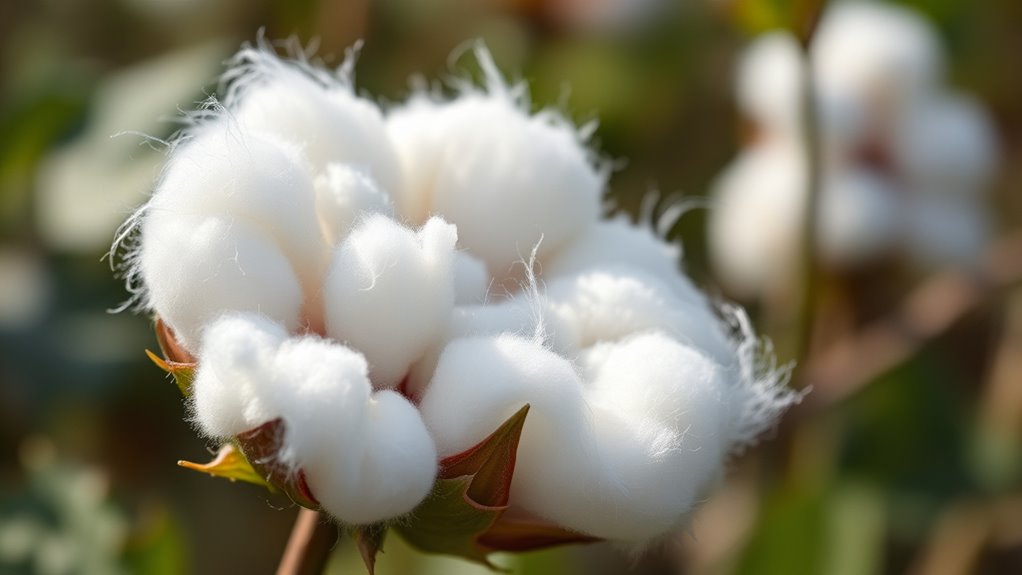
Have you ever wondered what makes cotton such a popular and versatile fiber? It all begins with how cotton is cultivated and processed. Cotton cultivation techniques are carefully designed to maximize both quality and yield. Farmers typically select specific cotton varieties suited to their climate and soil conditions. They prepare the land by plowing and sometimes fertilizing, then plant the seeds at the right depth to ensure healthy growth. During the growing season, they manage pests and weeds, often using integrated pest management methods to minimize chemical use. Proper watering is essential, especially during flowering and boll development, to produce high-quality fibers. Once the cotton bolls mature and open, it’s time for harvest, which can be done mechanically or manually depending on the region.
Cotton cultivation involves careful planting, pest management, and harvesting to ensure high-quality fibers.
After harvesting, the critical step is cotton fiber processing. This stage transforms raw cotton into the soft, fluffy fibers that end up in your clothes and textiles. First, the harvested cotton undergoes ginning, where the seeds are separated from the fibers. This process involves machines called gin stands that remove debris and prepare the fibers for further processing. The cleaned cotton then goes through cleaning and carding, which straighten and align the fibers, making them easier to spin. Carding also helps remove any remaining impurities, ensuring the quality of the final product.
From there, the fibers are spun into yarns or threads, which can be woven or knitted into fabric. During spinning, the fibers are twisted together to form a continuous thread, giving the fabric strength and flexibility. The entire process from cotton cultivation techniques to fiber processing emphasizes precision and quality control. It’s a delicate balance between agricultural practices and industrial techniques that results in the soft, durable cotton fibers you’re familiar with.
Cotton’s versatility stems from this meticulous cultivation and processing. Its properties—breathability, softness, and durability—are directly influenced by these early steps. Different types of cotton, like upland or Pima, undergo similar processes but have unique qualities based on their cultivation and fiber characteristics. Whether used in clothing, home textiles, or industrial products, cotton’s journey from seed to fabric is a tribute to the careful techniques involved at every stage. So, next time you wear cotton clothing, remember the detailed cultivation and processing efforts that make it such a remarkable natural fiber.
Frequently Asked Questions
How Is Organic Cotton Different From Conventional Cotton?
Organic cotton differs from conventional cotton because it’s grown through sustainable farming practices that avoid synthetic chemicals and pesticides. You’ll find that organic certification guarantees the cotton meets strict standards for environmental and social responsibility. By choosing organic cotton, you support eco-friendly methods, healthier ecosystems, and safer conditions for farmers. It’s a more sustainable option that reduces chemical use and promotes better soil health, making it a better choice for the planet.
What Are the Environmental Impacts of Cotton Cultivation?
You might think cotton cultivation is eco-friendly, but it actually has significant environmental impacts. It consumes a lot of water and requires extensive pesticide use, which harms ecosystems and pollutes water sources. These practices can lead to soil degradation and threaten biodiversity. By understanding these issues, you can support sustainable cotton options that reduce water consumption and pesticide reliance, helping protect the environment while enjoying cotton products.
Can Cotton Be Recycled or Repurposed Effectively?
Yes, you can recycle and repurpose cotton effectively by using various recycling methods like mechanical and chemical processes. These methods break down cotton fibers for reuse, reducing waste. Upcycling practices also allow you to creatively transform old cotton textiles into new, useful items, like quilts or bags. By choosing these options, you help lessen environmental impact and extend the life of cotton products, making your efforts both eco-friendly and innovative.
How Does Cotton Production Affect Local Economies?
You might be surprised to learn that cotton farming supports over 350 million people worldwide. When you consider local economies, cotton production greatly boosts local employment, providing jobs in farming, processing, and manufacturing. This industry creates economic stability in rural areas and stimulates related sectors like transportation and retail. By investing in sustainable cotton practices, you can help guarantee these communities thrive while minimizing environmental impacts.
What Innovations Are Emerging in Cotton Processingtechnology?
You’ll find that cotton fiber innovations are transforming how we process cotton, making it more efficient and eco-friendly. Advanced processing techniques like laser technology and enzymatic treatments help improve fiber quality and reduce waste. These innovations enable you to produce softer, stronger textiles faster while minimizing environmental impact. Staying updated on these advancements allows you to leverage cutting-edge methods, ensuring higher quality products and sustainable practices in cotton processing.
Conclusion
Now that you know what cotton is, its properties, types, and uses, you can appreciate why it’s such a crucial crop worldwide. Did you know that cotton accounts for about 2.5% of the world’s farmland but provides over 25% of the world’s textiles? This shows its incredible importance in global agriculture and industry. Understanding cotton’s versatility helps you see its impact on everyday life, from clothing to home furnishings, making it truly a remarkable natural fiber.