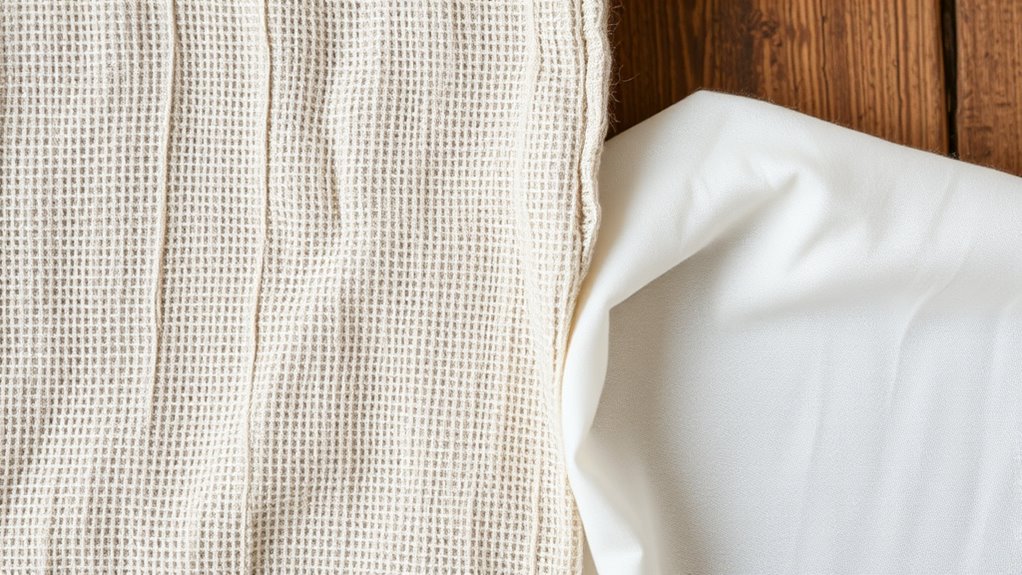

Linen and cotton are both natural fabrics, but linen is more sustainable, using less water, pesticides, and fertilizers. It’s stronger, more durable, and gets softer over time, making it a great eco-friendly option. Cotton is softer initially and more affordable, but it requires more water and chemicals to grow, and it wears out faster. To understand which fabric suits your needs best, explore more about their environmental impacts and uses ahead.
Key Takeaways
- Linen is more sustainable, requiring less water, pesticides, and fertilizers than cotton.
- Linen fibers are stronger and more durable, lasting longer with proper care.
- Linen offers superior moisture-wicking and becomes softer over time, enhancing comfort.
- Cotton is initially softer and more affordable but tends to wear out faster.
- Both fabrics are breathable, but linen’s eco-friendly cultivation makes it a better choice for sustainability-conscious consumers.
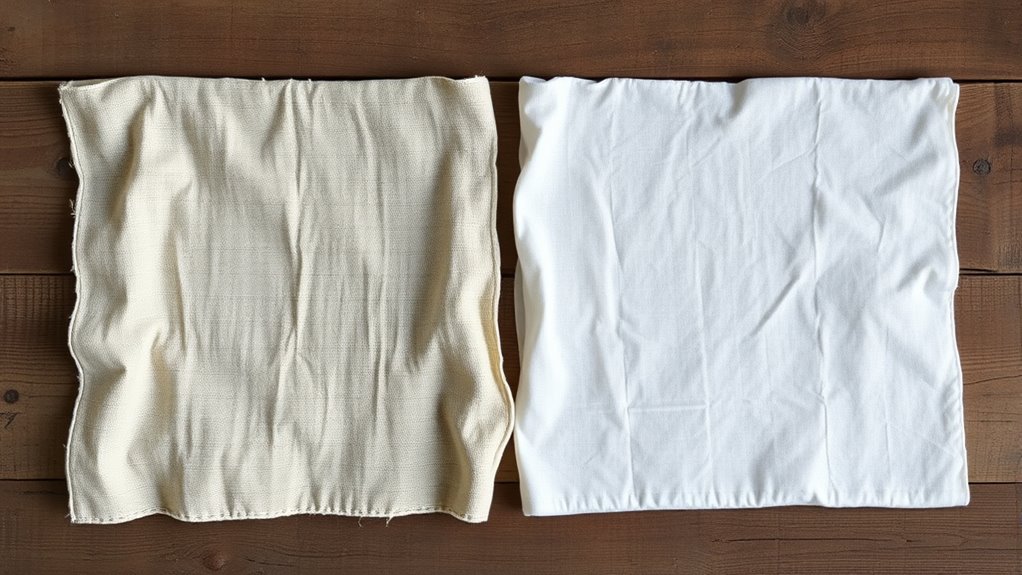
When choosing fabrics for clothing or home textiles, linen and cotton often top the list due to their comfort and durability. Both are natural fibers that have been used for centuries, but they each offer distinct advantages that can influence your decision. One key factor to contemplate is their sustainability benefits. Linen, made from flax plants, is generally regarded as more eco-friendly because it requires fewer pesticides, fertilizers, and less water during cultivation. It also grows quickly and can thrive in less fertile soil, making it a more sustainable choice overall. Cotton, while incredibly popular, tends to demand more resources, especially water, and often involves intensive pesticide use, which raises environmental concerns. However, organic cotton options are becoming more widely available, offering a more sustainable alternative for eco-conscious consumers.
Durability comparisons reveal notable differences between the two fabrics. Linen is renowned for its strength and longevity. Its fibers are stronger than cotton’s, which means linen garments and textiles tend to last longer, even with frequent use and washing. Linen also becomes softer over time, enhancing its comfort without sacrificing durability. Cotton, on the other hand, is softer initially and has good durability, but it can wear out more quickly compared to linen, especially if not cared for properly. Cotton fibers are less robust, which makes it more susceptible to pilling and tearing over time. If you’re looking for a fabric that can stand the test of time and maintain its appearance, linen might be the better choice. However, cotton’s softer feel right from the start makes it a popular pick for everyday wear and softer home textiles like towels and bedding.
Both fabrics are breathable and ideal for warm climates, but linen has superior moisture-wicking properties, meaning it keeps you cooler and drier in hot weather. Cotton is also breathable but tends to retain more moisture, which can sometimes feel damp or heavy. When weighing these factors, consider your priorities: if sustainability benefits and durability are at the top of your list, linen’s eco-friendly cultivation and longer lifespan give it an edge. Conversely, if softness and affordability are more important, cotton remains a versatile and comfortable choice. Additionally, understanding the market demand for each fabric can influence your purchasing decisions and help you choose the best option for your needs. Ultimately, your decision might come down to how you plan to use the fabric, your environmental values, and your preference for texture and feel. Both linen and cotton continue to be excellent, natural options, each with their unique qualities that suit different needs and lifestyles.
Frequently Asked Questions
How Do Linen and Cotton Perform in Extreme Weather Conditions?
In extreme weather, linen keeps you cooler thanks to its superior moisture management, letting sweat evaporate quickly, while cotton is more comfortable in humidity but may retain moisture longer. Linen’s colorfastness holds up well against sun exposure, maintaining its look, whereas cotton can fade faster with prolonged sunlight. You feel the difference—linen’s breathability and durability make it ideal for hot, intense conditions, while cotton offers more comfort in milder extremes.
Are Linen and Cotton Suitable for People With Sensitive Skin?
You’ll find that both linen and cotton are excellent choices if you have sensitive skin, thanks to their natural hypoallergenic properties. These fabrics are breathable, reducing irritation and keeping skin comfortable. When you choose linen or cotton, you’re likely to experience fewer allergic reactions and skin sensitivities, making your clothing feel softer and more soothing. Both fabrics help you stay comfortable while respecting your skin’s delicate needs.
What Are the Environmental Impacts of Producing Linen Versus Cotton?
You’ll find that linen generally has a lower environmental impact than cotton because it requires less water and is often produced through sustainable farming practices. Cotton, on the other hand, consumes significant water and may involve more chemicals, which can harm ecosystems. By choosing linen, you support better resource efficiency and eco-friendliness, making it a more sustainable option for conscious consumers like you.
Can Linen and Cotton Be Blended With Synthetic Fibers?
Yes, you can blend linen and cotton with synthetic fibers using various blending techniques. These techniques guarantee fiber compatibility, allowing the natural fabrics to combine seamlessly with synthetics like polyester or nylon. Blending enhances fabric durability, stretch, and moisture-wicking properties, giving you versatile textiles. When you choose to blend linen or cotton with synthetics, you get the benefits of natural comfort alongside added performance features, making your fabrics more functional and long-lasting.
How Do Linen and Cotton Compare in Terms of Durability Over Time?
Linen and cotton differ markedly in fabric longevity and aging characteristics. You’ll find linen tends to improve with age, becoming softer and more durable over time, while cotton may weaken and lose its strength, especially with frequent washing. Linen’s natural fiber resists wear longer, making it more durable across years. Conversely, cotton’s delicate fibers may fray or fade faster, requiring careful maintenance to preserve its appearance and integrity.
Conclusion
So, now that you’ve explored the strengths of linen and cotton, the choice might seem clear. But here’s the twist—there’s one fabric that could surprise you with its versatility and durability. Will it be the cool, crisp linen, or the soft, breathable cotton? Or perhaps, the answer lies somewhere unexpected. Decide what suits your needs best, but remember, the perfect fabric might just be waiting to reveal itself when you least expect it.