Sustainable alternatives like mycelium leather and plant-based textiles offer eco-friendly choices for your lifestyle. Mycelium leather grows quickly, reducing resource use and waste, while plant fibers like hemp, jute, and linen are strong, durable, and biodegradable. These materials help lower reliance on animal products and synthetic fibers, supporting a circular economy. If you want to explore how these innovative textiles can enhance your sustainability efforts, there’s plenty more to discover.
Key Takeaways
- Mycelium leather grows rapidly using agricultural waste, reducing resource consumption and environmental impact.
- Plant-based textiles like hemp, jute, and linen are durable, biodegradable, and require less water and chemicals.
- These sustainable materials minimize waste and reliance on animal agriculture and fossil fuels.
- They offer versatile, stylish options for fashion, accessories, and home furnishings with eco-friendly appeal.
- Using mycelium and plant fibers promotes a circular economy and supports responsible, eco-conscious living.
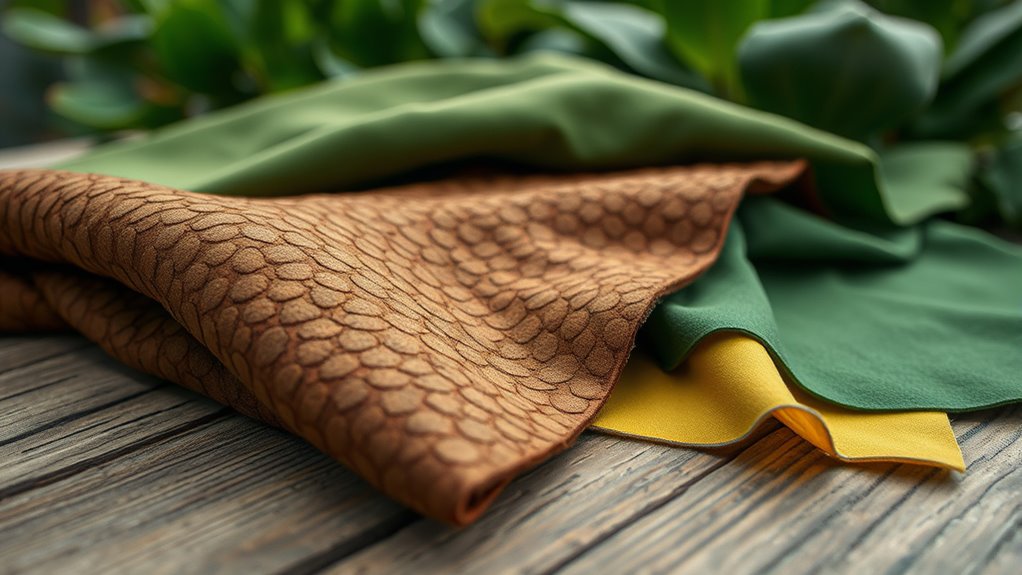
Are you looking for ways to reduce your environmental impact without sacrificing convenience? If so, exploring sustainable alternatives like mycelium leather and plant-based textiles can make a significant difference. These options are gaining popularity because they offer eco-friendly solutions that don’t compromise on style or function. One of the fascinating aspects of mycelium leather is its rapid growth process. Mycelium growth occurs quickly compared to traditional animal hides, allowing manufacturers to produce leather-like material in a matter of days rather than months or years. This accelerated growth not only reduces resource consumption but also minimizes waste, making it a more sustainable option overall. Additionally, mycelium can be cultivated using agricultural waste, further decreasing its environmental footprint. When it comes to plant fiber durability, these textiles excel as well. Many plant-based fabrics, such as hemp, jute, or linen, are known for their strength and longevity, meaning they can withstand regular use without falling apart prematurely. This durability ensures that you won’t need to replace items as often, ultimately reducing waste and conserving resources. Moreover, plant fibers are typically biodegradable, so even if they do reach the end of their life cycle, they break down naturally without polluting the environment. Choosing products made from plant-based textiles supports sustainable farming practices, which tend to require fewer chemicals and less water compared to conventional cotton or synthetic alternatives. The combination of fast mycelium growth and durable plant fibers creates a compelling case for making eco-conscious choices in your fashion and home goods. These materials are not only sustainable but also versatile, offering a range of textures and finishes that appeal to modern aesthetics. You can find everything from handbags to furniture upholstery crafted with mycelium leather or plant fibers, giving you options that align with your values. By opting for these innovative materials, you contribute to a circular economy that promotes responsible resource use and reduces reliance on fossil fuels and animal agriculture. For instance, building materials made from these textiles are increasingly being used in eco-friendly interior design. To put it differently, embracing sustainable alternatives like mycelium leather and plant-based textiles allows you to enjoy high-quality, durable products while actively reducing your environmental impact. The rapid mycelium growth process and the inherent durability of plant fibers make these options practical and long-lasting choices. As you seek to live more sustainably, incorporating these materials into your wardrobe and home can help you make a positive difference without sacrificing convenience or style.
Top picks for "sustainable alternativ mycelium"
Open Amazon search results for this keyword.
As an affiliate, we earn on qualifying purchases.
Frequently Asked Questions
How Does Mycelium Leather Compare to Traditional Leather in Durability?
You’ll find that mycelium leather offers a solid durability comparison to traditional leather, with impressive material resilience. While it may be slightly less resistant to extreme wear and tear, advancements in production have markedly enhanced its strength. You can expect mycelium leather to hold up well in daily use, providing a sustainable alternative that balances durability with eco-friendliness, making it a practical choice for those seeking longevity without the environmental impact.
Are Plant-Based Textiles Suitable for All Climate Conditions?
Plant-based textiles aren’t one-size-fits-all; you’ll need to see if they’re up to the climate’s demands. They excel in moderate conditions but may struggle in extreme heat or cold, depending on crop suitability and climate adaptability. Think of it as fitting a square peg in a round hole—you might need specific textiles designed for your region’s climate to get the best results.
What Is the Environmental Impact of Producing Mycelium Leather?
You might worry about the environmental impact of producing mycelium leather, but it’s generally eco-friendlier than traditional leather. Its biodegradability concerns are minimal, as it naturally breaks down over time. However, production can involve significant energy consumption, which impacts its overall sustainability. By choosing mycelium leather, you’re supporting a more sustainable option, but it’s important to weigh energy use and proper disposal to maximize its environmental benefits.
Can These Sustainable Materials Be Easily Recycled or Biodegraded?
You can recycle or biodegrade mycelium leather and plant-based textiles, but there are challenges. Biodegradability issues arise due to chemical treatments and mixed materials that complicate composting. Recycling infrastructure might not be fully equipped to handle these sustainable materials, limiting their reuse. To maximize their eco-friendly potential, you’ll need improved recycling systems and clearer guidelines, ensuring these materials break down naturally or get repurposed efficiently.
How Do Costs of Plant-Based Textiles Compare to Conventional Fabrics?
You’ll find that plant-based textiles often have a higher initial cost compared to conventional fabrics, mainly due to the cost analysis involved in their production and sourcing. However, as market affordability improves and demand rises, prices tend to decrease. While they may be more expensive upfront, these sustainable options can offer long-term benefits, such as eco-friendliness and reduced environmental impact, making them increasingly competitive in the marketplace.
Conclusion
Just like the heroes of old who relied on cleverness and courage, you can choose sustainable alternatives like mycelium leather and plant-based textiles to forge a better future. These eco-friendly options prove that you don’t need magic to make a difference—just awareness and action. By making mindful choices today, you join a community shaping a greener world, reminiscent of the legends who fought for what’s right. Your small steps can create a lasting legacy.