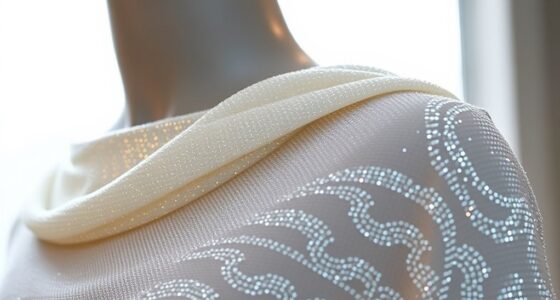
Digital fabric printing lets you create endless patterns with minimal waste by using precise inkjet technology that applies ink directly onto fabrics. This method eliminates screens and extensive setups, reducing leftover materials and overproduction. You can easily produce small batches, intricate designs, and customized motifs without excess waste. Its flexibility saves costs and supports sustainable practices. Keep exploring to discover how this innovative approach can transform your textile projects and release your creative potential.
Key Takeaways
- Digital inkjet printing enables creation of limitless, detailed fabric patterns without the need for screen setup.
- It produces only the required amount of ink and fabric, significantly reducing material waste.
- High-precision printing supports complex, full-color designs with minimal overproduction.
- Quick customization and on-demand printing eliminate excess inventory and overproduction waste.
- Advanced color management ensures consistent, accurate hues across all patterned textiles.

Digital fabric printing is transforming how designers and manufacturers create vibrant, custom textiles. This innovative process leverages advanced inkjet technology to deliver precise, high-quality patterns directly onto fabric surfaces. Unlike traditional methods that require screens or extensive setup, digital printing allows you to produce intricate designs quickly and efficiently, reducing lead times and enabling rapid customization. The core of this transformation lies in the precision of inkjet technology, which uses tiny nozzles to spray controlled bursts of ink onto textiles. This results in sharp, detailed images with a broad color spectrum, all achievable without the need for extensive manual labor or expensive tooling.
One of the key advantages of digital fabric printing is its exceptional control over color management. With digital systems, you can easily calibrate and adjust colors to match exact shades, ensuring consistency across multiple production runs. This level of color accuracy is vital for branding, fashion, and interior design, where precise hues can make or break a product. Modern color management software integrated with digital printers helps you maintain color fidelity from digital design to final print, reducing waste caused by mismatched colors or reprints. You can experiment with gradients, subtle shades, and complex patterns without worrying about costly mistakes or limited palette options. Additionally, digital printing technology can incorporate color fidelity enhancements that further improve the accuracy of color reproduction, making it an indispensable tool for high-quality textile production.
Because digital fabric printing is so precise, it minimizes waste. Traditional printing methods often involve excess dyes, screens, and fabric leftovers due to setup errors or overproduction. Digital processes, on the other hand, print only what’s needed, markedly lowering material costs and environmental impact. You can create small batches or even one-off pieces without the fear of excess inventory or unsold stock. This flexibility is especially valuable for designers wanting to test new ideas or for brands producing limited editions. Additionally, digital printing’s ability to handle detailed, full-color images means you can incorporate photographic elements and complex motifs that traditional methods struggle with, opening up endless creative possibilities while reducing waste.
Frequently Asked Questions
How Eco-Friendly Is Digital Fabric Printing Compared to Traditional Methods?
Digital fabric printing is more eco-friendly than traditional methods because it uses sustainable dyeing techniques, reducing water and chemical consumption. You can achieve vibrant designs with less waste, thanks to precise ink application and on-demand printing. This process minimizes excess fabric and dye runoff, making it a greener choice. Overall, digital printing supports waste reduction and sustainability, helping you create beautiful textiles with a smaller environmental footprint.
What Types of Fabrics Are Compatible With Digital Printing?
You can print on a variety of fabrics like cotton, silk, polyester, and blends using digital printing. Guarantee fabric dye compatibility to achieve vibrant, long-lasting colors. Digital printing works well with different textile texture effects, from smooth to textured surfaces, enhancing design detail. Keep in mind, some fabrics may require pre-treatment or special inks for ideal results, so check compatibility to ensure your printed designs look flawless.
Can Digital Printing Reproduce Complex or Textured Patterns Accurately?
Imagine a painter’s brush, capturing every swirl and shadow—digital printing does the same with fabric. You’ll find it reproduces complex and textured patterns with impressive texture detail and color accuracy. The technology can mimic intricate designs and textured surfaces, bringing your ideas to life with vibrant precision. So, whether it’s fine embroidery or layered textures, digital fabric printing guarantees your patterns are vivid, detailed, and true to your vision.
What Is the Typical Turnaround Time for Custom Digital Fabric Orders?
Your custom digital fabric order typically takes about 3 to 7 business days for turnaround. The process starts with order processing, where your design is prepared for printing. Once you approve the design, it moves into production. After final approval, the fabric is printed and shipped. Timelines can vary based on order complexity and supplier efficiency, so it’s good to confirm specific details during your design approval stage.
How Cost-Effective Is Digital Fabric Printing for Small-Scale Productions?
Digital fabric printing is highly cost-effective for small-scale productions because you benefit from lower setup costs and minimal waste, which reduce overall expenses. By doing a thorough cost analysis, you’ll see that scaling your production becomes more manageable and affordable. This method allows you to experiment with designs without significant financial risk, making it ideal for limited runs or customized projects, ultimately saving you money while maintaining quality.
Conclusion
Imagine a world where you can create endless fabric patterns without wasting material. Digital fabric printing makes this possible, turning your creative ideas into reality with minimal waste. Some believe it’s the future of sustainable fashion, and evidence shows it reduces excess fabric and pollution. By embracing this technology, you not only access unlimited design options but also contribute to a more eco-friendly industry. It’s a promising step toward a greener, more innovative textile world.