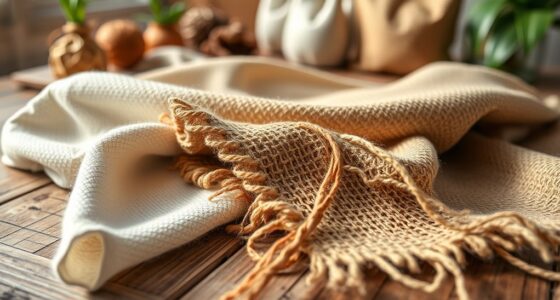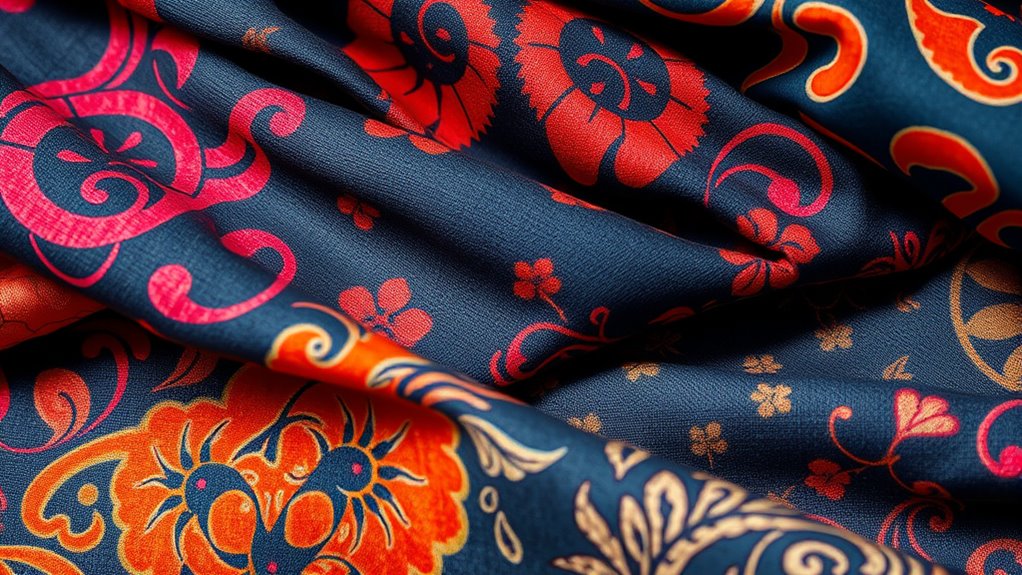

Using batik and hand-dyed fabrics in your artwork lets you explore rich textures, vibrant colors, and intricate patterns that carry cultural symbolism. You can layer designs, experiment with gradients, and create unique textures that add depth to your projects. These textiles also honor long-standing traditions, giving your work meaningful storytelling and craftsmanship. By incorporating them, you elevate your creative expression while respecting cultural heritage—so keep exploring to discover even more inspiration and techniques.
Key Takeaways
- Utilize intricate batik and hand-dyed techniques to create unique, layered textures and vibrant patterns in artistic projects.
- Incorporate traditional motifs and symbols to add cultural depth and storytelling elements to your artwork.
- Explore experimental methods like gradients, tie-dye, and shibori to develop dynamic visual effects.
- Respect and preserve cultural heritage by understanding the craftsmanship and symbolism behind these textiles.
- Combine these fabrics with mixed media to push creative boundaries and produce meaningful, authentic art pieces.

Batik and hand-dyed fabrics offer vibrant textures and rich patterns that can elevate any artistic project. When you work with these materials, you’re engaging with centuries-old textile techniques that have been refined across cultures. Batik, in particular, involves applying wax resist to fabric before dyeing, creating intricate patterns that reveal themselves through a meticulous process. This technique allows you to produce detailed, layered designs that stand out with depth and complexity. Hand-dyed fabrics, on the other hand, often use methods like tie-dye, shibori, or dip-dyeing, which give you opportunities to experiment with gradients, textures, and spontaneous patterns. Mastering these textile techniques enables you to craft unique, one-of-a-kind pieces that showcase your skill and creativity.
Explore vibrant textiles with centuries-old techniques like batik and hand-dyeing to create intricate, meaningful, and unique artistic designs.
Additionally, understanding the key components of traditional dyeing processes can help you better appreciate the craftsmanship involved. As you explore these fabrics, you’ll notice they often carry deep cultural symbolism. Many traditional designs are more than decorative—they tell stories, convey beliefs, or serve as markers of identity. For example, specific batik patterns in Indonesia represent social status, spiritual beliefs, or local legends. Similarly, in West Africa, tie-dye patterns like Adire carry symbolic meanings related to community, spirituality, and history. When you incorporate these fabrics into your artwork, you’re not just creating a visual piece; you’re also engaging with a rich cultural narrative. This connection can add layers of meaning to your work, inviting viewers to consider the history and symbolism embedded in the patterns.
Using batik and hand-dyed fabrics in your artistic creations requires more than just technical skill; it demands an appreciation for their cultural significance. Whether you’re designing textiles, mixed-media art, or fashion pieces, understanding the cultural symbolism behind the patterns can inspire more authentic and respectful representations. You might choose specific motifs or color schemes that honor the traditions from which they originate, or you may blend elements from different cultures to create a dialogue through your art. This approach enriches your work and helps preserve the cultural heritage embedded in these textiles.
Ultimately, working with batik and hand-dyed fabrics opens up a world of creative possibilities rooted in tradition and technique. By mastering textile techniques and respecting cultural symbolism, you can produce art that is both visually striking and meaningful. These fabrics allow you to tell stories, celebrate heritage, and push the boundaries of your creativity—all while paying homage to ancient practices that continue to inspire contemporary art.
Frequently Asked Questions
How Long Does Batik Fabric Typically Last With Proper Care?
With proper care, batik fabric can last for decades, maintaining its vibrant colors and intricate designs. To maximize fabric longevity, follow maintenance tips like washing in cold water, avoiding harsh detergents, and air-drying. You should also store it away from direct sunlight. By taking these steps, you guarantee your batik fabric stays beautiful and durable over time, making it a lasting piece for your artistic creations.
What Are the Best Tools for Designing on Hand-Dyed Fabrics?
You should use fabric marking tools like washable fabric pens, chalk, or pencils for designing on hand-dyed fabrics. These tools help you sketch your ideas easily and cleanly. For more complex designs, digital design software can be invaluable—allowing you to plan and visualize your artwork before transferring it onto fabric. Combining these tools guarantees precise, beautiful results and makes your creative process smoother and more enjoyable.
Can Batik and Hand-Dyed Fabrics Be Washed Together?
You should avoid washing batik and hand-dyed fabrics together to prevent fabric color bleeding. Hand-dyed fabrics are prone to dye fading, especially in the first few washes, so washing them separately helps preserve their vibrant colors. Use cold water and a gentle detergent designed for delicate fabrics to prevent dye bleeding and fading. This way, you protect your artwork and keep your fabrics looking bright and beautiful longer.
How Do I Fix Mistakes in Batik or Hand-Dyed Fabric Art?
Ever wondered how to fix mistakes in your batik or hand-dyed fabric art? First, try color correction by carefully reapplying dye or using fabric paint to match the rest of your piece. For stitching errors, gently undo stitches and resew with matching thread. Don’t rush—patience helps you blend repairs seamlessly. Have confidence—small fixes can restore your artwork’s beauty and keep your creative spirit alive!
Are There Eco-Friendly Dyes Suitable for Hand-Dyeing?
Yes, you can use natural dyes that are eco-friendly for hand-dyeing. These dyes come from plants, fruits, and vegetables, making them sustainable choices. To enhance colorfastness, pair natural dyes with eco-friendly mordants like alum or iron. This approach reduces environmental impact and creates beautiful, vibrant fabrics. Always research specific plant sources and mordants to achieve the best results for your artistic projects.
Conclusion
By weaving batik and hand-dyed fabrics into your art, you’re not just creating; you’re breathing life into tradition’s silent stories. Each stitch and hue becomes a brushstroke on a canvas of cultural heritage, inviting viewers to wander through a tapestry of history and passion. Embrace these fabrics as your artistic palette, transforming simple textiles into vibrant poems that whisper timeless tales with every fold and color—your masterpiece becomes a living, breathing affirmation to craft and creativity.