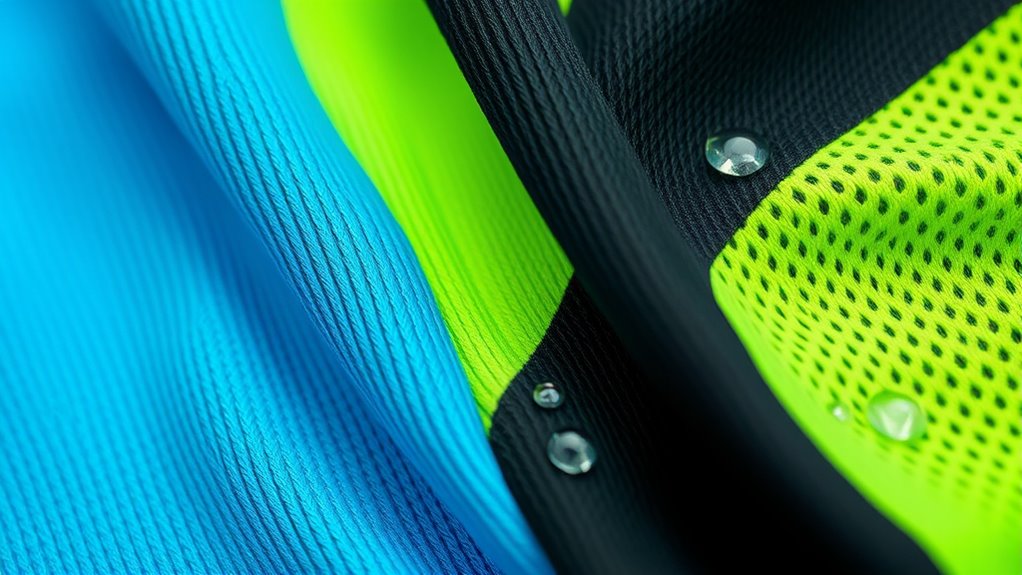

When choosing fabrics for activewear, look for moisture-wicking materials like polyester or nylon that pull sweat away from your skin, keeping you dry and comfortable. Opt for fabrics with stretch performance, such as those blended with spandex or elastane, to make certain of freedom of movement and shape retention. Durability matters too—consider fabrics with special finishes for resistance to pilling and fading. To find out more about selecting the best performance materials, keep exploring all these options.
Key Takeaways
- Opt for moisture-wicking fabrics like polyester and nylon to keep skin dry and enhance comfort during active use.
- Choose fabrics with stretch performance features, such as spandex blends, for better mobility and shape retention.
- Prioritize durable materials that resist pilling, fading, and wear from frequent washing to ensure long-lasting performance.
- Consider fabrics with UV protection and moisture resistance for outdoor activities and enhanced safety.
- Select technical fibers blended with finishing treatments to improve longevity, breathability, and overall functionality.
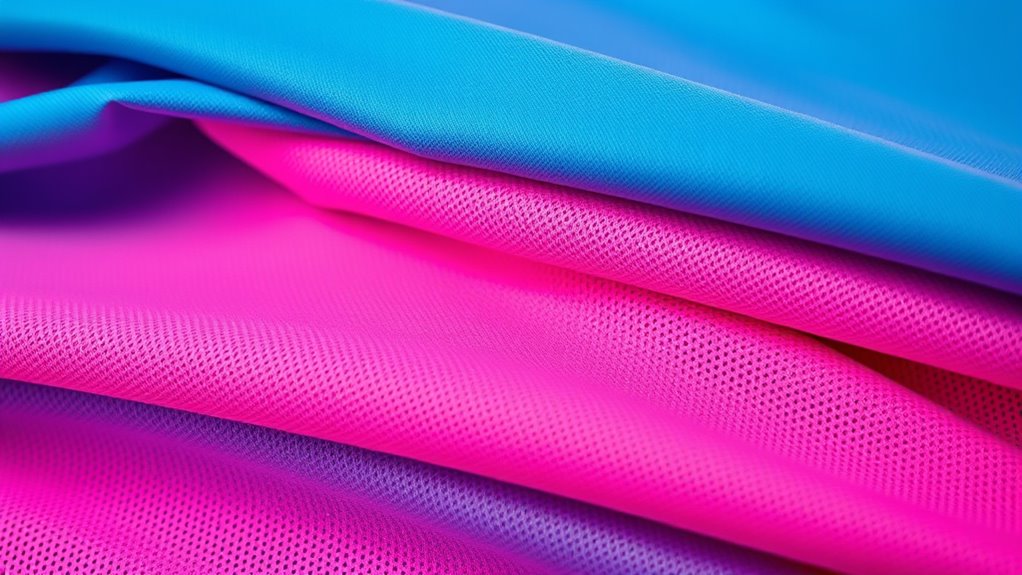
When choosing fabrics for activewear, the right material can make all the difference in comfort, performance, and durability. You want fabrics that keep you dry, comfortable, and flexible during your workout, so understanding what makes a good performance textile is essential. Moisture-wicking fabrics are your best friends here. They’re designed to pull sweat away from your skin, allowing it to evaporate quickly. This keeps you dry and prevents chafing or irritation, which is *crucial* whether you’re hitting the gym or running outdoors. When you wear moisture-wicking fabrics, you’ll notice how much more comfortable you feel, even during intense activity. These fabrics often incorporate technical fibers such as polyester or nylon, which have been engineered to enhance their moisture management properties. They’re lightweight, breathable, and capable of handling sweat without feeling heavy or sticky.
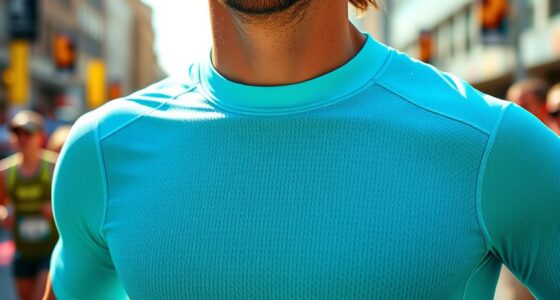
Moisture-wicking fabrics keep you dry, comfortable, and irritation-free during intense workouts or outdoor runs.
In addition to moisture management, stretch performance textiles are *essential* for activewear. These fabrics are crafted to stretch and recover, giving you full range of motion without restricting your movement. Whether you’re bending, jumping, or stretching, stretch performance textiles adapt seamlessly to your body’s movements. They’re usually made with elastane or spandex blended into other fibers, providing the flexibility you need for high-intensity workouts or yoga sessions. The elasticity of these fabrics not only enhances comfort but also helps garments maintain their shape over time, resisting sagging or bagging after repeated use and washing. When choosing activewear, look for fabrics that combine moisture-wicking features with stretch performance textiles to get the best of both worlds—dryness and mobility.
The durability of these fabrics also plays a *key* role in your overall experience. You want materials that can withstand frequent washing, stretching, and the rigors of active lifestyles without losing their shape or performance. Many high-quality fabrics are treated with special finishes to improve their longevity and resistance to pilling or fading. Additionally, understanding UV protection properties in fabrics can help you stay safe during outdoor activities. In your search for the perfect activewear fabric, consider the blend of fibers—synthetic fibers like polyester and nylon tend to be more durable and moisture-resistant, while natural fibers may offer breathability but less durability.
Ultimately, selecting fabrics that incorporate moisture-wicking properties and stretch performance textiles *guarantees* your activewear performs at its best. These fabrics will keep you dry, comfortable, and free to move confidently through any workout. By understanding the qualities of these materials, you can better evaluate your options and choose gear that supports your active lifestyle, helping you stay motivated and comfortable every step of the way.
Top picks for "fabric activewear choos"
Open Amazon search results for this keyword.
As an affiliate, we earn on qualifying purchases.
Frequently Asked Questions
How Do I Care for Performance Fabrics to Maintain Their Properties?
To maintain your performance fabrics, follow proper fabric maintenance and washing guidelines. Always wash them in cold water and avoid fabric softeners, which can damage the material’s moisture-wicking properties. Use gentle cycles and hang to dry when possible, or tumble dry on low heat. These steps help preserve the fabric’s elasticity and breathability, ensuring your activewear stays in top condition and performs well during your workouts.
Are Eco-Friendly Performance Fabrics Available for Activewear?
Think of eco-friendly performance fabrics as the green lights on your workout journey. Yes, they’re available, crafted with sustainable production and often holding eco-friendly certifications. These fabrics combine performance and sustainability, helping you stay active while reducing your environmental impact. As demand grows, more brands are investing in eco-conscious materials, making it easier for you to choose activewear that aligns with your values and supports a healthier planet.
How Do Different Fabrics Affect Moisture Management During Exercise?
Different fabrics considerably impact your moisture management during exercise. Breathability and ventilation help keep you cool, preventing overheating. Moisture-wicking technologies draw sweat away from your skin, allowing it to evaporate quickly, which keeps you dry and comfortable. Lightweight, breathable fabrics with advanced moisture-wicking properties work together to enhance your performance by managing sweat efficiently and maintaining ideal body temperature throughout your workout.
Can Performance Fabrics Be Recycled or Sustainably Sourced?
You’ll be glad to know that many performance fabrics can be recycled or sustainably sourced. Recycling options like turning worn-out gear into new textiles help reduce waste, while sustainable sourcing guarantees materials come from eco-friendly sources, minimizing environmental impact. By choosing brands that prioritize these practices, you actively contribute to a greener planet, making your activewear both functional and eco-conscious. It’s a win for you and the environment!
What Are the Best Fabrics for Sensitive or Allergy-Prone Skin?
You should look for hypoallergenic textiles and skin-friendly fibers when choosing activewear if you have sensitive or allergy-prone skin. Natural fabrics like organic cotton, bamboo, and silk are gentle and breathable, reducing irritation. Avoid synthetic materials with harsh chemicals or dyes. Always opt for seamless designs and tagless labels to prevent chafing. These choices help keep your skin comfortable and protected during active pursuits.
Conclusion
Choosing the right performance fabric can elevate your activewear experience. For example, if you prioritize moisture management during intense workouts, fabrics like polyester blends can keep you dry and comfortable. Imagine a runner who switches to a moisture-wicking material and notices improved endurance and less chafing. By selecting fabrics suited to your activity, you guarantee better comfort, durability, and performance—making every workout more effective and enjoyable.